
Event Type: Webinar
Location: PST
Date: 10/15/2026 — 11:00 AM to 12:00 PM
Great partnerships create better results. Join Enolytics and Corksy to see how winery brands of all sizes can combine smarter customer data with modern sales and marketing tools to grow revenue without adding complexity. Whether you're looking to improve customer engagement, increase repeat purchases, or make every marketing dollar work harder, you'll leave with practical ideas you can start using right away.
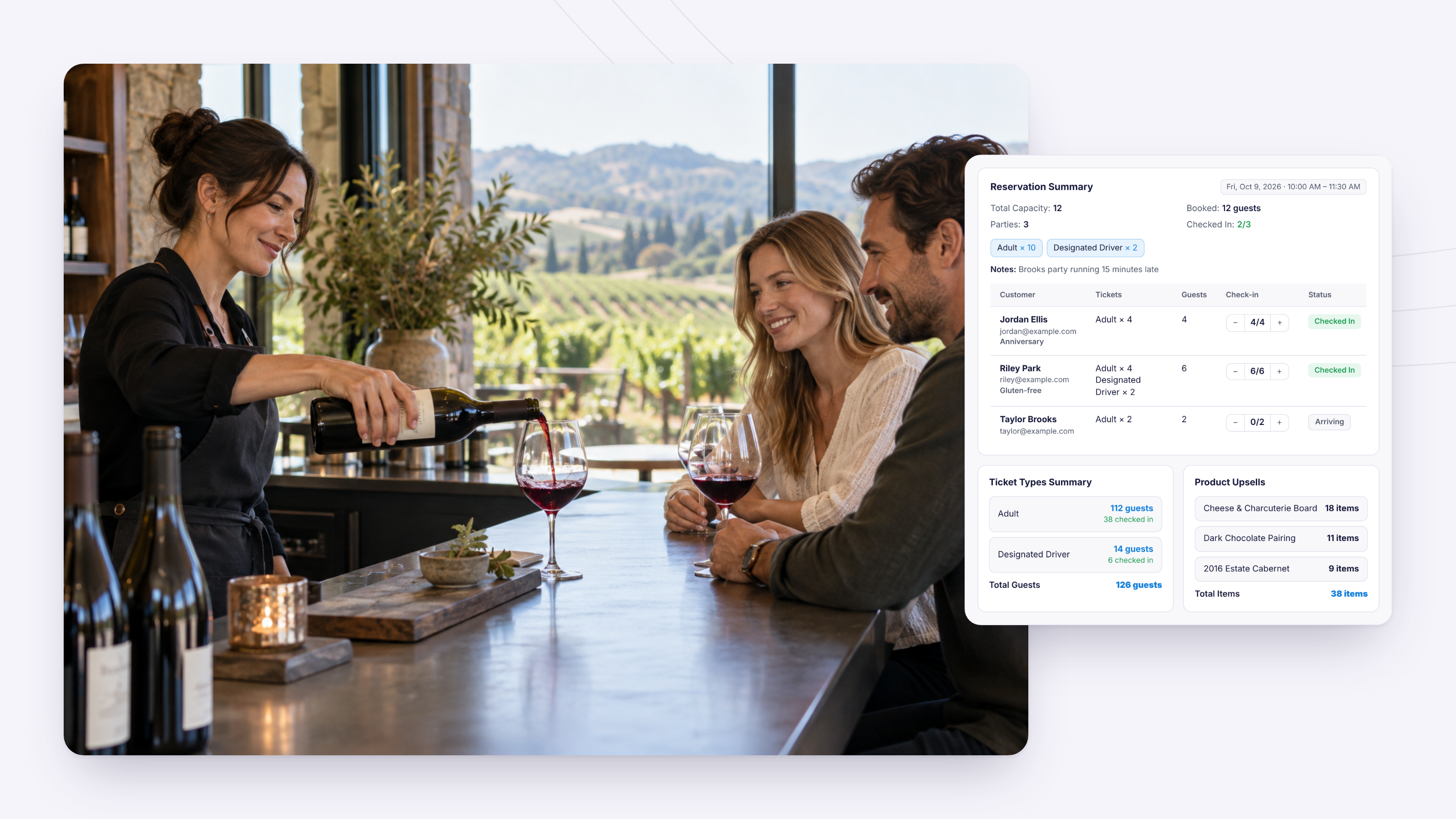
A club member books a tasting, adds a cheese board, and mentions an anniversary. By the time they arrive, your host should know all three.
How many systems does your team have to check to make that happen?
For wineries, that is where reservations become a bigger business question: how easily does a booking connect to everything your team needs to deliver the visit?
wait so for that opening what part comes after that third line?
Replace the original opening through “But can your team see all of that when the guest walks through the door?” with those three paragraphs. Then transition into Corksy like this:
A club member books a tasting, adds a cheese board, and mentions an anniversary. By the time they arrive, your host should know all three.
How many systems does your team have to check to make that happen?
For wineries, that is where reservations become a bigger business question: how easily does a booking connect to everything your team needs to deliver the visit?
A standalone booking tool may fill seats, but the work doesn’t end with the confirmation email. Member benefits, advance purchases, and guest requests still need to reach the people preparing for the visit. When that requires switching systems or manually connecting records, staff carry the extra work.
Corksy’s rebuilt reservations system brings those pieces together. The latest release, Corksy Reservations v2, connects winery experiences, guest bookings, member benefits, customer records, and tasting-room operations in the same platform wineries already use to run their DTC business.
For wineries juggling a separate booking tool alongside their ecommerce, wine club, and POS, that means an opportunity to simplify daily operations—and potentially eliminate the cost of another reservations subscription.
A booking should be the beginning of a better guest experience
A club member booking a tasting should be able to access their eligible member pricing. A guest planning a celebration should be able to share that detail before arriving. And a host should know which party ordered a cheese board without searching another system.
Corksy Reservations connects those details from booking through service.
Guests can find experiences by date and party size, choose an available time, select ticket options, and add products before checkout. Eligible members who sign in can access configured member pricing or member-only tickets through their existing Corksy club record.
The result is a booking experience that makes it easier to plan a visit—and gives the winery more of the information it needs to make that visit personal.
One less subscription. Fewer places to manage your business.
The cost of a reservations platform goes beyond its subscription. It also includes the time staff spend checking member eligibility, looking up purchases, and moving guest details between systems. When evaluating your setup, consider both the software bill and the work required to turn each booking into a well-prepared visit.
Corksy Reservations is included in the Corksy platform fee, giving existing clients a way to manage bookings without adding a separate reservations software subscription.
For wineries using Tock or another standalone booking platform, moving reservations into Corksy may offer an opportunity to reduce software costs while bringing more of their hospitality operations into one system.
The value extends beyond the subscription. Staff can manage bookings alongside the customer records, wine club information, products, and POS tools they already use. There are fewer places to look when preparing for a visit, answering a guest’s question, or reviewing their history.
Make it easy to book—and easy to buy a little more
The guest’s visit starts before they reach the tasting room. Booking is an opportunity to help them choose the experience they want and discover what would make it even better.
With Corksy Reservations, wineries can offer multiple ticket types within an experience and add products from their Corksy catalog before checkout. A seated tasting might include an optional cheese board. A special dinner might offer a bottle pairing. A tour might have distinct tickets for adults, designated drivers, and eligible members.
Those choices stay connected to the booking, so the team can see what was purchased and prepare accordingly.
For the winery, it creates another opportunity to generate revenue before the visit. For the guest, it makes more of the planning possible in one transaction.
Give staff what they need before the next party arrives
A smooth online booking means little if the team has to scramble to find the details during service.
Corksy’s Daily Reservations view gives staff a working view of the day, with bookings organized by timeslot or party. They can review tickets and add-ons, see special requests, assign a host, update a sublocation, post team notes, and check guests in.
Phone bookings and walk-ins can be entered by staff, too. With the POS sales channel enabled for an experience, reservations can also be booked through Corksy POS.
That keeps the team working from the same booking information, whether the guest reserved online, called the winery, or arrived at the tasting room.
Build the experiences you want to sell
Winery hospitality goes well beyond the standard tasting.
Corksy Reservations supports experiences such as cave tours, winemaker dinners, concerts, workshops, private events, and members-only releases. Wineries can configure recurring or one-time timeslots, multiple ticket options, capacity, duration, party-size limits, booking windows, and cutoffs.
Related ticket types can share a timeslot and capacity, helping staff manage one experience without splitting every ticket option into a separate offering.
That gives wineries room to expand their hospitality calendar while keeping booking and service organized.
A reservation should build the customer relationship
A reservation is part of a customer’s relationship with your winery. It should be accessible alongside the rest of that relationship.
Corksy records reservations on the customer’s profile, connecting booking history with the record used across wine club, ecommerce, and tasting-room purchases. Staff can look back at previous experiences, while managers can search bookings, manage changes and cancellations, handle eligible refunds, and review Reservation Summary and Details reports.
When a returning guest books again, the team has more context for the visit. When a manager reviews reservation activity, the information lives within the broader DTC platform.
Follow a booking beyond the confirmation email
Before evaluating your next reservations platform, follow one booking through your current operation. Can a member access their benefits without calling? Can a guest purchase an add-on without a separate transaction? Can the host see special requests before arrival? Does the visit become part of the customer’s history?
Every extra lookup, manual handoff, or duplicate record is work your team has to absorb. Those steps belong in the conversation alongside subscription costs and booking features.
Corksy’s rebuilt reservations system brings these workflows into the platform wineries already use for their DTC business. For wineries using Tock or another standalone tool, it offers an opportunity to simplify operations and potentially eliminate a separate reservations subscription.
Explore Corksy Reservations or talk with our team about your current booking setup.
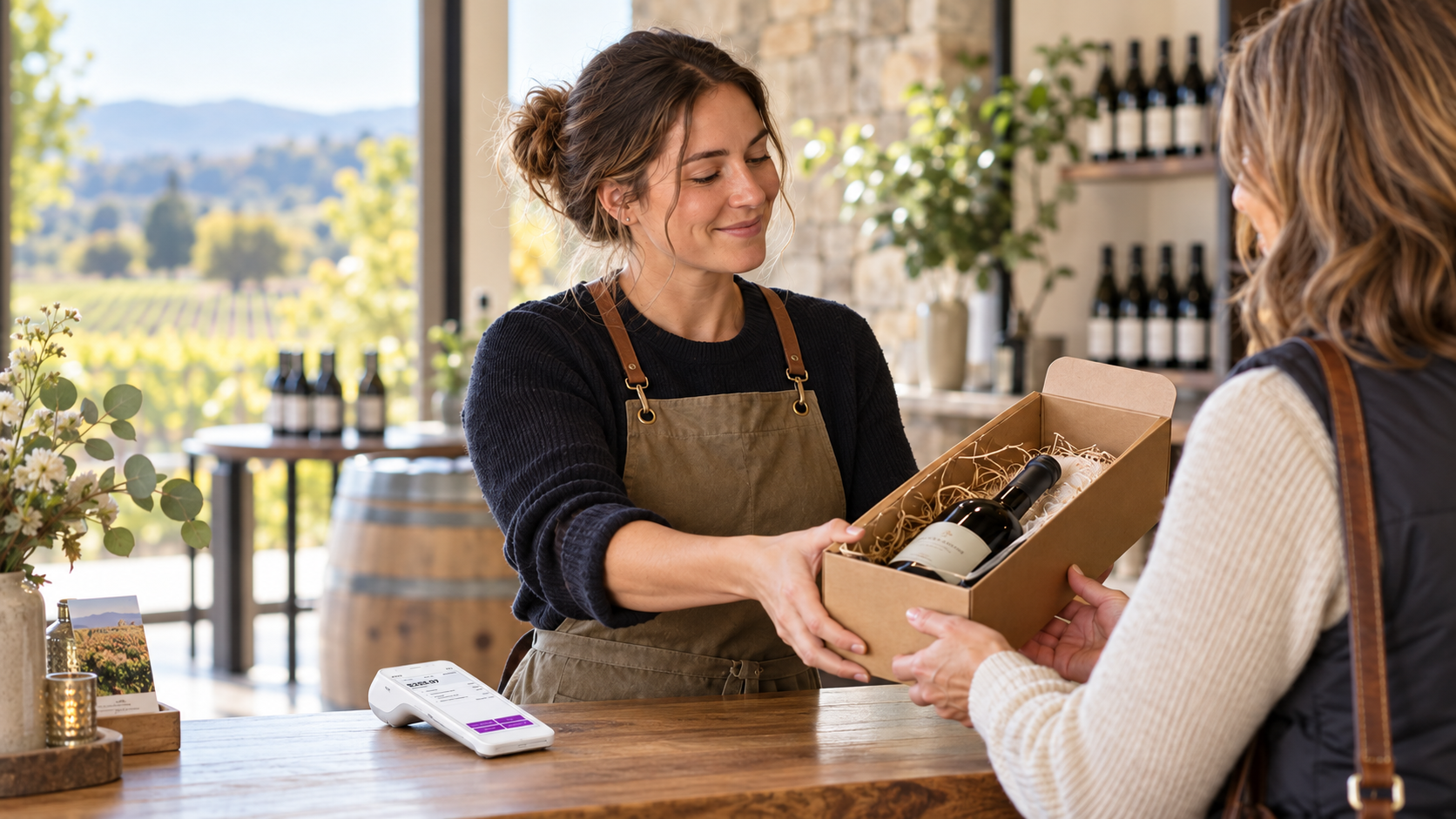
A winery can send a beautiful holiday email, feature the right bottle, and get a customer all the way to checkout. Then the customer notices the gift message field is missing. Or they can’t tell whether the order will arrive in time. Or the wine they wanted was already committed to the next club shipment.
These sound like small operational details. To the customer, they are the holiday shopping experience.
As wineries plan for OND 2026, I’d spend less time asking, “What campaigns should we run?” and more time asking, “Can we deliver on every promise those campaigns make?”
That question connects marketing to inventory, the tasting room, the wine club, and fulfillment. Here’s how to put it to work.
Choose offers your whole team can stand behind
Start with last year’s holiday orders. Look at what sold, what customers added to club shipments, and which gifts required the most back-and-forth from staff. Then check those opportunities against the inventory you’ll actually have available.
A wine may be popular but too limited to feature in a broad campaign. Another may have the stock, margin, and story to make an excellent host gift. Pick a small assortment with a clear purpose: perhaps an easy gift under a certain price, a premium bottle for a client or close friend, and a set for holiday entertaining.
For each offer, answer three questions before you promote it:
What exactly does the customer receive?
Who is it for?
Can we fulfill it consistently?
If marketing, tasting room staff, and fulfillment would give different answers, the offer needs more work.
Follow the customer from email to delivery
Once you have an offer, shop it yourself on a phone. Click the campaign link. Find the product. Add it to the cart. Send it to someone else.
Notice every point where you have to stop and think. Is the gift packaging shown? Can you add a note? Is pickup an option? Is the shipping information clear? A customer buying a gift is often making these decisions quickly, and uncertainty can be enough to send them elsewhere.
Do the same exercise in the tasting room. Ask a staff member what they would recommend to someone buying for a Cabernet drinker they don’t know well. Ask whether the featured gift is ready to purchase and whether they can help a guest order it for delivery. Your holiday campaign should make their job easier, too.
Treat the club shipment as a selling moment
For many wineries, a fall club shipment is the most predictable customer interaction of the season. It’s an opportunity to offer members something relevant while their order is already top of mind.
The best add-on might be a second bottle of a favorite wine, a giftable set, or a wine the member tried on a recent visit. Make the choice easy to understand and give members enough time to act before their shipment is finalized.
This is where connected customer information matters. A generic “buy more wine” message asks the member to do the work. A timely, relevant suggestion feels like service.
Make the delivery promise together
An “order by” date is a promise from the entire winery, not just a line in an email. Fulfillment needs time to pack. Inventory needs to be available. Shipping options need to match where the gift is going. Customer service and tasting room staff need to know what to say when someone asks, “Will it get there?”
Agree on those answers before the campaign launches. Then give one person responsibility for updating the website, emails, and staff as deadlines or availability change.
You can still run a creative campaign. In fact, the operational work gives you more confidence to do it. You know which gifts to feature, what customers can expect, and when to shift the message from shipping to local pickup.
A 30-minute holiday handoff meeting
Bring marketing, tasting room, club, inventory, and fulfillment leads together. Leave with answers to these five questions:
Which three holiday offers are we prioritizing?
Is the inventory available after club commitments?
Can a customer buy each offer easily online and in person?
What can we confidently promise about gifting, pickup, and delivery?
Who updates the customer-facing message when something changes?
That meeting won’t replace a holiday marketing plan. It will make the plan work.
The wineries that make holiday shopping feel effortless usually have a lot happening behind the scenes. Customers don’t need to see the handoffs. They just need each one to work.
Put your holiday handoffs to the test: Follow one gift order from campaign click through delivery, and note where your team or customer has to fill in a gap. If disconnected systems are making those steps harder, see how Corksy connects the winery shopping experience.
For years, the wine industry’s technology conversation has centered on one question:
Should wineries choose an all-in-one platform or build an ecosystem of specialized tools?
It is an understandable way to frame the decision. Winery teams want fewer systems to manage, cleaner customer data and a more consistent experience across ecommerce, wine clubs, the tasting room and every other DTC channel.
But “all-in-one versus ecosystem” no longer tells the whole story.
Two platforms may both describe themselves as all-in-one while operating very differently behind the scenes. One may have been designed as a connected platform from the beginning. Another may include decades of features that technically live under one brand but do not always share the same architecture, customer record or user experience.
Likewise, the presence of an integration does not automatically mean a winery has assembled a fragmented collection of applications. A thoughtfully designed integration can extend a unified platform without disrupting its core data or daily operations.
The more useful question is not simply:
Is everything native?
It is:
Does everything work together as one modern DTC operation?
What “Unified” Should Actually Mean
A winery does not have separate ecommerce customers, wine club members, tasting room guests and reservation holders.
It has people.
Those customers may discover the winery online, visit the tasting room, join the club, attend an event and purchase again months later. Winery technology should recognize those interactions as part of one relationship—not treat them as disconnected transactions.
A truly unified winery DTC platform should give the team:
One customer record across online and in-person activity
Shared product, order and inventory information
Connected ecommerce, wine club, POS and CRM data
Consistent customer recognition across channels
Reporting that reflects the complete relationship
Marketing capabilities informed by actual customer behavior
Clear access to data through reporting, exports and APIs
This is where architecture matters more than terminology.
A platform can offer a long list of features and still require teams to reconcile customer records, manually move information or switch between disconnected workflows. At the same time, a modern platform can incorporate a specialized partner while keeping the winery’s operational and customer data connected.
The number of applications involved matters less than whether the winery experiences them as one coherent system.
Native Where It Matters Most
There is still tremendous value in native functionality—particularly within the operational center of the winery.
Commerce, wine clubs, subscriptions, allocations, customer records, point of sale, inventory and order management are deeply interconnected. These functions should not behave like independent applications exchanging partial information after the fact.
When a club order is processed, inventory should reflect it.
When a customer shops online and later visits the tasting room, the team should be able to recognize the relationship.
When a guest changes an address or payment method, winery staff should not have to determine which systems need to be updated.
When marketing evaluates customer behavior, it should not depend on a patchwork of incomplete transaction histories.
This is why Corksy’s core commerce platform was built specifically for winery DTC. Ecommerce, wine clubs and subscriptions, POS, CRM, inventory, reservations, marketing automation and reporting operate within a connected environment designed around how wineries actually sell.
The website content-management experience is integrated into that environment, but it does not replace the underlying winery commerce platform. Corksy retains the wine-specific transactional infrastructure, customer record and operational functionality wineries need while providing modern tools for managing the digital experience.
That distinction matters.
The goal is not to claim that every possible technology must be invented and maintained by one company. The goal is to ensure that the functions at the heart of the customer relationship operate from the same reliable foundation.
Integration Should Create Possibility, Not Complexity
Wineries should not have to choose between a unified platform and access to innovative technology.
The right integrations allow wineries to use specialized services for areas such as fulfillment, compliance, accounting, email marketing, customer communication and hospitality—without rebuilding the core DTC operation around each new tool.
The difference is intentional architecture.
A strong integration should answer several questions clearly:
Which platform owns the customer record?
Which data is exchanged?
How frequently is it synchronized?
What happens when information conflicts?
Who supports the connection?
Can the winery access the data?
Can the integration be changed without destabilizing the rest of the operation?
An ecosystem becomes a problem when the winery is expected to serve as its own systems integrator.
The winery team should not spend its time identifying which vendor owns an issue, manually comparing reports or discovering that an important customer action never reached another system.
A modern platform should make integrations feel like an extension of the operation—not an additional operation to manage.
The Hidden Risk of “All-in-One”
All-in-one can sound synonymous with simplicity. It is not always the same thing.
Long-established software platforms often carry years of accumulated functionality, interfaces and technical decisions. That history can provide depth, but it can also make modernization more difficult.
Features may exist without being intuitive. Different parts of the platform may work differently. Data may technically reside with one provider while still being separated across modules. Updates may require teams to adapt their workflows around the limitations of older infrastructure.
This does not mean longevity is inherently a weakness. Experience matters.
But wineries should evaluate the condition of the technology they are buying today—not simply the year the company was founded or the number of features listed on a comparison chart.
Modern winery technology should be measured by how effectively it helps teams operate now and how readily it can evolve with changing customer expectations.
AI Raises the Standard for Winery Data
Artificial intelligence makes this conversation even more important.
AI is only as useful as the data informing it. If customer records are duplicated, purchase activity is incomplete or information is scattered across disconnected systems, an AI tool may produce faster answers without producing better ones.
Before wineries focus on what AI can generate, predict or automate, they need to know whether their underlying data is accurate and usable.
That requires:
A consistent customer identity
Clean transaction history
Reliable behavioral data
Clear permissions and access controls
Secure connections between approved systems
Transparent data ownership
The ability to retrieve and use winery data
Centralization alone is not enough. Data must also be structured, accessible and actionable.
The platforms best positioned for the next era of winery DTC will not simply add an AI feature to an existing interface. They will provide the connected data foundation that allows AI to become genuinely useful across marketing, hospitality, forecasting and customer service.
Better Questions for Evaluating Winery Technology
Feature matrices can help organize a technology search, but they rarely capture what it feels like to operate the platform every day.
Before choosing a winery DTC system, look beyond whether a box is checked and ask:
1. What powers the core transaction?
Determine which platform actually manages the order, customer, product, club and payment information.
2. Is there one usable customer record?
Ask to see how online purchases, tasting room orders, club activity, reservations and communications appear for an individual customer.
3. How quickly does data move?
“Integrated” can mean real-time communication, periodic synchronization or a manual process. Those are very different experiences.
4. What happens when something fails?
Find out who monitors integrations, who provides support and whether your team will be responsible for coordinating multiple vendors.
5. Can the platform adapt?
Evaluate APIs, exports, integrations and the ability to add capabilities without replacing the entire technology stack.
6. What will the team actually have to manage?
Count more than software subscriptions. Consider training, reconciliation, workarounds, vendor coordination and the time required to complete routine tasks.
7. Was the experience built for today’s customer?
A platform should support the modern expectations wineries face now: mobile shopping, flexible clubs, subscriptions, personalized communication, efficient tasting-room service and a consistent experience across channels.
The Future Is Connected, Flexible and Winery-Specific
The wine industry does not need another debate in which every platform is forced into one of two categories.
Wineries need core functionality that works together, customer data they can trust and the flexibility to adopt new capabilities without creating operational chaos.
That is the standard Corksy was built to meet.
Corksy combines a wine-specific commerce foundation with modern architecture, a unified customer record and an intentional approach to integrations. Wineries can manage ecommerce, clubs, subscriptions, POS, CRM, reservations, inventory, marketing and reporting within one connected platform—while still accessing specialized partners where they add meaningful value.
It is not technology for the sake of technology.
It is a platform designed to give winery teams a clearer view of their customers, fewer barriers between channels and more freedom to create the DTC experience their brand deserves.
Because the future of winery technology will not be won by the platform that can claim the most boxes.
It will be won by the platform that helps the winery—and its customer—experience everything as one.

Winery DTC technology has changed considerably over the years, but so has the customer journey it needs to support. For a long time, the winery direct-to-consumer model followed a fairly predictable path. A guest visited the tasting room, had a great experience, joined the wine club, and stayed connected through allocations, events, email offers, and return visits.
That path still exists, and the tasting room remains one of the most valuable customer acquisition channels available to wineries. But it is no longer the only way consumers build relationships with wine brands.
Today, a customer's first interaction with your winery may happen long before they walk through the tasting room door—or they may never visit at all. They might discover a bottle at a restaurant, see it in an Instagram post, hear about it from a friend, encounter your winery while planning a trip, search for a varietal or region online, receive a bottle as a gift, or come across your brand in an online wine community. From there, they may visit your website several times, subscribe to email, browse wines on their phone, leave without purchasing, return weeks later, place an order, and eventually book a tasting or join the club.
For wineries, this creates both an opportunity and a technology challenge. DTC is no longer about optimizing one predictable path to purchase. It is about creating a connected customer experience across many different paths—and having the technology to understand what happens along the way.
The Winery Customer Journey Has Become Less Linear
It is easy to look at a new online order and see a new customer. In reality, that purchase may be the culmination of months of interactions.
Consider a customer planning a trip to Napa Valley. They discover a winery through search, visit its website, browse the tasting experiences, and leave. A few weeks later, they see the winery mentioned on Instagram and return to look at a particular Cabernet. They sign up for email but still don't purchase. When their trip finally arrives, they book a reservation, visit the tasting room, purchase six bottles, and ship them home.
Was the tasting room the acquisition source? Search? Social? Email?
The answer is increasingly: all of them played a role.
The same journey can happen in reverse. A customer may discover a winery during a vacation and make their first tasting room purchase, but the long-term value of that relationship happens digitally. They reorder online, respond to seasonal offers, purchase gifts during the holidays, attend a virtual event, or eventually become a club member.
This is one reason attribution has become more complicated for winery marketing teams. There often isn't a single interaction responsible for a sale. There is a collection of experiences that gradually moves someone from awareness to purchase and, ideally, toward a longer relationship with the winery.
The technology supporting that journey needs to reflect this reality.
Consumers Don't See Your DTC Channels as Separate Businesses
Internally, wineries have good reasons to separate e-commerce, wine club, tasting room, reservations, events, email, SMS, fulfillment, and customer service. Different teams may manage them, and different systems may support them.
The customer doesn't see those divisions.
To them, every interaction is with the same winery.
That creates a higher expectation for continuity. A longtime customer who walks into the tasting room expects the winery to know they are a club member. Someone who regularly purchases online shouldn't feel like a stranger when they make a reservation. A customer shouldn't have to repeatedly provide information the winery already has because one system doesn't communicate well with another.
This is where fragmented winery technology starts creating problems that extend well beyond inconvenience.
When e-commerce, POS, wine club, reservations, CRM, and marketing data live in disconnected systems—or don't sync reliably—the winery never has a truly complete view of the customer. Staff members are left piecing together information, marketers build segments from incomplete datasets, and opportunities to recognize or reward valuable customers can easily be missed.
A winery may technically be collecting plenty of data while still struggling to use it.
That distinction is becoming increasingly important.
Your Website Has Become the Bridge Between Discovery and Revenue
As wine discovery has expanded, the winery website has taken on a much larger role in the DTC journey.
A consumer who hears about your winery almost anywhere is likely to eventually search for you online. They may arrive through Google, social media, an email, a QR code, an event listing, a digital wine publication, or a recommendation shared by a friend.
And increasingly, they won't arrive on your homepage.
Someone searching for a specific bottle may land directly on a product page. A visitor planning a wine-country weekend may enter through your reservations page. A club member may click directly from an email to an allocation or offer. Someone researching your winery after seeing a bottle at dinner may arrive through search.
Every one of those visits represents intent.
The job of the website is to make it easy for that intent to become action.
That means winery websites have to do more than look good. They need clear navigation, strong product merchandising, useful information, fast performance, intuitive reservations, easy access to club information, and a purchasing experience that works just as well from a phone as it does from a desktop.
This is also why a winery's website and commerce platform can no longer be treated as completely separate projects. The transition between discovering a wine and purchasing it should feel like one experience, not like leaving a modern website and entering a completely different piece of software at checkout.
The Standard for Winery E-Commerce Isn't Other Winery E-Commerce
Consumers don't lower their digital expectations because they're purchasing wine.
They spend every day shopping through modern e-commerce experiences that have made browsing, checkout, payments, shipping updates, account management, and repeat purchases increasingly easy.
Those experiences establish the benchmark.
For wineries, mobile is particularly important because so much discovery now happens on a phone. A customer may click an email while standing in line at the grocery store, revisit a wine they tasted at dinner, or see an Instagram post that reminds them they wanted to reorder.
If purchasing requires zooming into a page, navigating a cumbersome cart, remembering an account password, working through unnecessary fields, or abandoning the payment methods they're accustomed to using elsewhere, the winery has introduced friction at the moment of highest intent.
That doesn't mean wineries need to replicate Amazon. Wine has complexities that traditional retail doesn't, including compliance, shipping restrictions, age verification, club rules, allocations, and fulfillment requirements.
The goal is to handle those complexities without unnecessarily transferring them to the customer.
Modern winery technology should make a complicated business feel simple to buy from.
A Better Checkout Is Only Part of the Opportunity
Conversion matters, but the larger opportunity begins once a customer has purchased.
Every transaction adds another piece to the customer relationship. Over time, a winery may know what someone buys, how frequently they purchase, whether they belong to the club, what they've purchased in the tasting room, whether they've booked experiences, which promotions they respond to, and when they last engaged with the brand.
That information can make winery marketing significantly more relevant.
Instead of sending another broad promotion to the entire database, a winery can begin identifying specific customer behaviors and opportunities.
Customers who repeatedly purchase Cabernet but haven't joined the club may be strong candidates for a Cabernet-focused club offer. Members who regularly add bottles outside their allocation could receive a different offer from members who only accept their standard shipment. Customers who historically purchase cases during the holiday season may be ideal candidates for an early holiday offer. Someone who was once highly engaged but hasn't purchased in 18 months may warrant a thoughtful re-engagement campaign.
Even relatively simple segmentation can dramatically improve the way a winery communicates.
The important shift is moving from asking, "What should we send our list this week?" to asking, "Which customers should we be talking to, and what would be most relevant to them right now?"
That requires usable customer data.
Wineries Don't Necessarily Have a Data Problem. They Have a Connection Problem.
Most established wineries have years—sometimes decades—of customer data.
The problem is often that accessing and acting on that information is unnecessarily difficult.
For many winery teams, getting a complete picture of a customer still requires piecing information together across exports, spreadsheets, duplicate records, manually maintained lists, and tags that may or may not still mean what they meant two years ago. One platform contains club history. Another manages email engagement. Another handles reservations. The POS has transaction information. Website analytics live somewhere else.
Beyond being inefficient, that fragmentation limits what wineries can do with the information they already have.
A marketing team should be able to identify high-value customers without building a complicated spreadsheet. A tasting room employee should be able to understand the relationship standing in front of them. A club manager should have useful context when communicating with a member. Leadership should be able to understand DTC performance without reconciling multiple versions of the same customer.
The more connected those systems become, the more useful the underlying data becomes.
And that matters far beyond reporting.
Connected customer data is what makes better segmentation, personalization, automation, service, retention, and ultimately better decision-making possible.
Personalization Doesn't Have to Feel Like Personalization
"Personalization" has become one of those marketing terms that can quickly sound more complicated than it needs to be.
For wineries, it doesn't have to mean an elaborate recommendation engine or a website that changes completely for every visitor.
Often, good personalization simply means being more relevant.
A first-time purchaser shouldn't necessarily receive the same communication as a longtime club member. Someone who just purchased a case doesn't need an immediate promotion encouraging them to buy the same wine. A customer who has consistently purchased Pinot Noir for five years probably shouldn't receive exactly the same offer as someone who exclusively purchases Cabernet.
The more useful the customer record becomes, the easier it is to make these distinctions.
Automation can then help wineries act on those signals without requiring someone on the marketing team to manually build every campaign.
A first purchase can trigger a thoughtful welcome journey. An abandoned cart can receive a reminder. A lapsed customer can enter a re-engagement series. A club member approaching a meaningful anniversary or lifetime value milestone might even trigger a task for personal outreach rather than an automated promotion.
Used well, automation doesn't make winery marketing less personal.
It gives teams more opportunities to be personal at the moments that matter.
Modern Winery DTC Technology Needs to Be Flexible
There is another reason wineries are rethinking their DTC technology: the business itself is changing quickly.
Wine clubs aren't all structured the same way anymore. Wineries are experimenting with customizable allocations, subscriptions, loyalty programs, bundles, limited releases, member-exclusive experiences, new discount strategies, off-site events, corporate gifting, SMS, new fulfillment models, and different ways of combining hospitality and e-commerce.
Marketing changes quickly, too. New channels emerge. Consumer behavior shifts. Teams adopt new tools. Strategies that worked five years ago may not be the strategies a winery wants to pursue next year.
Technology shouldn't be the reason an idea can't be tested.
Yet that is often where legacy systems create the most frustration. The issue isn't always that a feature is completely unavailable. Sometimes it technically exists, but using it requires a workaround, a support request, another integration, an export, or a process so cumbersome that the team simply stops trying.
Over time, those limitations influence strategy.
Instead of asking what would create the best customer experience, teams start asking what their system will allow them to do.
That is backwards.
Why Wineries Are Rethinking Legacy DTC Technology
Most wineries don't wake up one morning and decide to replace their DTC platform because of a single feature.
The decision usually builds over time.
The website becomes difficult to manage. Checkout feels dated. Reporting requires too much manual work. The marketing team struggles to create the segments it wants. Customer records don't provide enough context. Staff relies on workarounds everyone has simply accepted as part of the job. Adding a new tool creates another disconnected source of data.
Individually, each issue may be manageable.
Collectively, they create operational drag.
That's why evaluating winery technology purely through a feature checklist can miss the larger question. Two platforms may both technically offer e-commerce, wine club, POS, CRM, and reporting, while providing dramatically different experiences for the winery team and its customers.
The better question is whether the technology helps the winery operate the way it wants to operate now—and gives the team room to evolve.
What Should Wineries Look for in Winery DTC Technology?
The right winery DTC technology depends on the size, sales model, and operational needs of the winery, but modern platforms should do more than process transactions. Wineries should look for technology that connects customer activity across ecommerce, wine club, POS, reservations, and CRM; supports a fast mobile buying experience; makes customer data easy for teams to use; integrates with essential marketing, compliance, shipping, and fulfillment tools; and provides enough flexibility to evolve as the winery's DTC strategy changes.
Ultimately, the question isn't whether a platform has the longest feature list. It's whether the technology makes it easier to understand customers, execute your DTC strategy, and grow the business without creating unnecessary operational friction.
At Corksy, this shift is shaping how we think about modern winery DTC technology. Ecommerce, wine club, POS, reservations, CRM, websites, and customer data shouldn't operate as separate pieces of the customer relationship. The more connected those experiences become, the easier it is for winery teams to understand customers and act on that information.
Ultimately, modernizing winery technology isn't about having more features. It's about giving teams the flexibility to create the experience they want for customers—and removing the operational friction that gets in the way.
Start by Looking at Your Own Customer Experience
Before evaluating any new technology, wineries can learn a lot by experiencing their current DTC journey exactly as a customer would.
Start with your phone and search for your winery. Don't begin on the homepage. Enter through Google, Instagram, an email, or wherever a real customer is likely to encounter you. Find a wine and try to purchase it. Pay attention to how many steps are required, whether information is easy to find, how the site performs, and whether anything makes you hesitate.
Then look at the experience from the other side.
Choose one of your best customers and see how quickly your team can understand their complete relationship with the winery. Can you easily see their online and tasting room purchases? Club membership? Reservations? Recent activity? Lifetime value? Marketing engagement?
Finally, ask the people who use your technology every day a simple question:
What do you want to do that our current technology makes unnecessarily difficult?
The answers are often more revealing than a feature comparison.
Building for Wherever the Customer Goes Next
The channels consumers use to discover and purchase wine will continue to change.
There will be new social platforms, new marketing tools, new search behaviors, new payment expectations, and new ways for consumers to learn about wine. AI is already beginning to change how people research products and plan travel, just as social media and mobile commerce changed discovery before it.
Wineries don't need to chase every new channel. They need winery DTC technology capable of adapting as customer behavior changes.
They need a DTC foundation capable of adapting when customer behavior changes.
That means making it easy for someone to move from discovery to purchase, maintaining a connected understanding of the relationship after that purchase, and giving winery teams the flexibility to turn customer data into better experiences.
The future of winery DTC isn't about being everywhere.
It's about making sure that wherever your customer finds you, the next step works.
And when they do become a customer, your winery has the technology to recognize that relationship, understand it, and keep building on it.
Is Your Winery Technology Ready for What's Next?
See how Corksy connects e-commerce, wine club, POS, CRM, reservations, websites, and customer data in one modern DTC platform built specifically for wineries.
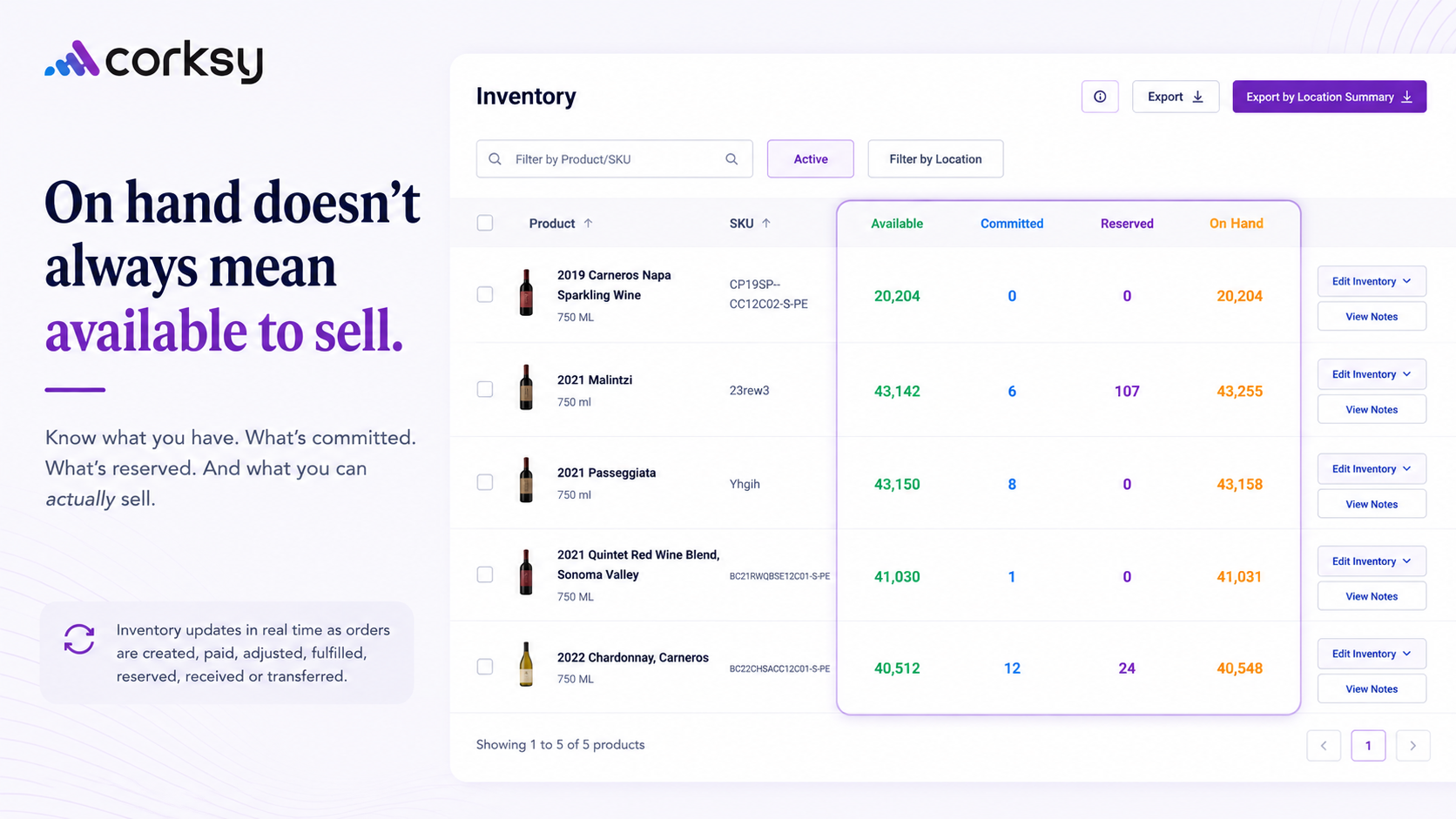
For wineries, inventory has never been quite as simple as the number of bottles sitting in the warehouse. But as DTC programs have expanded across ecommerce, tasting rooms, wine clubs, multiple locations and fulfillment methods, knowing what you have has become increasingly different from knowing what you can actually sell.
That distinction matters operationally, but it also matters for revenue.
A wine can show 500 bottles on hand while some of those bottles are already committed to online orders, others are reserved for an upcoming event or release, and still others may be sitting at a location that doesn’t supply the sales channel trying to sell them.
If every team is working from the same “500 bottles” number, the winery doesn’t really have inventory visibility. It has a physical count.
The Four Numbers Behind Better Inventory Visibility
One useful way to think about modern winery inventory is through four different numbers:
Available: Stock that can be sold right now.
Committed: Stock that has been committed to an order but has not yet been fulfilled.
Reserved: Stock intentionally held back for a specific purpose, such as an event, club release or VIP.
On Hand: The physical inventory at a location — including Available, Committed and Reserved stock.
The distinction is important because a bottle can still be physically On Hand while no longer being Available.
A pickup order is a simple example. Once the customer purchases the wine, those bottles shouldn't remain available for another customer to buy. But until the order is picked up, they're still physically sitting at the winery.
In practice, that inventory follows a straightforward lifecycle:
Available → Committed → Fulfilled
If an order is canceled before fulfillment, that inventory can become Available again. Inventory intentionally held for another purpose moves between Available and Reserved without changing the physical On Hand count.
That's the model Corksy recently introduced across its inventory system, giving wineries a clearer view of what's physically there, what's already spoken for and what can actually be sold. Corksy's inventory statuses now update as orders are created, paid, canceled, refunded, fulfilled, reserved, adjusted, received or transferred.
The concept itself is straightforward. The operational details are where it becomes important.
Wine Club Is Where Inventory Gets Particularly Interesting
Wine club adds another layer to the inventory equation.
Many wineries allow members to customize upcoming shipments, sometimes for days or weeks before a club batch is actually processed. Holding every bottle sitting in a member's customizable package as committed inventory throughout that entire period can unnecessarily reduce what appears available to sell elsewhere.
In Corksy, customizable wine club packages don't hold inventory while members are making their selections. Inventory becomes Committed when the batch processes and individual orders are created.
That does mean wineries need visibility into projected club demand before processing, particularly for limited-production wines. But it separates two very different operational questions: What might we need for an upcoming club run? and What inventory has actually been committed to an order?
The goal isn't simply to track more numbers. It's for the inventory behavior to reflect what's actually happening with the wine.
Inventory Visibility Is Also a Sales and Marketing Issue
Inventory management may primarily live with operations, but its effects reach directly into marketing and sales.
Consider a limited wine you're preparing to feature in an email campaign.
If the marketing or ecommerce team sees only On Hand inventory, the number may look healthy. But if a meaningful portion is already committed to orders or intentionally reserved, promoting that wine aggressively could create a problem.
The opposite can happen too.
When teams don't have confidence in inventory, the safest response is often to be conservative. A wine comes off the website early. Marketing avoids promoting it. Tasting room staff are told not to sell another case until someone checks with the warehouse.
Better inventory visibility creates more confidence to sell.
It can also help wineries understand where inventory can actually be sold. A winery may have plenty of a particular SKU overall, for example, but only some of that inventory may be accessible to its ecommerce channel.
Corksy's new Sellable by Channel report is designed around that question, showing available inventory based on the locations from which a selected sales channel can pull.
That's a much more useful DTC question than simply asking how many bottles exist.
Don’t Forget the Inventory That Has Already Sold
There's another category that can easily get overlooked: inventory that's been committed to a customer but hasn't finished its journey.
An ecommerce order may be paid and waiting to ship. A tasting room customer may have a pickup order waiting at the winery. An Admin order may have been created for a known customer but hasn't yet been fulfilled.
Those bottles are still physically On Hand, but they're no longer inventory the winery should be trying to sell.
And once inventory is committed, another operational question becomes important:
How long has it been waiting for fulfillment?
Corksy's new Pending Fulfillment report identifies orders with committed inventory that hasn't yet been fulfilled and groups them by how long they've been waiting. A separate Reserved Stock report shows what's being held, why it was reserved, who reserved it and when.
That turns inventory reporting into something teams can actually work from rather than something they review only when counts don't match.
A Better Inventory Question
Modern winery DTC is interconnected.
Wine club affects inventory. Ecommerce affects fulfillment. POS affects available quantities. Pickup orders can be sold while still physically sitting at the winery. Locations affect what each channel can sell. And all of it ultimately affects the customer experience and the winery's ability to generate revenue.
The technology supporting those channels should understand those relationships too.
That's the thinking behind Corksy's latest inventory improvements: give winery teams a clearer view of what's physically On Hand, what's already Committed, what's intentionally Reserved and what's truly Available to sell.
Because the most useful inventory question isn't always:
How much wine do we have?
It's:
How much wine can we sell?
Want a clearer view of inventory across your winery? See how Corksy connects inventory, ecommerce, wine club, POS and fulfillment →
AI is quickly becoming part of the day-to-day toolkit for winery teams. But while writing emails, brainstorming social posts, and creating content may be the easiest places to start, some of the biggest opportunities for wineries are in the customer data they already have.
Your winery is already collecting information across e-commerce, wine club, POS, email and SMS, tasting room visits, shipping, events, and customer profiles. AI can help make that information easier to analyze—and, more importantly, easier to act on.
During our recent webinar with Sovos ShipCompliant, How AI Is Helping Wineries Improve Wine Club Retention & Reduce Customer Friction, we explored practical ways wineries can begin using AI across their DTC business.
The biggest takeaway: you don't need an AI strategy to get started. You need a good business question.
How Can Wineries Use AI?
At its core, AI is very good at identifying patterns across large amounts of information.
For a winery, that means you can move beyond questions like:
“How many active wine club members do we have?”
And begin asking:
“What behaviors do our best wine club members have in common?”
Or instead of simply reporting your cancellation rate:
“What behaviors tend to happen before a member cancels?”
That distinction is important. Traditional reporting tells you what happened. AI can help you identify patterns in that data, explore what may be driving them, and determine where your team should look next.
Here are a few practical places to start.
1. Identify Customers Most Likely to Join Your Wine Club
Your next wine club members may already be some of your best customers.
Look at the behavior of current members and compare it with non-members:
How frequently do they purchase?
How often do they visit?
What is their average order value?
Do they consistently purchase certain varietals?
How engaged are they with email, SMS, or events?
AI can help analyze those behaviors and identify non-members who look most like your existing members.
During our webinar demonstration, for example, AI analyzed a sample dataset of 1,201 customer records and identified 37 non-members who shared key behaviors with existing wine club members.
For a winery team, the value isn't simply knowing there are 37 prospects.
It's having a list you can actually use.
Your tasting room team can follow up with repeat visitors. Marketing can create campaigns for frequent purchasers who haven't joined. A Cabernet buyer may receive a membership message built around the wines they already love instead of a generic wine club promotion.
2. Look for Wine Club Churn Signals Before a Member Cancels
By the time someone submits a cancellation request, you're already reacting to the outcome.
A better question is:
What happened before they canceled?
A skipped shipment alone probably doesn't tell you much. Neither does one unopened email.
But multiple changes in behavior can create a pattern.
A member might:
Experience repeated failed payments
Skip a shipment
Stop purchasing outside club releases
Engage less with email
Visit the tasting room less frequently
AI can help compare active and canceled members to identify which behaviors tend to occur before cancellation.
That doesn't mean every customer displaying those behaviors is about to cancel. It gives your team a group worth paying attention to.
And your response can depend on the customer.
Someone struggling with shipment frequency may need a more flexible option. Someone who moved may need a shipping-focused membership. A member who is still opening every email may be a strong candidate for a personalized win-back campaign.
The goal isn't to automate hospitality. It's to know where your team's attention may matter most.
3. Create Better Winery Customer Segments
Most wineries have far more customer segments hiding in their database than they actively use.
Think beyond “member” and “non-member.”
You might find:
Varietal loyalists: Customers consistently purchasing Cabernet, Chardonnay, sparkling wine, or another category.
High-engagement non-members: Customers purchasing and visiting frequently without joining the club.
Club-only buyers: Members who receive allocations but rarely make purchases between shipments.
Event-driven customers: Guests whose purchasing behavior increases around winery events.
Holiday buyers: Customers who reliably return during the same seasonal window.
Once those patterns are visible, segmentation becomes much more useful.
Instead of sending the same campaign to 10,000 people, you can change the offer, product, timing, or message based on how different customers actually interact with the winery.
4. Analyze More Than Marketing Data
AI isn't just a marketing tool.
Some of the most useful questions may come from wine club and operational data:
Which wines generate the highest reorder rates?
Which club tiers generate the most add-on purchases?
Does club customization correlate with retention?
Which SKUs consistently underperform?
Which shipments have the strongest retention afterward?
The answers can inform allocation decisions, club shipments, bundles, inventory planning, and holiday campaigns—not just email strategy.
Shipping and compliance information can add another layer. Failed deliveries, weather holds, shipping costs, state-level behavior, and geographic purchasing patterns can reveal customer friction that isn't obvious from order data alone.
5. Prepare Your Winery Data for AI
AI can identify patterns in your data. It can't make bad data good.
Duplicate customer records, incomplete profiles, inconsistent cancellation reasons, missing engagement data, poor tagging, and disconnected systems all affect the quality of the analysis.
So before building an elaborate AI workflow, start with one question.
For example:
Which non-members behave most like our current wine club members?
Then determine which data would actually help answer it.
You may need club status, purchase frequency, average order value, tasting room visits, or engagement data.
You probably don't need every field in your CRM.
Clean the obvious issues, analyze the data, validate the results, and decide whether the insight gives you something worth acting on.
The process is simple:
What AI Tools Should Wineries Use?
There isn't one “best AI tool for wineries.”
Different tools are better suited to different jobs.
ChatGPT can be a strong general-purpose option for data analysis, research, writing, brainstorming, and working with uploaded files. Claude is particularly useful for long documents, strategy, analysis, and writing. Gemini can make sense for wineries heavily invested in Google Workspace, while Microsoft Copilot fits teams operating primarily in Excel, Outlook, and Microsoft 365.
Research-focused tools such as Perplexity can be useful when you're researching consumer trends, competitors, industry developments, or broader market information.
But you probably don't need subscriptions to all of them.
Choose the tool based on the job you're trying to accomplish—and understand the account and data policies before uploading winery information.
Protecting Winery Customer Data When Using AI
Before uploading customer information into any AI tool, understand exactly what you're sharing. The right answer will depend on the tool, account type, and settings you're using, so don't assume the data policies for a free consumer account are the same as those for a business or enterprise account.
Ask:
Where is the data stored and processed?
Is it used to train a shared or public model?
Who can access it?
How long is it retained?
Can it be deleted or exported?
Does the task actually require personally identifiable information?
In many cases, it doesn't.
You don't necessarily need someone's name, email address, phone number, or mailing address to understand purchase frequency or identify churn patterns.
An anonymized record such as Customer 001 / Chardonnay / 4 orders / $812 LTV may provide everything needed for the analysis.
The rule is simple: don't give an AI tool more customer data than it needs.
How to Start Using AI at Your Winery
You don't need to overhaul your tech stack.
Pick something you genuinely want to know about your customers or business.
Then:
Pick one question. What do you actually want to know?
Identify the data that could answer it.
Clean obvious data issues.
Ask AI to identify patterns.
Validate the results. Ask why the pattern exists and check the underlying records.
Take one action.
Measure whether it worked.
Want to Go Deeper?
Watch the full How AI Is Helping Wineries Improve Wine Club Retention & Reduce Customer Friction webinar with Corksy + Sovos ShipCompliant.
See What’s Possible With Your Winery Data
AI is only as useful as the data behind it. See how Corksy brings customer, wine club, e-commerce, POS, and DTC data together—and makes it easier for your team to turn that information into action.
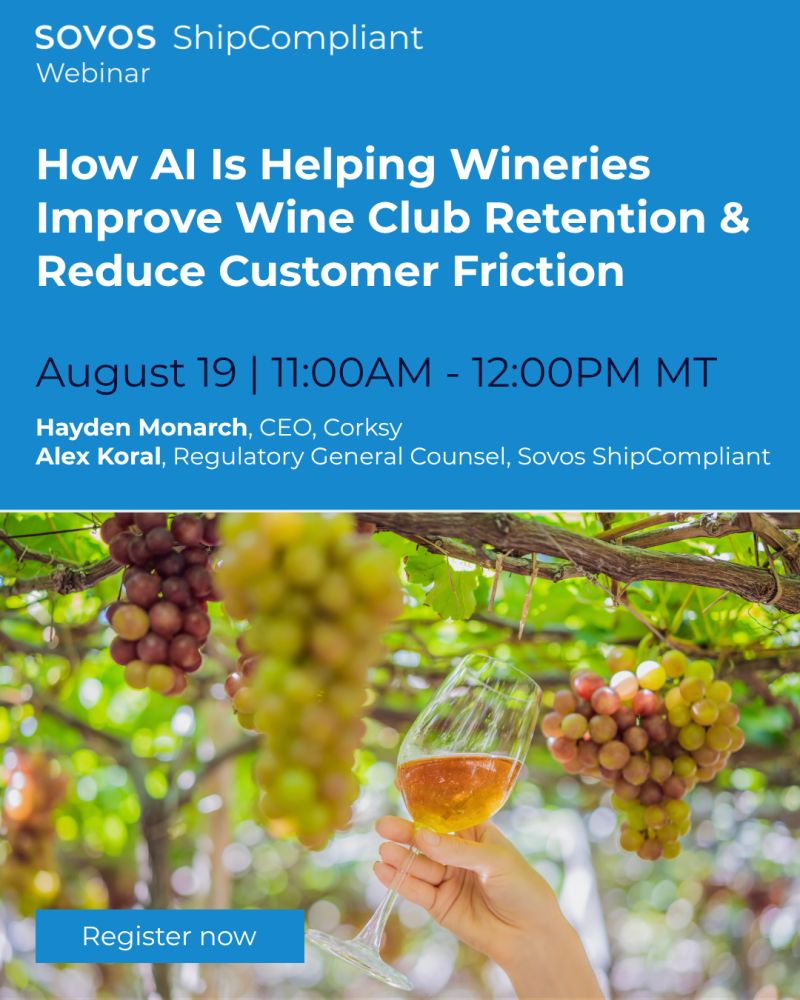
Event Type: Webinar
Location: Irvine, CA
Date: 8/19/2026 — 10:00 AM to 11:00 AM
Artificial intelligence is changing the way wineries understand and engage with their customers. While content generation is in the spotlight, the biggest opportunity isn't using AI to write content—instead, it's using AI to uncover insights from the customer, club, and shipping data wineries already have.
Join Corksy and Sovos ShipCompliant for a practical discussion on how wineries are using AI to identify future club members, improve retention, reduce customer friction, and make smarter DtC decisions. You'll see real-world examples of how AI can turn everyday winery data into actionable insights.
In this webinar, you'll learn how to:
Identify customers most likely to join your wine club
Spot early warning signs of churn and declined payments
Analyze shipment deliverability and customer trends
Build smarter customer segments and personalized outreach
Turn existing winery data into actionable business decisions with AI
Whether you're just getting started with AI or looking for practical ways to use it in your winery, you'll leave with ideas you can put into practice right away.
Register: https://sovos.com/shipcompliant/webinar/ai-winery-wine-club-retention/
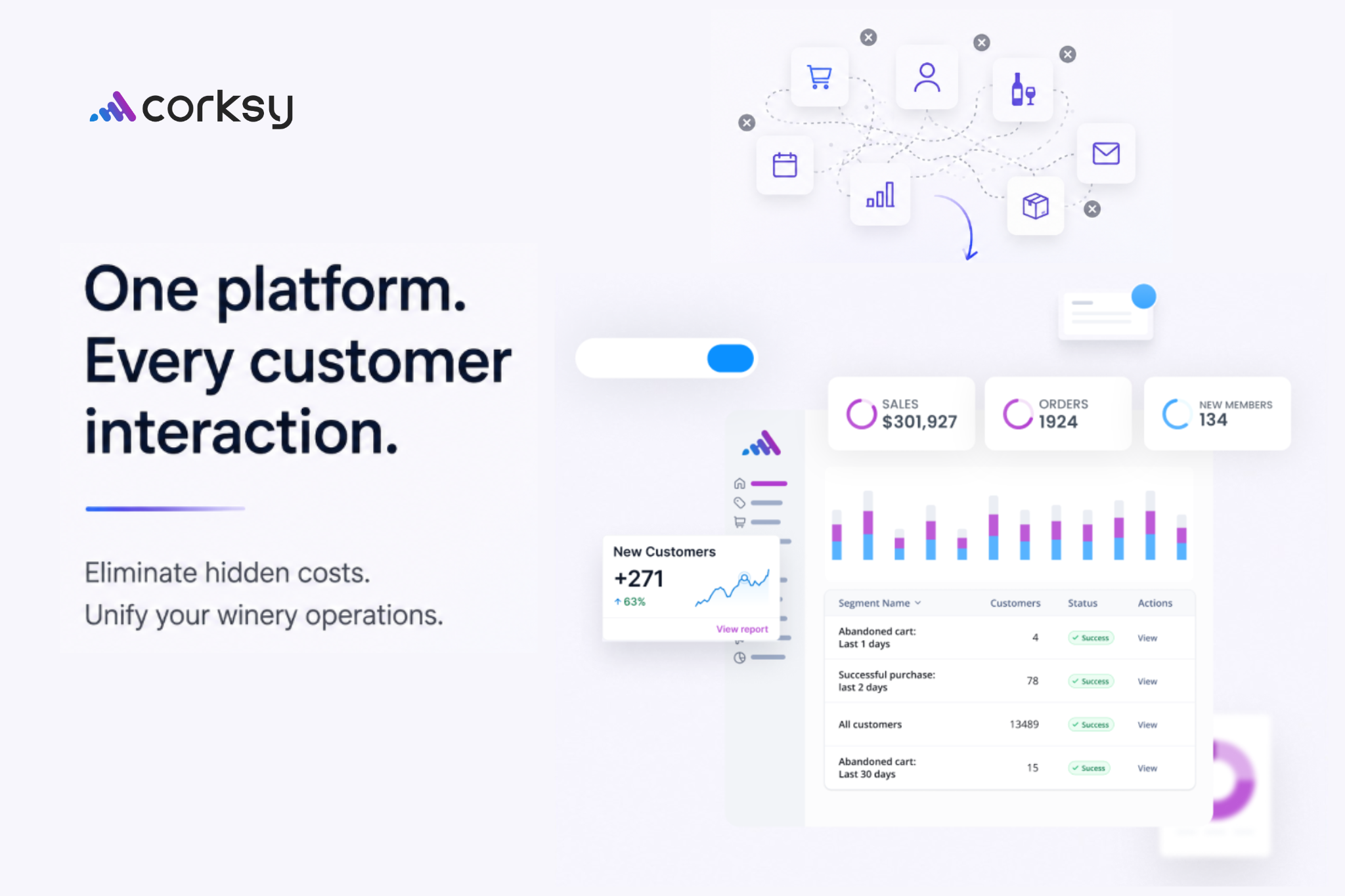
Winery software is designed to connect the core systems wineries use every day—including POS, e-commerce, wine club management, CRM, reservations, reporting, and fulfillment—into one platform. When those systems operate independently instead of together, wineries often experience duplicate customer records, inconsistent reporting, manual administrative work, and higher operational costs.
When wineries evaluate new software, the conversation usually starts with subscription costs.
How much does the POS cost? What's the monthly fee for the website? Is one wine club platform less expensive than another?
Those are important questions, but they rarely tell the whole story.
The larger cost is often hidden in day-to-day operations. Every disconnected system introduces another handoff, another spreadsheet, another report to reconcile, and another opportunity for customer data to fall out of sync. Individually these tasks don't seem significant. Collectively they consume hours each week and make it harder for teams to deliver a consistent customer experience.
The question isn't simply whether your winery is paying for multiple software subscriptions. It's whether your technology is helping your team move faster—or forcing them to spend valuable time managing the software itself.
Every Handoff Creates Friction
Most winery technology stacks weren't designed all at once. They evolved over years as new needs emerged. A POS was selected for the tasting room. An e-commerce platform handled online sales. A separate wine club application offered more flexibility. Email marketing, reservations, shipping, and reporting were layered on over time.
Each decision made sense in isolation.
The challenge is what happens between those systems.
When a customer joins your wine club, purchases online, attends an event, or visits the tasting room, that information should follow them. Instead, it often has to be passed from one application to another. If those integrations aren't seamless, your staff becomes responsible for keeping customer information aligned.
That's where operational friction begins.
Marketing exports customer lists. Club managers verify records before processing shipments. Finance reconciles reports that don't quite match. Tasting room staff search multiple systems to understand a guest's purchase history.
None of these activities create revenue. They're simply the cost of operating disconnected software.
Corksy was built to eliminate those handoffs. Instead of switching between systems to understand a customer, tasting room staff can see purchase history, wine club status, reservations, notes, lifetime value, and recent orders from a single customer profile. Whether that customer shopped online yesterday or visited the tasting room six months ago, every interaction lives in one place.
Duplicate Customer Records Are a Symptom—Not the Problem
Almost every winery has encountered duplicate customer records.
A guest purchases wine online using one email address, joins the wine club in the tasting room with another, and later registers for an event through a third-party platform. Before long, what should be one customer relationship exists across multiple profiles.
The duplicate record is frustrating, but it's usually not the root problem.
The real issue is that every disconnected system maintains its own version of the customer. Purchase history becomes fragmented. Club status isn't always visible. Marketing segmentation becomes less reliable. Staff lose confidence in the information they're seeing because they don't know which system reflects the customer's complete relationship with the winery.
The solution isn't spending more time cleaning up customer data. It's making sure every department is working from the same customer record from the start. Instead of managing multiple versions of the same customer, every department works from a single customer profile that's updated in real time. With Corksy, every purchase, club shipment, reservation, event registration, and tasting room transaction builds the same customer profile. That gives staff a complete picture of each guest instead of piecing together information from multiple applications. It also improves segmentation, customer service, and reporting because everyone is working from the same record.
Reporting Shouldn't Require Investigation
One of the most common frustrations we hear from winery teams isn't that they lack reporting—it's that they have too many reports producing different answers.
Sales totals differ between the POS and e-commerce platform. Wine club reports don't reconcile with accounting exports. Marketing builds customer segments from one dataset while finance relies on another.
Instead of asking what the data is telling them, teams first have to determine which report is correct.
That uncertainty slows decision-making across the business. Leadership loses confidence in the numbers, finance spends additional time reconciling data, and marketing struggles to understand customer behavior across channels.
Reliable reporting isn't just about having dashboards. It's about knowing every department is making decisions from the same information.
Because Corksy's POS, eCommerce, wine club, CRM, and reporting all operate from the same dataset, leadership isn't spending time reconciling conflicting reports. They can confidently answer questions like:
Which wines are driving repeat purchases?
Which tasting room associates convert the most club memberships?
Which customers are at risk of churn?
Which marketing campaigns are generating revenue?
The conversation shifts from Which report is correct? to What should we do next?The Costs That Don't Appear on Your Software Invoice
Subscription fees are easy to compare because they're visible.
Operational costs are harder to measure because they're spread throughout the organization. They're reflected in hours spent reconciling reports, manually updating customer records, maintaining multiple product catalogs, correcting inventory discrepancies, or exporting spreadsheets between platforms.
Payment processing is one example. Many wineries evaluate processing separately from the rest of their technology stack, even though the two directly affect one another. Platform fees, transaction fees, processing rates, and operational workflows all contribute to the true cost of running your DTC business. We've explored this topic in more detail in our guide, The True Cost of Payment Processing for Wineries, including how platform fees, effective processing rates, and operational efficiency work together to determine what your winery is actually paying.
Your website is another hidden cost that's often overlooked.
Many wineries pay separately for a website platform, developer support, plugins, hosting, and ongoing maintenance—then spend additional time keeping products, inventory, club offerings, and content synchronized across multiple systems. Marketing teams often have to recreate products, club offers, and event pages across multiple systems, increasing the chances that something falls out of sync. Those costs rarely appear in software comparisons, but they have a direct impact on both your budget and your team's productivity.
With Corksy, your winery website is part of the same connected platform as your eCommerce, POS, wine club, CRM, reservations, inventory, and reporting. Products only need to be updated once, customer data stays connected, and your team can manage website content without relying on developers or juggling multiple systems.
Looking at any one of these costs in isolation rarely tells the whole story.
Connected Doesn't Stop at the Tasting Room
Most wineries think about software integration as something that happens behind the scenes—between the website, CRM, wine club, and reporting. But some of the biggest disconnects happen where wine is actually sold.
Wine festivals, club pickup parties, vineyard concerts, farmers markets, and off-site tasting events often rely on separate mobile payment systems or manual processes. Transactions have to be imported later, inventory is updated after the fact, and new club members don't always make it into the winery's primary CRM right away. By the time the event is over, staff are already catching up on administrative work instead of moving on to the next customer.
Corksy Go was built to eliminate those handoffs.
Because it's part of the same Corksy platform—not a separate mobile POS—every sale, club signup, Apple Pay or tap-to-pay transaction, inventory adjustment, and customer interaction updates in real time. Staff can see a customer's purchase history, enroll them in a wine club, complete a sale, and move on, knowing that information is immediately available across the rest of the business.
Whether a guest buys a bottle in your tasting room, joins your club at a food and wine festival, or purchases a case during a vineyard concert, every interaction becomes part of the same customer profile. There are no spreadsheets to import, no duplicate records to merge, and no waiting for systems to catch up.
Unlike standalone mobile payment solutions, Corksy Go isn't another system to integrate. It's simply another way to access the same winery platform, whether you're behind the tasting room bar or pouring wine at an event.
Signs Your Tech Stack Is Costing More Than You Think
If any of these sound familiar, your technology may be creating more operational work than it should.
Staff regularly export or import CSV files.
Customer records exist in multiple systems.
Reports don't match across departments.
Products need to be updated in more than one platform.
Finance spends significant time reconciling sales data.
Marketing maintains separate customer lists.
Wine club processing requires manual cleanup before each run.
Staff ask, "Which system has the correct information?"
These aren't people problems. They're technology problems.
What Winery Software Integration Actually Looks Like
When people hear "integration," they often think about connecting two applications.
Modern winery software integration goes much further than that.
It means every customer interaction—from a tasting room purchase to an online order, club shipment, reservation, or event registration—updates the same customer record. Inventory, reporting, marketing, and fulfillment all work from the same information without requiring staff to manually bridge the gaps.
The result isn't simply fewer logins.
It's fewer duplicate records, fewer manual processes, more reliable reporting, and a better customer experience because every team has the information they need when they need it.
With Corksy, that means your website, eCommerce, tasting room POS, Corksy Go mobile POS, wine club, CRM, reservations, inventory, fulfillment, analytics, and reporting all operate from the same platform. Customer information doesn't need to be synchronized between systems because every department is already working from the same data.
Why More Wineries Are Consolidating Their Technology
As staffing becomes leaner and customer expectations continue to rise, wineries are looking beyond feature lists and monthly subscription costs.
They're asking a different question:
How much time is our team spending managing disconnected software?
That's often where the biggest opportunity exists.
Replacing multiple disconnected applications with one connected platform reduces manual work, improves reporting, simplifies customer management, and gives every department access to the same information.
Those operational gains compound over time, creating efficiencies that are difficult to achieve when every system operates independently.
Bring Your Winery Operations Together with Corksy
Replacing disconnected systems isn't just about reducing software subscriptions—it's about creating one connected ecosystem for your entire DTC business. Corksy brings together your website, eCommerce, POS, wine club, reservations, analytics, marketing, fulfillment, and customer data in a single platform, giving every department access to the same information at every stage of the customer journey. Instead of spending time connecting systems, your team can spend more time serving guests, growing wine club membership, and selling more wine.
Corksy was built around a simple idea: winery teams shouldn't have to spend their day moving information between systems.
Imagine a guest discovering your winery at a festival, joining your wine club through Corksy Go, booking a tasting the following month, purchasing online after they return home, and picking up a shipment at your winery later that year. Every interaction becomes part of the same customer record without your team exporting a spreadsheet, merging duplicate contacts, or reconciling reports.
That's what connected winery software should do. And that's exactly how Corksy was built.
The result isn't just fewer systems to manage. It's a more efficient operation, better visibility across your business, and more time focused on what matters most—building customer relationships and growing direct-to-consumer sales.
Ready to simplify your winery technology stack? Schedule a personalized demo and see how Corksy helps wineries replace disconnected systems with one connected platform.
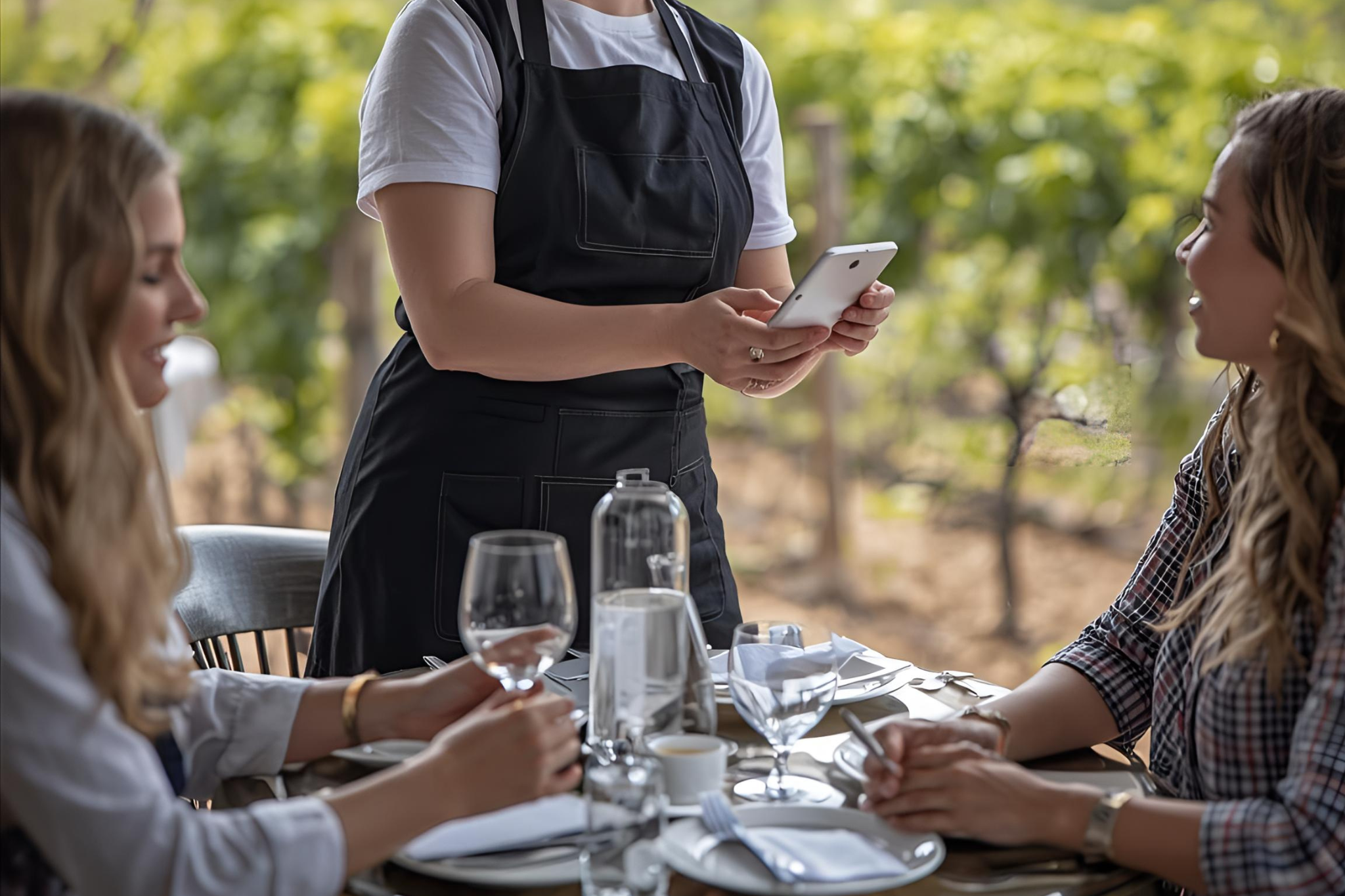
Great wine brings people to your winery. Great hospitality brings them back.
Winery hospitality doesn't stop at the tasting bar anymore, and neither should your point of sale.
Whether guests are exploring the vineyard, relaxing on the patio, attending a member event, or discovering your wines at a festival, they expect buying wine to be just as easy as tasting it. But many wineries are still using POS systems designed for a single checkout counter, creating unnecessary friction for both guests and staff.
A mobile POS changes that. Instead of asking guests to come to the register, it brings the register to the guest, making every interaction faster, more personal, and more connected.
Why Flexibility Matters in Winery Service
Hospitality is the heartbeat of any winery. Guests expect warm, personal interactions, whether they’re standing at your tasting bar or sipping on a hilltop vineyard tour. A mobile POS ensures every one of those interactions is seamless, connected, and personalized.
Wineries are no longer relying solely on tasting room traffic. More are hosting concerts, vineyard dinners, member events, private tastings, and off-site experiences to create new opportunities for direct sales and deeper customer relationships. As the industry continues to evolve, flexibility isn't just nice to have; it's becoming essential.
What they don’t expect is to:
Wait in line just to close out a tab.
Watch staff juggle iPads, card readers, or multiple systems to complete a sale.
Miss out on wine club pricing or loyalty benefits because the "event POS" doesn't connect to your customer data.
Be asked to head back inside just to finish a purchase or join the wine club.
Disjointed POS setups create disjointed experiences. And in an industry built on relationships, that disconnect can be costly.
Meet Customers Where They Are (Literally)
The best winery experiences happen when service comes to the guest, not the other way around. Whether you're on the patio, hosting a vineyard tour, pouring at a festival, or helping members during a pickup event, every interaction is an opportunity to create a memorable experience, and complete a sale without missing a beat.
With a mobile POS designed for wineries, your team can:
Open a tab anywhere. From the vineyard lawn to a festival booth, start a tab instantly without directing guests back inside.
Stay connected almost anywhere. Whether you're using LTE or Wi-Fi, transactions keep flowing from the tasting room to the vineyard and everywhere in between.
Access wine club details on the spot. View membership status, saved cards, purchase history, and customer preferences, making it easy to deliver a more personalized experience.
Sign up members instantly. Enroll guests in your wine club while the excitement is fresh, without paper forms or follow-up emails.
Offer personalized service at scale. Store guest names, notes, and preferences directly in your CRM so every interaction feels familiar, whether it's their first visit or their fiftieth.
Instead of simply processing a transaction, you're building a relationship. Every interaction becomes an opportunity to strengthen loyalty, capture valuable customer data, and create the kind of personalized experience that keeps guests coming back.
Beyond Transactions: Turning Moments Into Memberships
The difference between a transaction and a long-term customer is often timing. The best opportunities to sell wine or grow your club happen when guests are fully engaged in the experience—not when they're standing in line at the register.
Corksy Go isn't just a handheld POS. It's your wine club sign-up tool, payment terminal, CRM, and customer profile, all in one device.
Picture this:
A guest joins a vineyard tour. By the end, they're so impressed they decide to join your wine club. Instead of asking them to head back inside, you enroll them on the spot, securely save their card, and they leave as a member before the tour is even over.
At a festival booth, someone falls in love with your Syrah but doesn't want to carry bottles around all afternoon. You process the sale, schedule the shipment, and capture their information for future marketing—all from the same device.
A returning guest comes in for a tasting. Before you even pour the first wine, you can see their favorite varietals, past purchases, club status, and saved payment method. Instead of starting from scratch, the conversation picks up right where it left off.
These are the moments that build loyalty. When technology gets out of the way, your staff can focus on creating connections that last long after the last pour.
Why Legacy Systems Fall Short
Many legacy POS systems weren't built for the way wineries operate today. As wineries have expanded beyond the traditional tasting bar, too many teams are left juggling disconnected tools that create extra work for staff and unnecessary friction for guests.
The reality often looks like this:
Separate apps or card readers for events and off-site sales.
Customer information that's missing, duplicated, or spread across multiple systems.
Inventory that doesn't update in real time.
Manual wine club enrollments after the guest has already left.
A checkout experience that feels anything but premium.
Guests may not know what's happening behind the scenes, but they notice when service slows down or feels disconnected. And in a world where consumers can check out tableside at a restaurant or make a purchase anywhere in an Apple Store, wineries can't afford to let outdated technology get in the way of great hospitality.
Corksy Go: Built for the Modern Winery
Corksy Go brings your POS, payment processing, wine club, and CRM together in one handheld device—giving your team everything they need to serve guests wherever the experience takes them.
Whether you're pouring at a festival, hosting a vineyard tour, serving members during a pickup event, or checking guests out from the patio, Corksy Go helps wineries:
Stay connected with LTE or Wi-Fi, so your team can keep selling wherever they're serving.
Keep customer, wine club, and POS data connected in real time.
Enroll wine club members instantly and securely save payment methods for future purchases.
Accept Apple Pay, Google Pay, and all major credit cards from one device.
Access customer history, preferences, and club status to deliver a more personalized experience.
Open tabs, apply discounts, and complete transactions in just a few taps.
Final Pour
The wine may bring guests through your doors, but the experience is what keeps them coming back.
As wineries continue to create more opportunities beyond the tasting bar—from vineyard tours and member events to festivals and private tastings—the ability to sell, serve, and sign up members from anywhere is quickly becoming part of delivering great hospitality.
A mobile POS isn't just about accepting payments. It's about removing friction, keeping your customer data connected, and giving your team the tools to create a more personal experience from the first pour to the final purchase.
With Corksy Go, your staff can focus less on the technology in their hands and more on the guest standing in front of them.
Ready to see Corksy Go in action? Visit corksy.io/go to learn more or schedule a demo.