

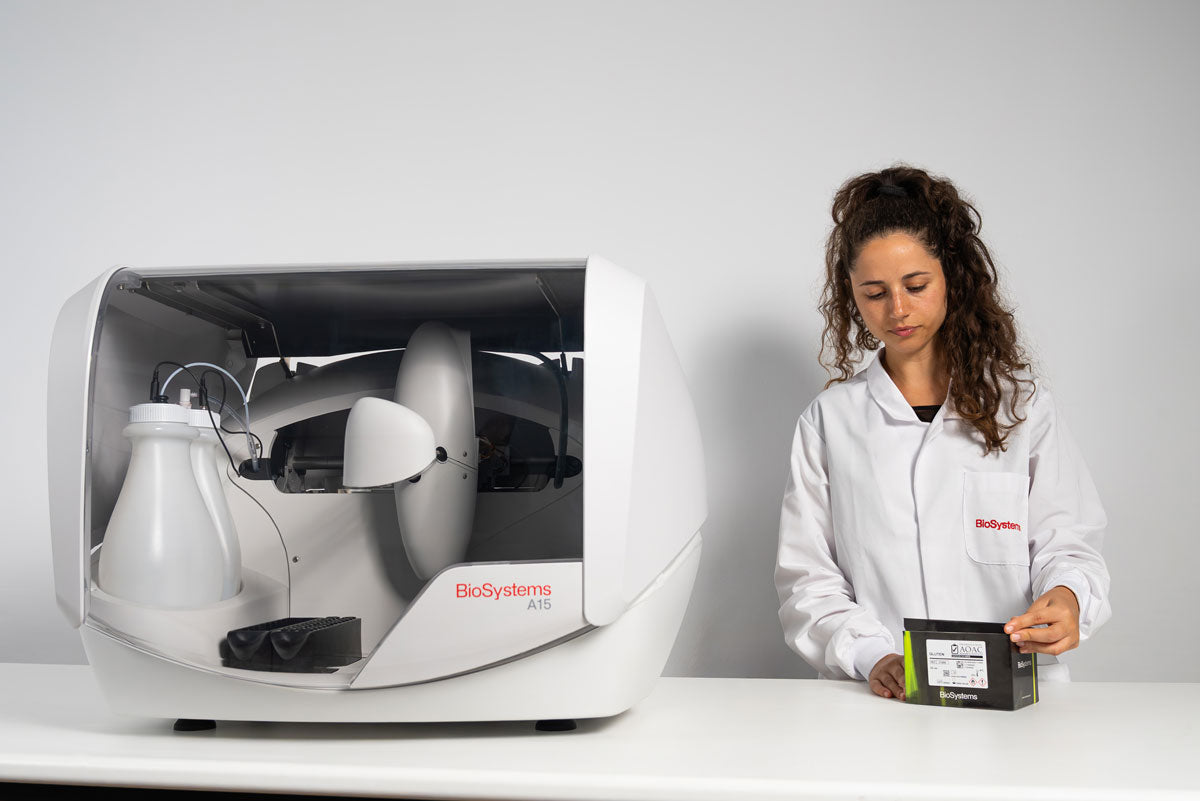
Automated wine analysis replaces manual, step-by-step bench chemistry with instruments that draw the sample, run the method, and return a result with little to no operator handling in between. For a winery laboratory, that shift changes how much testing a lab manager can run in a day and how much of that work depends on one person being available and steady-handed.
What Is Automated Wine Analysis?
Automated wine analysis is laboratory testing in which an instrument, not a technician, performs the mechanical steps of a method: measuring the sample, adding reagent, mixing, incubating, reading the result, and recording the data. The technician's role shifts from performing each step by hand to loading samples, reviewing results, and managing exceptions.
Manual bench testing for wine chemistry typically involves pipetting reagents, timing reactions, and reading a result on a separate instrument or by visual comparison, one sample at a time. An automated system such as the BioSystems SPICA runs the same enzymatic and colorimetric methods, but the instrument controls timing and volume precisely for every sample in the batch, and the operator's attention is freed for other cellar or lab work while it runs.
The distinction that matters operationally is not "instrument versus no instrument." Most winery labs already use instruments for individual tests. The distinction is whether the workflow around those instruments still depends on a person executing each step manually, sample by sample, or whether a system carries a batch through the method with the operator supervising rather than executing.
How Does the Automated Wine Analysis Workflow Work?
A typical automated wine analysis workflow follows five stages, whether the lab is running enzymatic panels, colorimetric tests, or automated... READ MORE
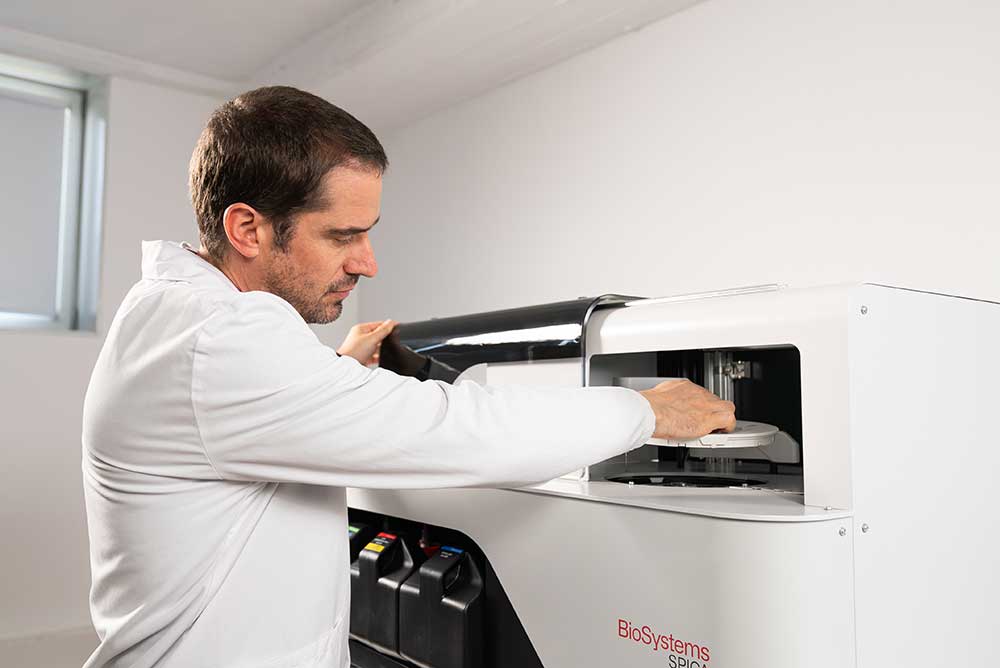
Laboratory
A wine analyzer is a laboratory instrument that measures a wine's chemical properties, such as pH, titratable acidity, sulfur dioxide, organic acids, sugar content, and more using automated enzymatic, colorimetric, or titration methods instead of manual bench chemistry. Winery labs rely on these results to make production decisions during fermentation, aging, and before bottling, when accurate, fast answers directly affect wine quality.
A wine analyzer is only the right fit if it matches six things about your lab: how many samples you run, which analytes you need, who is running the bench, how much automation your team can support, what happens when something breaks, and what your budget actually allows. Get those six inputs right first, and the product comparison becomes straightforward.
What Factors Actually Determine the Right Wine Analyzer?
The right wine analyzer is the one that fits your lab's sample volume, analyte list, staffing, automation needs, support expectations, and budget, in that order. Labs that start with a product name before answering those six questions tend to end up with equipment that is oversized, undersized, or missing a method they need during harvest. The sections below walk through each factor and point to where... READ THE FULL GUIDE HERE

What if you didn’t have to spend time preparing solutions or diluting reagents?
With BioSystems reagents, you don’t have to.
- Ready-to-use formats
- Pre-calibrated concentrations
- Clear instructions and support from Admeo
That means you can focus on your analysis, not on mixing, labeling, and recalculating.
Simple, consistent, and efficient enzymatic testing right from your bench.

Tannins are a group of phenolic compounds found naturally in the skin, seeds and stems of grapes used in wine, as well as in the barrels where wine is aged.
Traditional methods of tannin determination require the preparation of specific reagent solutions and are demanding in time and preparation. The Tannins kit is based on the methylcellulose precipitable method (MCP), improving its usability and stability. The MCP technique captures both tannin types and pigment-bound forms, giving a clearer picture of a wine’s structure and future evolution.
Our analyzers use UV-Vis spectrophotometry, which measures light absorption at specific wavelengths associated with tannins. This provides an objective, accurate and reproducible measurement of tannin content, allowing the winemaker to control its extraction during maceration, its evolution during aging and its influence on the stability and final quality of the wine.
Are you curious to learn more about measuring tannins? Please reach out to us, we would love to chat!

As we are in bottling season, free sulfite deserves extra attention.
Free SO₂ is your last line of defense against oxidation and microbial spoilage. Levels can shift more than expected after racking, blending, or filtration.
Before bottling, make sure to:
• Measure and confirm free SO₂
• Adjust based on pH and desired molecular SO₂
• Recheck after final additions and just prior to filling
A few ppm can make the difference between a wine that evolves beautifully and one that fades prematurely.
Please reach out if you’d like to chat about automated solutions for checking free sulfite.

Precision and repeatability are essential in wine quality control.
Steroglass' FLASH2 automatic titrator performs rapid and reliable analyses on key parameters such as pH, total acidity and free and combined sulfur dioxide, with automatic equivalence point detection.
A compact, intuitive instrument that is perfect for improving efficiency in wine laboratories, reducing errors and working times.

Come chat with us at our Open House April 22–23 to talk about all things in-house QC! 🍇
See our analyzers up close, ask questions, and explore how labs are saving time with automation.
No formal presentations, simply good conversation and practical solutions. We can't wait to see you there!

Come chat with us at our Open House April 22–23 to talk about all things in-house QC! 🍇
See our analyzers up close, ask questions, and explore how labs are saving time with automation.
No formal presentations, simply good conversation and practical solutions. We can't wait to see you there!
Who are the women behind your favorite wines?
Please tag the dedicated women that make your winery what it is, let's cheers to them! 🥂
From the vineyard to the cellar to selling the bottle, women's expertise, passions and contributions impact the industry every day. We celebrate you!

How do you ensure that your wine is ready for bottling, cold stable and free of the dreaded tartaric acid crystals?
For some wineries getting this certainty can be a nightmare both in terms of time, costs and space.
With EasyCheck from Admeo you get the all-important confidence before bottling ensuring your wine is cold stable.
What’s more, EasyCheck also provides precision temperature control meaning accurate, repeatable results.
With EasyCheck you get your data in minutes, not hours and get real-time results that could take weeks off your QC process.