

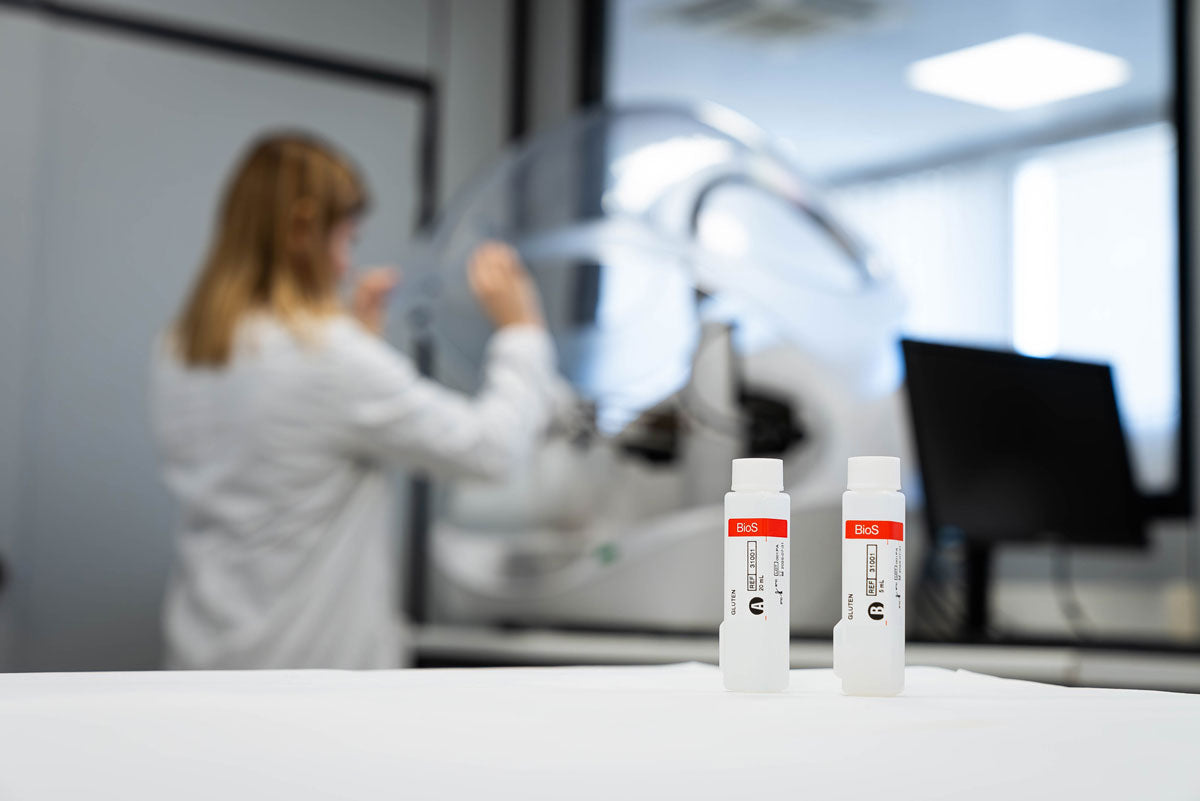
 A winery lab technician running manual titrations for pH, titratable acidity, and free SO2 spends most of a testing session on setup, pipetting, and sample handling, not on interpreting the result itself. That balance of hands-on time versus analytical time is the practical difference separating manual and automated wine testing, and it becomes most visible during harvest, when sample volume rises faster than staffing does.
This guide compares manual and automated wine testing across operator time, repeatability, scalability, and the winery profiles each approach fits best, so a lab manager or winemaker can match the method to the laboratory's actual testing load.
What Is the Difference Between Manual and Automated Wine Testing?
Manual wine testing relies on an operator performing each step of an analytical method by hand: measuring reagents, running a titration to a visual or electronic endpoint, and recording the result. Automated wine testing uses an instrument, such as an enzymatic analyzer or automatic titrator, to carry out the reaction and endpoint detection with limited operator intervention beyond loading the sample and reagents.
Both approaches can use the same underlying chemistry. Enzymatic analysis of glucose, fructose, malic acid, or acetic acid, for example, follows established methods whether a technician runs it on a benchtop spectrophotometer or an automated analyzer processes it in sequence. The difference is not the science; it is how much of the workflow depends on continuous, hands-on operator attention.
How Much Operator Time Does Each Method Require?
Manual testing requires an operator present for the full duration of each analysis: reagent preparation, sample introduction, endpoint monitoring, and result logging. A technician running several manual titrations in sequence cannot easily step away mid-run without risking a missed endpoint or a timing error that affects... READ MORE