AI is becoming part of the everyday DTC toolkit. How can wineries – and those that support the wine industry – use it thoughtfully while understanding its full cost?
Recently, Wineshipping, RedChirp, Commerce7, and WISE hosted a three-stop roadshow on the West Coast. We heard plenty of thoughtful questions from winery leaders along the way, but one question stumped us all. A leader from a winery with a strong commitment to environmental sustainability asked:
“How should a winery that has built our brand on being green reconcile the environmental impact of artificial intelligence (and data centers usage) that is embedded in winery technology?”
Another winery leader added an important counterpoint: “AI is quickly becoming a competitive advantage, and waiting too long to use it carries a cost, too. If we don’t adopt AI, does the winery run the risk of being less competitive, and the vineyard getting ripped out to be a data center?”
The conversation stayed with us long after the session ended. Later that night, all of us were perplexed, and tried to navigate unchartered waters together. Eventually, we continued talking with other wine industry technology and service providers, we began to see a useful way to frame the issue:
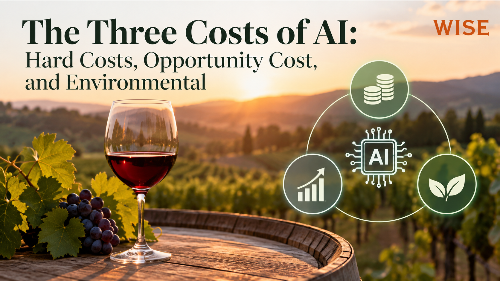
AI carries three costs: hard costs, opportunity cost, and environmental cost.
The wine industry is still learning about all three. That gives us an opportunity to approach the conversation with curiosity and intention – the WISE way.
Cost One: Hard Costs
AI can feel nearly free when someone types a question into a chat window and receives an answer within seconds. Behind that interaction is a much larger technology infrastructure.
For wineries, the hard costs or explicit costs (line items that leave your bank account) are financial and operational outlays. These may include software subscriptions, platform upgrades, implementation, employee training, data preparation, developing and putting company policies into practice, and paid staff time spent reviewing and refining AI-generated work.
Technology companies also pay for model access, computing capacity, product development, testing, security, storage, and support.
Commerce7 provides a helpful example. AI is already embedded across its software, including Ask Pip, Customer Insights, Churn Prediction, Signup Prediction, Personalized Products, and Reservation Standup. Commerce7 noted that its current AI use costs approximately $1,000 per day. That expense may not appear as a separate line item for the winery, but it is part of what it takes to build and operate the tools wineries increasingly expect.
Enolytics raised another practical consideration: wineries are not necessarily volunteering to pay more because a vendor uses AI. Many providers are currently absorbing at least part of the expense as an investment in stronger products and customer experiences. This makes the business case important. An AI feature should have a clear purpose and create enough value to justify the investment.
Awtomic is taking a measured approach. The company currently uses AI in engineering, product development, and customer support. It is also exploring applications that could improve onboarding, analytics, and connections with tools such as Claude and Shopify Sidekick. Its approach is simple: use AI when it meaningfully improves productivity or the customer experience. That is a useful standard for wineries, too.
Cost Two: Opportunity Cost
Few technologies have encouraged wine businesses to experiment as quickly as AI, which matters in an industry where technology adoption has often been slow and fragmented. For wineries, the opportunity cost of waiting is the value of work they could have improved, decisions they could have made sooner, and staff time they could have put to better use. That cost will differ by winery, but it may show up in routine tasks that continue to take hours, useful patterns buried in customer data, or outreach that arrives too late to be relevant.
Enolytics has used machine learning for years to recognize patterns and surface insights from winery data. Generative AI has made that work more visible and interactive. Enolytics described the difference this way: “Machine learning is the engine; AI is the whole car.”
With an interactive AI tool such as Enolytics’ Robin, an employee can ask a question in plain English, receive an answer, refine the request, and continue the conversation. This accessibility creates possibilities for teams that may not have dedicated analysts, large marketing departments, or extensive technical resources. It can also give employees more time for the work people do especially well: building relationships, coaching employees, and creating memorable guest experiences.
To be clear: AI remains a tool. These benefits are possibilities, not guarantees. A well-written email still needs the right audience and a compelling offer. A prediction is only as useful as the data behind it. AI can help a manager prepare for a coaching conversation, but the manager still needs to deliver it.
A practical starting point is to identify one repeatable task, measure how it is being handled today, test whether AI improves the work, and decide how the time saved can be used more effectively. That gives wineries a way to assess both the cost of adopting AI and the cost of continuing as it is.
Cost Three: Environmental
AI may feel invisible, but it runs on physical infrastructure. AI models are trained and operated in data centers that require electricity, cooling, water, hardware, and physical infrastructure. As AI use grows, so does demand for that infrastructure. The International Energy Agency estimates that worldwide electricity consumption from all data centers could nearly double between 2025 and 2030, reaching approximately 950 terawatt-hours. AI-focused data centers are expected to grow even faster.
At the same time, the energy efficiency of individual AI tasks is improving quickly. There is no single answer to the question, “What is the carbon footprint of an AI prompt?” It depends on the model, the complexity of the request, the length of the response, the data center, and the electricity powering it. A short text question requires far fewer resources than a complex reasoning task, an AI-generated image, or a video.
Wineshipping put everyday AI use into perspective by comparing it to shipping a 40-pound package from California to New York.
Ground shipping produces about 80–85% fewer emissions than air shipping. The emissions saved by choosing ground could be comparable to roughly 400,000 ordinary text-only AI questions or about 60 years of asking 20 questions a day.
These are directional estimates. Actual emissions vary based on shipping methods, AI use, and energy sources.
Nevertheless, the comparison helps put our choices in perspective. AI’s environmental footprint matters, and it belongs within the winery’s larger environmental picture. For many wineries, freight mode, expedited deliveries, packaging weight, refrigeration, travel, and waste may offer larger and more measurable opportunities for immediate improvement. AI may also help reduce some of those costs through better forecasting, order consolidation, inventory planning, staffing, routing, and earlier identification of operational problems.
For wineries, the practical question is what AI use accomplishes. Its footprint belongs in the broader environmental picture alongside shipping, packaging, refrigeration, travel, and waste. A winery might use AI to improve forecasts and avoid unnecessary shipments or spoiled inventory. Those savings should be measured where possible, rather than assumed. The goal is to use AI thoughtfully and evaluate both the resources it consumes and the resources it helps save.
The outcome matters. “We used AI” tells us very little. “We reduced expedited shipments” or “we improved forecasting and eliminated unnecessary waste” gives us something useful to evaluate.
Taking a First Step
The original question prompted several companies to act.
RedChirp, Commerce7, New Vintage Labs, and Enolytics, have committed to purchasing carbon offsets.
Offsets are one part of a broader sustainability effort. If a winery wanted to pursue this route, consider looking for credible, independently verified options and that communicate honestly about what their investment covers.
For example, RedChirp recently published their formal commitment to offsetting the carbon footprint of AI, outlining how they calculate and offset the environmental cost of every AI interaction across their platform.
They can also begin with a few practical questions:
What problem are we using AI to solve?
What does it cost?
What value does it create?
How will we measure the result?
What can our technology provider tell us about its environmental approach?
Where are the larger environmental opportunities within our operation?
If you are a vendor and use AI to support the wine industry, we invite you to join this effort. Email WISE to tell us how your organization is working to understand, reduce, or offset the environmental impact of its AI use. We will be glad to add your company to this growing list.
The companies participating in this conversation do not have every answer. Neither do we. What we have is a practical framework and a willingness to keep learning together.
AI carries a hard cost. It carries an opportunity cost. It carries an environmental cost.
Understanding all three can help us decide where AI belongs, how it can serve our businesses, and how we can use it responsibly.
Walk into almost any tasting room and you’ll hear a familiar introduction: “This is a blend of Cabernet Sauvignon and Merlot. It spent 18 months in French oak. The fruit comes from three estate vineyards, harvested by hand…”
None of those things are wrong. They’re also not why most people buy wine.
People don’t fall in love with barrel programs. They don’t become loyal because of a blend percentage. They don’t tell their friends about the clone selection or the fermentation protocol. They remember the story.
At WISE, we often say, “Brand first. Wine second.” Not because the wine isn’t important. It absolutely is, but exceptional wine is no longer enough to stand out. There is another beautiful Cabernet down the road… Another thoughtfully crafted Chardonnay across the valley…Another talented winemaker making excellent wine.
Your competitive advantage isn’t simply what’s in the bottle. It’s the story that gives the bottle meaning.
People Remember Meaning
Think about the last great book you read or movie you watched. You probably don’t remember every detail. You remember how it made you feel. Wine works the same way.
Guests may forget the exact percentage of Petit Verdot in your Bordeaux blend. They won’t forget the story about the grandmother who inspired the winery.
They’ll remember the rescue dog whose name appears on the label.
They’ll remember the vineyard that survived a wildfire.
They’ll remember the family’s fourth generation farming the same land.
Stories create emotional anchors. Facts provide information. Stories create connection. That’s the difference between making a sale and creating a fan.
Start With Why
Simon Sinek’s bestselling book and TED Talk, Start With Why, challenged organizations to think differently about how they communicate. The concept is simple. People don’t buy what you do. They buy why you do it. That applies just as much in a tasting room as it does in the boardroom.
Instead of beginning with: “This wine spent 18 months in French oak.”
Try beginning with: “Our winemaker wanted to create a Cabernet that reminded him of the wines his father shared around the dinner table. Every decision, from vineyard selection to barrel aging, was made to create elegance instead of power.”
Now the barrel program has context.
Now the wine has purpose.
Now the guest has something they’ll remember.
The technical details haven’t changed. The meaning has.
Facts Answer Questions. Stories Create Questions.
One of the easiest ways to know whether you’re creating a memorable experience is to pay attention to what happens next. Facts answer questions. Stories create questions.
A guest rarely interrupts to ask, “Tell me more about the barrel regimen.” But they’ll absolutely lean in and ask,
“Wait…why did you name it after the dog?”
Or…“Who was your grandmother?”
Or…“How did your family end up here?”
That’s the beginning of a conversation. And conversations build relationships.
The best tasting room professionals don’t just educate. They create curiosity. Because curious guests stay engaged. They ask more questions. They spend more time with your brand. They remember more. And they’re far more likely to share those stories with others after they leave.
Tell Stories They Can Retell
One of the simplest tests for a great tasting room story is this: Can your guest tell it again tomorrow? Because that’s exactly what they’ll do.
When they open your bottle at home…
When they bring it to dinner…
When someone asks where they found it…
They’re not likely to say: “It was 72% Cabernet and aged in 40% new French oak.”
They’re much more likely to say: “This winery named the wine after the owner’s rescue dog.”
Or… “Their family has been farming that hillside for four generations.”
Or… “The winemaker wanted this wine to remind people that great wines are meant to be shared around a table, not collected on a shelf.”
Those are stories worth repeating. And every time they’re repeated, your brand grows stronger.
The Opportunity We See Every Day
Through WISE Mystery Shopping, we’ve experienced thousands of tasting room visits across North America. One opportunity continues to stand out. Many wineries are still leading with information instead of inspiration.
Our 2026 mid-year results found that only 48% of winery visits effectively communicated what made the brand truly differentiated, and just 58% created memorable brand stories.
Those numbers represent more than missed sales opportunities. They represent missed relationship opportunities. Because memorable brands aren’t built by reciting tasting notes. They’re built by giving guests something worth remembering.
Every Bottle Has Two Stories
The first story is about the wine.
How it was grown.
How it was made.
How it tastes.
The second story is about your brand.
Why this winery exists.
Why these people dedicate their lives to making wine.
Why this place matters.
The best tasting room professionals know how to weave those two stories together. They use the wine to introduce the brand. Then they use the brand to give the wine meaning. Because at the end of the day, you’re not simply pouring wine. You’re inviting someone into a story they want to become part of. And that’s what keeps them coming back.
Here’s a challenge for your next tasting or event. Before you memorize another technical detail about a wine, ask yourself one question: “If my guest remembers only one thing about this wine tomorrow, what do I hope it is?” If the answer is a blend percentage, keep digging. If the answer is a story they’ll share with someone else, you’re building something much more valuable than a sale. You’re no longer competing bottle against bottle. You’re competing story against story.
And the brands with the best stories are the ones people remember, recommend, and return to.
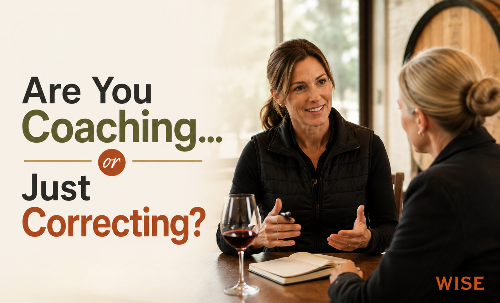
The highest-performing winery teams don’t wait for problems to coach.
They coach so problems happen less often.
For many leaders, coaching has become synonymous with difficult conversations.
An employee misses a goal.
A guest leaves unhappy.
A policy isn’t followed.
Sales decline.
Only then does the coaching begin.
That’s not coaching. That’s consequence management. The best leaders understand that coaching is not an event. It’s a rhythm.
It’s a regular, consistent conversation that helps people improve their skills, remove obstacles, and grow their confidence before performance ever becomes a problem.
At WISE, we believe great coaching builds stronger leaders, healthier teams, and more profitable customer relationships. That doesn’t happen through annual reviews or corrective action alone. It happens through intentional conversations that create clarity, accountability, and continuous improvement.
Coaching Is About Development, Not Discipline
Every winery leader has moments that require direct feedback. Compliance matters. Safety matters. Hospitality standards matter.
There are times when leaders must be clear, decisive, and directive. Those conversations will always be part of leadership. They simply shouldn’t be the only coaching your team experiences.
When coaching only appears after something goes wrong, employees begin to associate feedback with failure. They become defensive instead of curious.
Developmental coaching creates the opposite effect. It normalizes feedback. It creates trust. It encourages experimentation. Most importantly, it shifts the conversation from, “Here’s what you did wrong,” to, “Let’s talk about how you can continue growing.”
Meet People Where They Are
One of the frameworks we teach throughout WISE Leadership programs is that effective leaders adapt their coaching to the individual, not the other way around.
A brand-new tasting room associate needs clear direction, structure, and frequent check-ins. As experience and confidence grow, that same employee benefits from more collaboration, greater autonomy, and coaching that asks thoughtful questions instead of simply providing answers. Leadership isn’t about having one coaching style. It’s about recognizing what each team member needs today and helping them prepare for tomorrow.
Great coaches are constantly asking:
What skills does this person need to build?
What obstacles are standing in their way?
How can I help them become more successful without solving every problem for them?
Make the Business Visible
One of the most powerful coaching tools is transparency. People make better decisions when they understand how the business works.
Share the metrics.
Celebrate progress.
Discuss challenges openly.
Help your team understand how today’s guest experience influences tomorrow’s wine club growth, customer retention, online reviews, and long-term profitability.
This philosophy, often referred to as Open Book Management, creates ownership instead of compliance. When employees understand the “why” behind the numbers, they begin thinking like business partners instead of task managers. That perspective changes everything.
Coaching Across Generations
Today’s workforce expects something different from leadership than previous generations.
Millennials challenged organizations to answer an important question: Why does my work matter?
Gen Z has continued that conversation by asking leaders to create opportunities for learning, collaboration, and meaningful contribution. Both generations respond well when leaders invite them into the problem-solving process instead of simply handing them the solution.
Rather than saying: “Here’s what we’re going to do.”
Try asking:
“What do you think is getting in the way?”
“If this were your business, what would you change?”
“What support would help you be more successful?”
Those questions develop critical thinking, ownership, and confidence.
The goal isn’t to create employees who wait for instructions. The goal is to develop leaders who think independently and contribute ideas that strengthen the business.
Coaching Should Be Scheduled, Not Accidental
The healthiest coaching cultures don’t rely on good intentions. They build systems.
Weekly one-on-ones.
Monthly development conversations.
Quarterly career discussions.
Daily observations followed by immediate feedback.
Regular coaching removes the anxiety surrounding feedback because it becomes part of everyday leadership. Instead of wondering whether they’re in trouble, employees begin expecting conversations that help them improve. That’s where real growth happens.
The Future Belongs to Coaching Cultures
The wineries that will thrive over the next decade won’t simply hire great people.
They’ll develop them.
They’ll build coaching into the rhythm of leadership.
They’ll create environments where feedback is expected, learning is continuous, and every employee understands how their individual contribution strengthens the entire organization.
Because coaching isn’t about correcting yesterday. It’s about preparing people for what’s next.
Join Us
If you’re ready to build a stronger coaching culture, we’d love to have you join us for WISE #301: Mastering Leadership Coaching.
Together, we’ll explore practical coaching frameworks, adaptive leadership techniques, developmental conversations, accountability strategies, and real-world tools you can implement immediately with your team.
Whether you lead a tasting room, oversee a department, or guide an entire organization, coaching is one of the highest-return investments you can make in your people.
Your team deserves more than a manager. They deserve a coach.
One of the biggest mistakes we see wineries make isn’t during a wine tasting experience at the winery.
It’s what happens after the tasting.
A guest visits, they enjoy the experience, perhaps they buy a few bottles, but they aren’t quite ready to join the wine club.
Then they leave…and we have no way to continue the conversation, the relationship.
We hope they’ll remember us. We hope they’ll come back. We hope they’ll tell their friends.
Hope is not a strategy.
Today’s visitor may become tomorrow’s wine club member, next quarter’s corporate gifting client, a future event attendee, a roadshow guest, and eventually a loyal advocate who introduces your winery to dozens of new customers over the next decade.
But only if you earn permission to stay in touch.
That’s why we believe data capture is one of the most underappreciated growth strategies in DTC.
Not data collection for the sake of filling a CRM or Point-of-Sale platform, but REAL relationship building.
Every guest should have an easy, frictionless opportunity to share their information with informed consent, technology has made this remarkably simple, beyond pen and paper.
QR codes.
NFC tap-to-share technology.
Guest check-in platforms like RedChirp‘s.
When guests voluntarily provide their information early in the tasting experience, your team spends less time typing, your records are more accurate, and checkout becomes faster because much of the work is already done.
More importantly…the relationship doesn’t have to end when they walk out the front door. The tasting experience should be more than a one-time transaction based on hope for more.
With permission, you can continue sharing stories, new releases, upcoming events, and invitations that are relevant to their interests. The richer the data, the more meaningful those conversations and relationships become.
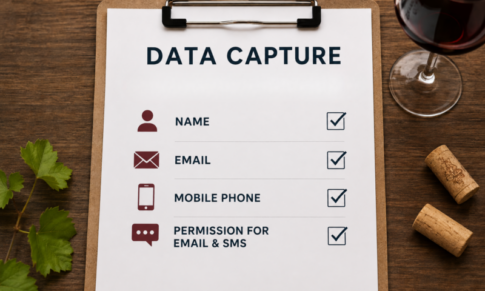
At a minimum, consider capturing:
First and last name
Email address
Mobile phone number
Permission for email and SMS communication
If your experience allows, consider adding:
ZIP code
Wine preferences
Upcoming milestone celebrations
Corporate gifting potential
How they discovered your winery
Source codes (where they first interacted with the winery) such as tasting room, roadshow, member referral, or event
Better data doesn’t mean sending more messages, but it means sending better ones. The goal isn’t to build a bigger database, it’s to build more relationships.
Every guest who walks through your door has already raised their hand and said, “I’m interested enough to spend time with your brand.” Don’t let that opportunity disappear because you never asked for permission to continue the conversation.
How are you capturing guest information today, and what has worked best for your team?
One final thought: Wine clubs are rarely won in a single conversation. They’re earned through a series of positive interactions. Data capture is what makes the second conversation possible.

There’s a quiet shift happening in tasting rooms right now, and it’s costing wineries more than they realize.
A guest walks in. The experience is warm, engaging, and thoughtful. The wines are poured with care. There’s connection, conversation, even enthusiasm. And then… nothing.
No mention of the wine club. No invitation to continue the relationship. No next step.
Recent WISE Mystery Shopping data tells a clear story: the industry isn’t getting “less pushy,” it’s getting quieter. In Q1 (January – March), our mystery shopping revealed that staff effectively presenting wine club dropped from a 2025 average of 35% down to just 13%.
That’s not a subtle dip. That’s a behavioral shift. When did hospitality get so quiet?
What We’re Hearing from Teams
When we talk to tasting room teams, the intention is clear – and it’s a good one.
“I don’t want to sound pushy.”
“Guests will join if they want to.”
“It feels salesy to bring it up.”
This isn’t about lack of care. It’s a misunderstanding of what great hospitality actually includes.
While the intention is to respect the guest, the impact is often a missed opportunity for both the guest and the winery.
The Hidden Influence: Selling with Our Own Wallets
We’re operating in a moment filled with economic uncertainty, political noise, and “doom and gloom” headlines about the wine industry. Whether we realize it or not, that environment shapes how teams show up on the floor.
We start to make assumptions:
“People probably aren’t spending right now.”
“They won’t be interested.”
And without meaning to, we begin selling with our own wallets instead of serving the guest in front of us. This is where the Platinum Rule matters most.
The Golden Rule says: treat others the way you would want to be treated.
The Platinum Rule asks more: understand what they want and respond to that.
Not every guest is hesitant. Not every guest is constrained. Many see a wine club as convenience, access, even joy. When we decide for them – without offering, explaining, or inviting – we’re not being thoughtful. We’re being assumptive.
The Data Doesn’t Lie (But It Does Tell a Story)
At WISE, we look at the Triple Score:
Asking for the order
Presenting the wine club
Capturing contact data
And increasingly, we’re seeing wine club presentation become the lowest – and now declining – behavior.
Winery DTC metrics will tell us what is happening. Mystery shopping tells us why.
If your tasting room club conversion rate is below ~6% for a seated experience, chances are very high the wine club isn’t being meaningfully introduced, if at all. Often, it’s mentioned once, briefly, or at the very end, when the guest is already mentally checking out.
When a behavior disappears, it’s rarely accidental. It’s cultural.
The Missed Invitation
One recent mystery shop in Sonoma captured this perfectly. When asked what the staff member shared about the wine club, the shopper responded:
“NOTHING. I mentioned other clubs by name/frequency/favorite wines I reorder. I mentioned allocation lists. We still don’t know if they even have a club.”
Let that sink in. The guest opened the door, and the team still didn’t walk through it.
Now contrast that with a shop in the Willamette Valley, where the approach felt natural, thoughtful, and genuinely helpful:
“Since you two don’t live nearby, joining the club is a perfect excuse to come back and see us. We have 4 club events per year & give great discounts and early access on the wine…”
The shopper’s reaction?
“Fantastic. I would never think to use DISTANCE as a selling point, but it sounded awesome and was super convincing!”
Same concept. Two completely different experiences. One is silent. One is hospitality.
The Big Reframe: Sales = Hospitality
Here’s where we need to shift the lens.
If we’re being pushy – scripted, self-serving, tone-deaf – then yes, it is pushy. But if we’re being helpful – connecting the dots between what the guest enjoyed and what would enhance their experience – then we’re doing our job.
Sales, at its best, is simply an extension of great hospitality. It’s not about “closing.” It’s about continuing.
And often, what feels like “mentioning the club” is really just hinting without ever making the invitation clear.
Teams often believe they’re talking about the club more than they actually are. Dropping hints like:
“This was in our last club shipment…”
“This is a club favorite…”
“This one sells out quickly; club members get it first…”
These build awareness. They plant seeds. But they’re not the invitation.
If We Don’t Mention It, We’re Not Being Polite – We’re Being Incomplete
Guests don’t always know what to ask for. That’s why they’re there. When we skip the wine club conversation entirely:
Guests miss out on something they may genuinely value
Wineries miss the opportunity to extend the relationship
The experience stays transactional instead of relational
Not mentioning the club isn’t restraint, it’s a missed hospitality moment.
From Pushy to Purposeful: What Good Looks Like
So what does this look like in practice? It’s not about scripts. It’s about intention.
Anchor it in the guest: “You mentioned loving the Pinot…”
Position it as a benefit: Access, convenience, insider experience, not obligation.
Make it conversational: An invitation, not a presentation.
Normalize it: “A lot of our guests choose this because…”
And most importantly: Use what you’ve learned. This is where the Platinum Rule comes to life: serving them, not your default approach.
A Simple Analogy
Think about walking into a retail store and trying on clothes. A great associate doesn’t drop you in the fitting room and disappear. They:
Bring different sizes
Suggest pieces to complete the look
Check in
Offer to take items to the register
Now imagine the opposite. You’re left alone. No follow-up. No guidance. That’s not less pushy. That’s less helpful.
A Leadership Note: This Is a Culture Conversation
This isn’t just a training issue– it’s a leadership one. If teams feel:
Unclear → they avoid
Uncomfortable → they skip
Unsure → they retreat
They need:
Clear language
Modeled behavior
Reinforcement that this is part of great hospitality
Teams don’t avoid what they’re trained on. They avoid what they’re not confident owning. People respect what we inspect. Clear goals, consistent reinforcement, and the right tools; it’s on us as leaders to set the standard.
The Invitation Matters
Guests come to wineries for connection, discovery, and experience. The wine club is simply the continuation of that experience. It’s not a sales moment. It’s an invitation. And right now, too many guests are leaving without ever being invited.
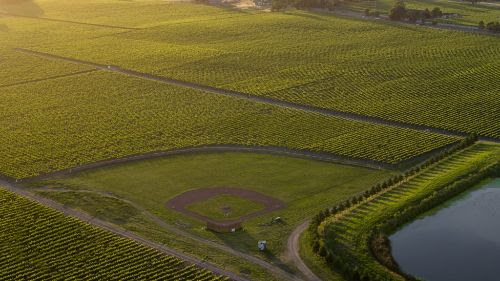
In the film Field of Dreams, a quiet voice whispers a simple promise: “If you build it, he will come.”
The idea was never really about baseball. It was about creating something meaningful and trusting that the right people would be drawn to it.
The wine industry is standing at a similar crossroads.
For decades, wineries have operated on a simple assumption: make great wine, tell a compelling story, and consumers will come. Craft the product. Earn the accolades. Build the brand.
But the next generation of wine consumers is telling us something different.
Gen Z, now entering legal drinking age and shaping the future of hospitality, is not primarily seeking bottles to collect or scores to chase. Many say they are looking for something more fundamental: connection, community, and places where they can gather with friends away from the constant pull of the digital world.
In other words, they are looking for a third space.
For winery owners, executives, and Direct-to-Consumer leaders, the opportunity ahead is clear. The wineries that thrive in the next decade will not simply sell wine.
They will build environments people want to return to again and again.
The Cultural Shift Toward the Third Space
Sociologist Ray Oldenburg coined the term “third space” to describe places outside of home (the first space) and work (the second space) where people gather, socialize, and build community.
Historically, cafés, pubs, parks, and neighborhood gathering places served this role.
Today, many of those spaces are disappearing. At the same time, research consistently shows younger consumers are actively searching for places that offer authentic in-person experiences.
Polly Hammond of 5forests recently explored this concept in her research on hospitality and the evolving role of gathering spaces. Her work highlights that younger consumers are increasingly drawn to environments that foster belonging, discovery, and shared experience rather than traditional transactional retail models.
Wine has a natural role to play here.
Not as the center of attention.
But as the facilitator of connection.
Experience Over Possessions
Young consumers are leading the shift toward the experience economy, prioritizing memorable activities over physical goods.
Spending on experiences such as events, travel, and entertainment has surged as younger consumers increasingly value connection and memories over material accumulation. (Source: Forbes – The Experience Economy and Gen Z)
Implication for wineries:
Wine may be the product, but the experience surrounding it is what people are truly buying.
Why Traditional Tasting Rooms May Not Resonate
Many tasting rooms today were designed around the priorities of previous generations of wine consumers.
Baby Boomers often approached wine through collection and cellar-building. Wine clubs offered access to allocations and rare releases.
Gen X and Millennials often engaged through scores, prestige, and discovery, influenced by critics, publications, and the excitement of finding the next great bottle.
Those models built extraordinary businesses.
But they were built for a different moment.
- Gen Z consumers often approach wine with different motivations:
- They value experiences over possessions
- They seek casual, social environments
- They want places where they can gather with friends without intimidation
- They are curious about wine but less interested in long-term cellar collecting
When tasting rooms feel designed primarily for previous generations, younger consumers may simply conclude that wine spaces – and wine clubs – are not built for them.
That is not purely a product problem.
It is a relevance problem.
Physical Experiences Still Matter
Despite growing up online, 61% of Gen Z prefers discovering new products in physical spaces rather than online. (Source: PwC Consumer Insights Survey)
Implication for wineries:
Tasting rooms remain one of the wine industry’s greatest strategic assets, but is also one of its most underleveraged for brand strategy.
The Liquid Matters Too
There is also an important nuance in conversations about Gen Z and alcohol consumption.
Yes, some younger consumers are exploring moderation or lower-alcohol options.
But they are also in an age defined by discovery.
When many older generations entered wine, very few began with ultra-premium wines. They started with accessible entry points that allowed them to explore, learn, and develop their palate over time.
That raises an important question for wineries today:
Are we creating those same entry points for this generation?
Exploratory flights, accessible wines, social tastings, and relaxed formats can all serve as a welcoming on-ramp into the category.
The goal is not to dilute wine.
The goal is to invite curiosity.
Gen Z Is Value Conscious
79% of Gen Z consumers report waiting for sales or promotions before making purchases. (Source: PwC Global Consumer Insights)
Implication for wineries:
Accessible experiences and flexible membership structures can lower barriers to entry.
Designing the Winery as a Third Space
If wineries want to attract younger consumers, the conversation must shift from product to environment design.
What would it look like to create a space people want to visit regularly with friends?
- Some possibilities include:
- Comfortable lounge areas for casual hangouts
- Community tables that encourage conversation
- Flexible indoor and outdoor gathering spaces, built around analog experiences
- Programming focused on discovery and participation
- Environments where guests feel comfortable staying longer
In this model, wine becomes the shared medium of connection rather than the sole focus of the visit. The trick is finding something on brand that connects to the analog world.
Real-World Experiences Are Making a Comeback
Gen Z increasingly seeks authentic, tangible experiences to balance digital life. (Source: First Event Experience Economy Research)
Implication for wineries:
Community-driven environments may resonate more than traditional tastings.
Rethinking the Wine Club as a Community
Wine clubs have traditionally revolved around shipments.
But what if the club of the future was designed around community and experience?
Forward-thinking wineries are already experimenting with expanded membership models.
Social Memberships
A lower-commitment membership focused on access to experiences rather than required wine purchases.
- Benefits might include:
- Invitations to monthly gatherings
- Access to members-only events
- Preferred pricing on wine and experiences
- A digital wallet usable for tastings, events, or food pairings
These models can complement traditional wine clubs while opening the door for younger consumers.
Tasting rooms remain one of the wine industry’s greatest strategic assets, but is also one of its most underleveraged for brand strategy.
Community-Centered Events
Events that encourage shared participation help transform wineries into gathering places.
- Examples include:
- Supper clubs
- Vinyl listening nights
- Vineyard yoga or fitness classes
- Analog game nights
- Wine and book clubs
- Creative workshops
- Local artist showcases
- Seasonal harvest gatherings
The common thread is simple:
The winery becomes a place to gather, not just a place to taste.
The Generation to Watch
Gen Z spending is projected to surpass Baby Boomer spending globally by the end of this decade. (Source: McKinsey Consumer Insights)
Implication for wineries:
Engaging this generation now is essential for long-term growth.
Turning Hospitality Into Growth
For Direct-to-Consumer teams, these ideas translate directly into measurable outcomes.
- When guests return regularly:
- Revenue per visitor increases
- Wine club conversion becomes more natural
- Long-term relationships develop
This is where the WISE Triple Score becomes especially powerful.
- Every guest interaction presents three opportunities:
- Ask for the order
- Invite the guest to join the appropriate club or membership
- Capture contact information to continue the relationship
Frontline hospitality teams play a critical role here. Creating an inviting space is only part of the equation.
Teams must confidently invite guests to stay connected so those first visits can grow into lasting relationships.
Practical Steps Wineries Can Take Now
- For wineries beginning to think about attracting younger consumers, consider a few guiding questions:
- Evaluate your environment
Would a group of 25-year-olds feel comfortable spending an afternoon here? - Expand entry points
Consider social memberships or experience-based clubs alongside traditional shipments. - Create recurring events
Consistency builds community and gives guests a reason to return. - Train your team
Hospitality should feel welcoming, curious, and conversational. - Capture the relationship
Make sure every guest interaction includes an invitation to stay connected.
The Opportunity Ahead
The wine industry does not lack great wine.
What it needs are places where people want to gather.
The next generation of wine consumers will not be built solely through distribution channels or critic scores.
They will be built through experiences that create belonging.
When wineries design environments that foster curiosity, friendship, and community, something powerful happens.
People return.
They bring friends.
They become members.
They build traditions.
In the end, the message from Field of Dreams still holds true.
If we build it thoughtfully, with the next generation in mind, they will come.
Wine Industry Sales Education (WISE), the leading provider of Direct-to-Consumer (DTC) sales education, leadership coaching, and certification for the wine industry, today announced the launch of WISE Public Speaking Pathways, a new suite of live, practice-based public speaking courses developed in partnership with Clear Communication Academy (CCA).
Designed specifically for winery professionals, WISE Public Speaking Pathways delivers role-based communication training across every level of the organization, from frontline tasting room staff building confidence with guests, to managers and winemakers representing the winery publicly, to executives speaking with influence and authority.
With both live Zoom and in-person options, the program offers flexible access for individuals and organizations to select the experience that best aligns with their goals, team structure, and growth initiatives.
“Strong communication is not a ‘nice to have’ in today’s DTC environment. It is foundational to sales, brand, and long-term customer relationships,” said Lesley Berglund, Co-Founder of WISE. “Whether it’s a tasting room conversation, a winemaker dinner, or a leadership presentation, wineries need a consistent, compelling brand message delivered with confidence at every level. This partnership allows us to equip teams, from frontline to executive leadership, with the skills to communicate with clarity, authenticity, and impact.”
The curriculum blends WISE’s proven sales and hospitality frameworks with CCA’s globally recognized communication methodology, creating a highly practical, immersive learning experience grounded in real winery scenarios.
WISE is launching the pathway with two core courses:
WISE #120: Public Speaking Fundamentals
Designed for frontline winery staff, this program focuses on the core skills of clear and confident communication. Participants learn how to structure messages, speak comfortably with guests, and deliver engaging explanations of wines, tastings, and experiences. Through guided practice and feedback, participants develop the confidence to represent their winery with clarity and professionalism.
WISE #221: Public Speaking for Managers
Managers and supervisors often serve as the bridge between the winery team and the public. This program expands foundational speaking skills with a focus on storytelling, helping managers communicate the winery’s story, philosophy, and experiences in ways that resonate with guests, partners, and industry audiences. Participants learn how to deliver clear messages, tell meaningful stories, and speak with confidence in leadership situations.
Additional courses, including an in-person advanced workshop and a program designed specifically for winemakers, will be introduced throughout the year, further expanding the pathway to meet the evolving communication needs of winery teams.
Clear Communication Academy (CCA) brings a proven, globally recognized approach to communication that focuses on clarity, connection, and impact. Led by founder LaQuita Cleare—a seasoned communication strategist, keynote speaker, and former media professional—CCA combines psychology, performance, and Hollywood storytelling techniques to help professionals communicate with intention, strengthen credibility, and inspire action. Drawing on decades of experience working with executives, entrepreneurs, and global teams, CCA’s approach emphasizes real-world application in high-stakes moments, powered by CCA’s proprietary Engagement Code™ a methodology designed to turn communication into meaningful audience engagement. As she shares, “What excites me most about this partnership with WISE is helping wine professionals translate their expertise into communication that truly connects—whether sharing the stories behind their wines or speaking in ways that engage and inspire audiences.”
WISE Public Speaking Pathways reinforces a critical industry need: transforming everyday communication moments into opportunities to build connection, strengthen brand, and drive measurable DTC outcomes.
Courses within the WISE Public Speaking Pathway are now open for enrollment, however, spots are limited. Register now for WISE #221 (beginning April 28) or WISE #120 (beginning May 14) to equip your team with the communication skills that directly impact sales, club growth, and long-term customer relationships.
About Wine Industry Sales Education (WISE)
Wine Industry Sales Education (WISE) is the leading provider of Direct-to-Consumer (DTC) sales training, leadership development, and certification for the wine industry. Through live courses, coaching, and Mystery Shopping programs, WISE helps wineries build strong leaders, healthy teams, and successful businesses.
About Clear Communication Academy (CCA)
Clear Communication Academy (CCA) is a global communication and storytelling training company helping professionals communicate with clarity, confidence, and impact. Through a unique blend of psychology, performance, and storytelling techniques, CCA equips individuals and organizations to connect with audiences and inspire action.

When the Super Bowl and Olympics approach, we celebrate the performance we see on the field. What we don’t see is the year-round conditioning, repetition, and skill-building that made that performance possible.
Winning teams don’t train only when the lights are brightest. They train all year long. The same principle applies to winery DTC teams.
Downtime Is Where Advantage Is Built
Periods of slower visitation or economic uncertainty can feel like a signal to pause. But research shows that the opposite approach separates leaders from laggards.
A landmark study published by Harvard Business Review analyzed more than 4,700 companies across multiple recessions. The findings were striking: “Only 9% of companies emerged from recession stronger than before.”
Even more telling: “Companies that balanced cost discipline with continued investment in people and capabilities recovered faster and gained market share.”
Training Is a Growth Strategy, Not an Expense
Organizations that pulled back hardest on training struggled to regain momentum. Those that stayed committed to skill development entered recovery phases with sharper teams and stronger results.
In Winery DTC, that advantage shows up as:
- Higher conversion to purchase rates
- Stronger club conversion
- Better data capture for engagement beyond the tasting bar
- Higher measurable guest satisfaction scores
Training during slower cycles isn’t about staying busy. It’s about conditioning. It is about strength training.
What WISE Teams Are Focusing On Right Now
We’re seeing wineries use this moment to build both new capabilities and refined mastery:
Building new skills
- SMS strategy that drives response through WISE #117 DTC Text Messaging Professional
- Outbound phone sales with confidence and structure via WISE #116 Outbound Phone Sales Professional
- Roadshow events that convert relationships into revenue by WISE #222 Roadshow Events
Sharpening existing skills
- Advanced tasting room selling through WISE #121 Advanced Tasting Room Professional
- Managers are developing their people leadership soft skills and financial acumen in WISE #201 Management Core
- More consistent guest experiences across teams
Going deeper with onsite coaching
- Custom training aligned to each winery’s goals
- Live observation and real-time coaching
- Practical skills teams can sustain long after we leave
This spring, WISE is also launching WISE Public Speaking Pathways, a NEW suite of live, practice-based public speaking courses designed for winery professionals at every stage of their career. From frontline staff building confidence with guests, to managers and winemakers representing the winery publicly, to executives speaking with influence and authority, each course is tailored to the real communication demands of the role. With virtual and in-person options, Public Speaking Pathways allows individuals and organizations to select the experience that best fits their needs – without a one-size-fits-all approach.
Why Acting Now Matters
Training calendars fill quickly, and the wineries securing time now are positioning themselves ahead of the curve.
Waiting until traffic returns often means:
- Less time to train
- More pressure on staff
- Missed revenue during peak moments both in the tasting room and beyond
The teams that invest now are doing exactly what high-performing organizations do in every industry: preparing before demand returns.
A Final Thought
Championship teams don’t train during the game. They train so the game feels familiar.
The same is true for your tasting room.
This is the season to condition, refine, and strengthen your team — so when the crowd returns, you’re already performing at your best.
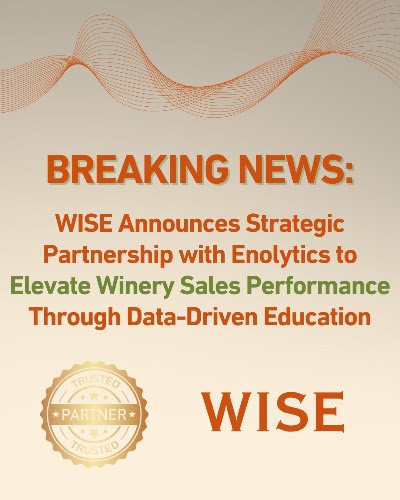
WISE and Enolytics are officially partnering up—and we couldn't be more thrilled about the benefits and value that this partnership will bring our clients and colleagues. Together, we aim to redefine how wineries turn data into action—improving sales execution, revenue outcomes, and long-term customer relationships.
“This partnership is about empowering winery teams to succeed, even in headwinds,” said Cathy Huyghe, co-founder & CEO of Enolytics. “By aligning Enolytics’ insights with WISE’s sales expertise, we’re helping wineries move faster from insight to ROI. The WISE team is so well-respected and intelligent, plus they are simply interesting and fun people to spend time with.”
Lesley Berglund, WISE co-founder & chairman, went on to add “Data becomes impactful when leaders know how to use it. This partnership with Enolytics allows us to ground sales training in real customer behavior and data insights. That’s where visibility, confidence, and action align to drive measurable improvements in sales performance.”

We proudly announced the recipients of the inaugural WISE Rising Stars Scholarships during a live presentation at the DTC Wine Symposium last week, celebrating the next generation of DTC wine industry leaders in front of more than 500 winery professionals.
As one of the event’s original sponsors, WISE continues to invest in the Symposium’s mission of education, collaboration, and forward‑thinking leadership. The Rising Stars Scholarships extend that commitment—supporting people, developing leadership, and strengthening the DTC community across the industry.
The Rising Stars Scholarships received an overwhelming response from across the country. The strength of applications prompted Commerce7 to step in and match one of the scholarships, allowing WISE to expand the program and support additional recipients.
Join us as we raise a glass towards this year's recipients!
Kelsey Gomes is the DTC Marketing Manager at Lange Twins Family Winery & Vineyards. Upon receiving the WISE Rising Manager Scholarship, she noted she is proud of the work she does at LangeTwins Family Winery and Vineyards, building a successful wine club and DTC business while connecting customers with the stories behind the wines they love. Through the industry-specific education and mentorship offered by WISE and the Rising Star Manager Scholarship, she hopes to accelerate her development as a leader so she can empower her team, create meaningful experiences for customers, and help shape a strong future for the business and the industry.
Ivy Thompson is the DTC Manager at Center of Effort Winery in Arroyo Grande, and is also earning her MBA at Cal Poly. She told us her career has been shaped by strong mentorship, community, and a passion for hospitality. Through WISE, she looks forward to expanding her strategic impact by strengthening her data-driven and marketing skill set in an ever-evolving industry.
Giselle (Gigi) Panaigua is the Sales and Engagement lead at Emeritus Vineyards in Sebastopol. She is quoted as saying:
"My approach to winery DTC blends thoughtful strategy with authentic guest connection—because great wine experiences should feel as good as they taste. WISE represents the next step in growing as a leader and contributing to the future of the wine industry"
Zoe Lucas is the DTC Manager at Black Ankle Vineyards, located in Frederick Maryland. She shared "I am incredibly excited to have received this scholarship and am looking forward to all that WISE has to offer, and can't wait to bring what I learn back to Maryland!"
In addition, earlier this month, we were pleased to announce a special WISE Scholarship in partnership with the Texas Hill Country Wineries. Awarded to Michelle Padilla, a Global Hospitality Leadership student at the University of Houston, she was bit by the wine bug at her Wine Appreciation course with Dr. Taylor. She reflected that she became "Much more interested in learning about wine and how it reflects the people and culture behind it...my eyes were opened to the growing potential of the Texas wine industry and made me want to be a part of its future."
To our five scholarship recipients Kelsey, Ivy, Gigi, Zoe and Michelle: we see you. We celebrate you. And we can’t wait to see where your paths lead next!