

When a tank cleaning cycle finishes and residue is still clinging to the walls, the instinct may be to run the cycle longer, add more chemical or follow up with manual scrubbing.
But poor cleaning performance often starts with the spray system itself.
Low pump pressure, insufficient flow, incorrect nozzle selection, poor tank cleaner placement and inadequate spray impact can all leave behind lees, tartrate and other stubborn buildup.
Here are four things to check before adding more time, water or chemicals to the cleaning process.
1. Pressure and Flow
Tank cleaners are designed to operate within specific pressure and flow ranges. If either falls below the recommended level, cleaning impact and coverage can suffer.
Pressure losses through hoses, piping, valves and fittings can also mean the cleaner is receiving less pressure than the pump rating suggests.
If cleaning cycles are taking longer than they used to, confirming the actual pressure and flow reaching the tank cleaner is a good place to start.
2. The Right Tank Cleaner for the Job
Not every tank or residue requires the same cleaning approach.
Static spray balls can work well for lighter cleaning applications, while rotary or higher-impact tank cleaners may be better suited for stubborn lees, tartrate or other difficult buildup.
The key question isn't simply whether the tank has a spray device — it's whether that device provides enough impact for the material being removed.
If cellar workers routinely need to hose down or manually scrub a tank after an automated cleaning cycle, the equipment may not be properly matched to the application.
3. Tank Cleaner Placement
Even the right equipment can underperform if it isn't positioned correctly.
Tank geometry, manways, agitators and internal fittings can create areas that the spray doesn't effectively reach. If residue repeatedly remains in the same spot, that can be a sign of a coverage issue rather than a problem with cleaning chemistry.
Proper placement helps ensure cleaning solution reaches the entire vessel instead of repeatedly washing only the easiest surfaces.
4. More Water Isn't Always the Answer
Longer cleaning cycles can quickly add up to more water, more chemicals, more labor and longer tank turnaround times.
If operators routinely compensate for poor cleaning performance by extending the cycle or manually finishing the job, it may be worth evaluating the spray equipment first.
Optimizing pressure, flow, coverage and impact can help improve cleaning effectiveness while reducing unnecessary resource use and manual cleanup.
Make Sure the Spray Is Doing Its Share
Spraying Systems Co. offers winery tank cleaning solutions ranging from static spray balls and rotary tank cleaners to higher-impact cleaning equipment for more demanding applications.
Their spray specialists can also evaluate vessel size, residue type, pressure, flow and equipment placement to help determine whether an existing cleaning system is performing as effectively as it should.
Before adding more water, chemicals or cleaning time, make sure the spray is doing its share of the work.

Today’s wine consumers are increasingly focused on sustainability, pushing wineries to reduce water use, limit chemicals, and improve overall efficiency — all without compromising wine quality. Meeting these expectations requires innovative systems that make operations cleaner, faster, and more resource-efficient.
Spraying Systems Co. helps wineries achieve exactly that. Their Cloud-Sellers® Tank Cleaning and WindJet® Drying Systems are designed to minimize waste and energy consumption while maintaining high production standards.
The Cloud-Sellers® 360 Tank Cleaner and TankJet® Nozzles deliver powerful, uniform cleaning with less water and reduced cycle times, helping wineries save both time and resources. Meanwhile, WindJet® Air Knife Systems use clean, heated air to dry bottles and containers quickly and efficiently — cutting energy use and reducing the need for compressed air.
By integrating these sustainable solutions, wineries can lower operational costs, conserve valuable resources, and meet growing consumer demand for eco-friendly practices — all while maintaining the quality their wines are known for.
Reducing Spray Drift and Chemical Waste
Spraying vineyards with pesticides and fungicides can often result in drift, leading to inefficient application and environmental damage. Wineries are under increasing pressure to reduce chemical usage and minimize spray drift.
Solution: Low-Drift Nozzles from Spraying Systems Co.
Spraying Systems Co. offers advanced Low-Drift Nozzles and TankJet® Nozzles designed to reduce spray drift, providing more precise application of chemicals. These nozzles minimize waste, reduce environmental impact, and ensure better treatment coverage for the vines.
How It Works:
Low-Drift Nozzles create larger droplets that fall directly onto the vines, minimizing drift and ensuring that chemicals are applied more efficiently.
TankJet® Nozzles offer customizable spray patterns, allowing you to adjust the nozzle to match your specific needs, whether you're spraying large areas or hard-to-reach spots in the vineyard.
These technologies help you reduce chemical consumption, lower costs, and reduce environmental impact.
By adopting these precision nozzles, you can ensure targeted, effective spraying while conserving resources and protecting the environment.
Problem:
A manufacturer of wine bottles needed to blow broken glass off production lines. Homemade air nozzles fabricated from crimped stainless steel tubing were being used. The nozzles were able to remove the glass from the conveyor lines but they were extremely expensive to operate because they consumed a large volume of compressed air.
Solution:
Spraying Systems Co.’s solution is WindJet® Air Cannon packages, which are installed on each of the seven production lines in the plant. Each system consists of a 2.5HP blower and a 1” air cannon to powerfully blow broken glass from the conveyor. The regenerative blowers are low maintenance, low noise, energy efficient and produce clean, heated air. WindJet Air Cannons deliver a uniform, high-velocity air stream that is able to easily blow broken shards of glass away from the production line.
Results:
Prior to installing the WindJet® Air Cannon packages, the customer had been spending almost US$170,000 annually on compressed air. The annual operating expenses for the WindJet Air Cannon packages are about US$8,500 – a savings of more than US$161,000. The cost of the new system was recouped in just over one month.
Issue: Time-Consuming and Wasteful Cleaning Processes
Winery cleaning is essential to maintain quality, but traditional cleaning methods can be inefficient and costly, wasting water and chemicals, and requiring significant labor.
Solution: Cloud-Sellers® and TankJet® Cleaning Systems from Spraying Systems Co.
Spraying Systems Co.'s Cloud-Sellers® 360 Fluid-Driven Tank Cleaner and TankJet® 50 Fluid-Driven Tank Cleaner provide effective and efficient solutions to clean tanks and barrels quickly, with minimal resource waste. These systems reduce cleaning time, improve consistency, and help maintain hygiene without compromising quality.
How It Works:
The Cloud-Sellers® 360 is perfect for large tanks, up to 100 feet in diameter. It delivers high-impact cleaning, ensuring that even stubborn residues are removed efficiently, which helps minimize downtime between cleaning and production cycles.
The TankJet® 50 nozzle provides high-impact, solid stream cleaning for smaller barrels and containers, ideal for wine barrel cleaning.
When paired with a Cloud-Sellers® Pump Cart, you can easily transport the cleaning nozzle between tanks for maximum flexibility and efficiency.
These solutions help streamline cleaning operations, saving valuable time, reducing chemical and water waste, and ensuring your winery equipment is spotless and ready for the next batch.

Save Water, Time, and Money with Cloud Sellers, a Division of Spraying Systems Co.
Find out how you can put your tanks and vessels back into action faster with the superior cleaning and exceptional reliability of our expansive product
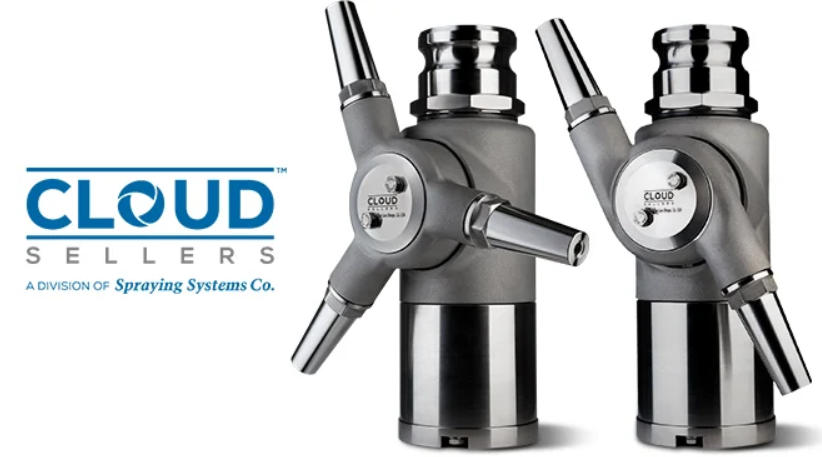
The Cloud-Sellers™ 360 Fluid-driven Tank Cleaner for tanks up to 100’ (30 m) in diameter – this powerful fluid-driven machine offers the most consistent impact over the entire pressure range. High-impact cleaning removes even the most stubborn residues efficiently and effectively so tanks can be returned to service quickly.
Available with 2 or 3 nozzles, the Model 360 features gear ratio options and food-grade oil-lubricated or flow-through gearbox designs for maximum cleaning flexibility, predictability, and minimum cleaning cycle times.