In an increasingly crowded Wine & Spirits market, brand differentiation has never been more critical. While digital touchpoints continue to grow in importance, the physical product remains the most powerful brand ambassador. At the point of sale, packaging and label decoration are often the decisive factors that turn attention into engagement – and sales.
“Consumers still make a significant share of their purchase decisions in front of the shelf,” says Alex Mulvenny, Managing Director Wine & Spirits Europe at CCL Label. “In those few seconds, decoration has to do a lot of work. It must communicate quality, brand values and credibility instantly. Premium decoration is not an add-on. It is a strategic asset.”
Premium is about perception and precision
Premium decoration goes beyond visual appeal. It is about how a brand is perceived the moment a bottle is picked up, turned, or examined more closely. Tactile finishes, depth effects, transparency and light interaction all contribute to a richer brand experience.
“In Wine & Spirits, consumers are highly attuned to detail,” Mulvenny explains. “They associate weight, texture and finish with craftsmanship and authenticity. A well-executed label reinforces trust in the product before it is ever opened.”
This is where premium decoration continues to differentiate. It allows brands to express character and positioning through materials and craftsmanship in ways that complement, rather than compete with, digital brand experiences.
Translating ambition into reality
While the creative ambition behind premium labels is high, successful execution depends on technical expertise and process control. Complex ideas only create value when they can be realised consistently and reliably.
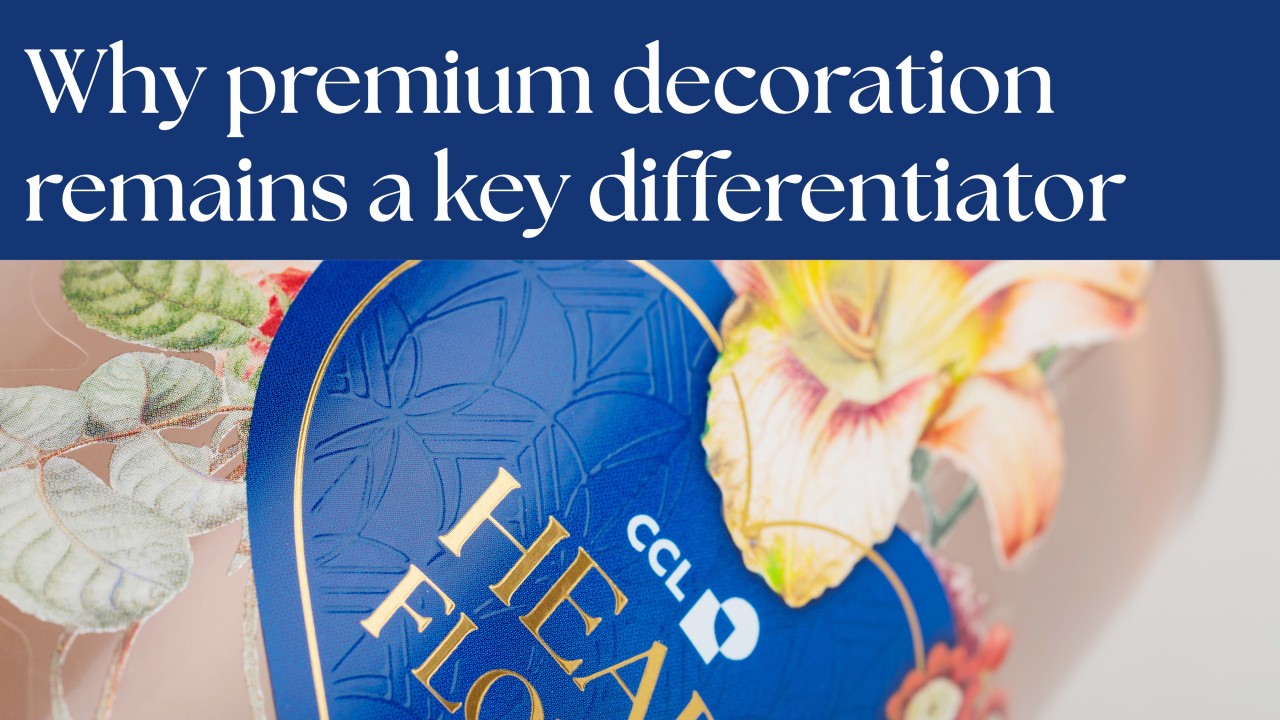
Heartflower is part of the CCL Signature Collection, a series of self-promotional concepts created to explore the possibilities of premium label decoration. It demonstrates how advanced printing technologies and embellishments can work together in a controlled production environment.
Created to explore premium decoration possibilities rather than as a market-ready product, the concept demonstrates how advanced printing technologies and embellishments can work together in a controlled production environment.
“One of the key features of Heartflower is the double-sided digital printing,” explains Christiane Spang, Project Management & Premium Label Development at CCL Label Trittenheim. “The front and the inner side of the label are printed with different designs in a single pass. This allows messages to appear on the inside of the label, visible through the bottle, without adding complexity to production.”
In addition, variable data printing enables the inner messages to change from label to label. “This shows how digital printing can be used creatively,” Spang adds. “It is not only about efficiency or short runs. It can become a design element in its own right.”
When embellishment adds meaning
Premium decoration is most effective when embellishments are used with intent. In the Heartflower concept, several techniques are combined to demonstrate this principle.
Selective application of a Light Line film creates a subtle shimmering effect on floral elements, while hot foil stamping in gold adds a refined premium accent. Glossy flexo varnish enhances colour depth, and a screen-printed glossy relief varnish introduces tactility through a fine grid structure.
“The challenge is not applying many effects, but aligning them,” says Spang. “Each embellishment has to support the overall design. Precision in registration and balance between visual and tactile elements are what make premium decoration feel effortless.”
Standing out where it matters most
At the shelf, brands compete not only with other products, but with limited consumer attention. Premium decoration helps brands earn that attention and turn it into engagement.
“Decoration is one of the few elements a brand fully controls at the point of sale,” Mulvenny concludes. “When executed well, it creates a moment of connection between the product and the consumer. That moment is still incredibly powerful, and it is why premium decoration remains a key differentiator in Wine & Spirits.”
As markets evolve and consumer expectations rise, the role of label decoration will continue to shift from functional necessity to strategic brand tool.
Those brands that invest in thoughtful, well-executed premium decoration are better positioned to stand out, today and in the future.
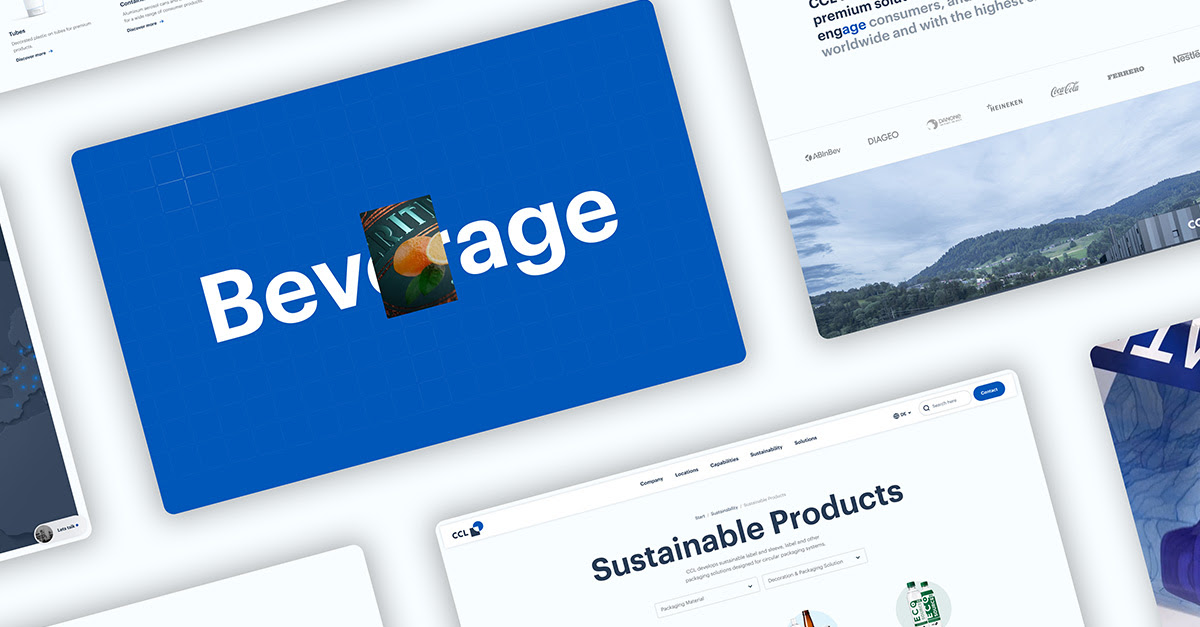
New Website. New Tools.
One Goal: Better Packaging Decisions.
Our passion for labels has inspired us to rethink the way you experience CCL Label online. The new website brings together our decoration technologies, industry expertise, sustainability innovations and global network in one intuitive experience.
Explore solutions tailored to your market, discover our latest innovations and quickly connect with CCL Label experts around the world.
Start Exploring!
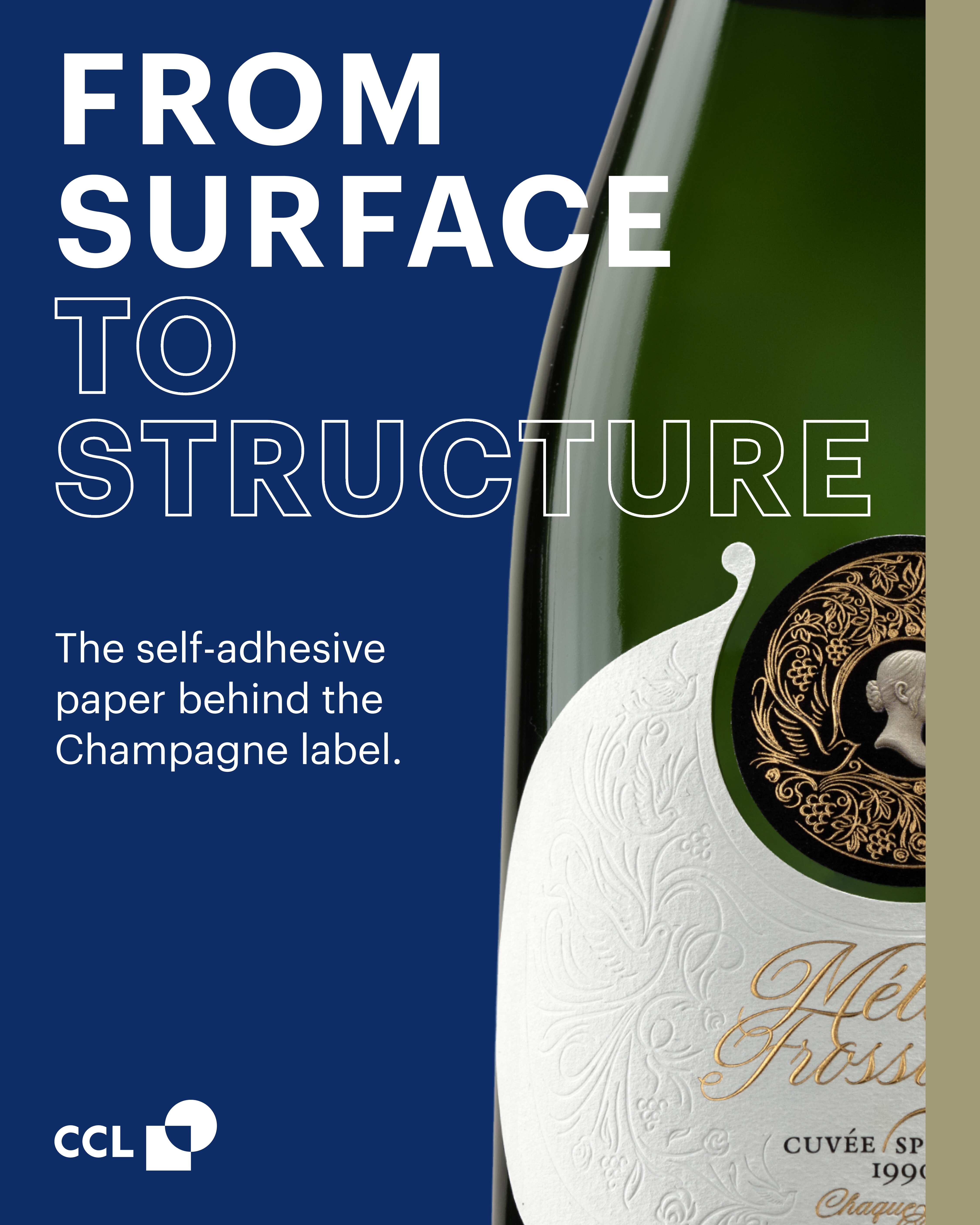
Premium self-adhesive paper must perform in two distinct moments.
First, during conversion.
Embossing pressure, sequential foil passes and die-cutting demand dimensional stability and surface integrity to maintain precise alignment.
Then, on the bottle.
Moisture, temperature fluctuation and ice bucket immersion require wet opacity and resistance to deformation – without compromising texture or appearance.
For the Mélodie Frossard Champagne label, material performance protected both precision in production and visual integrity in use.
Because premium decoration must endure beyond production and application.
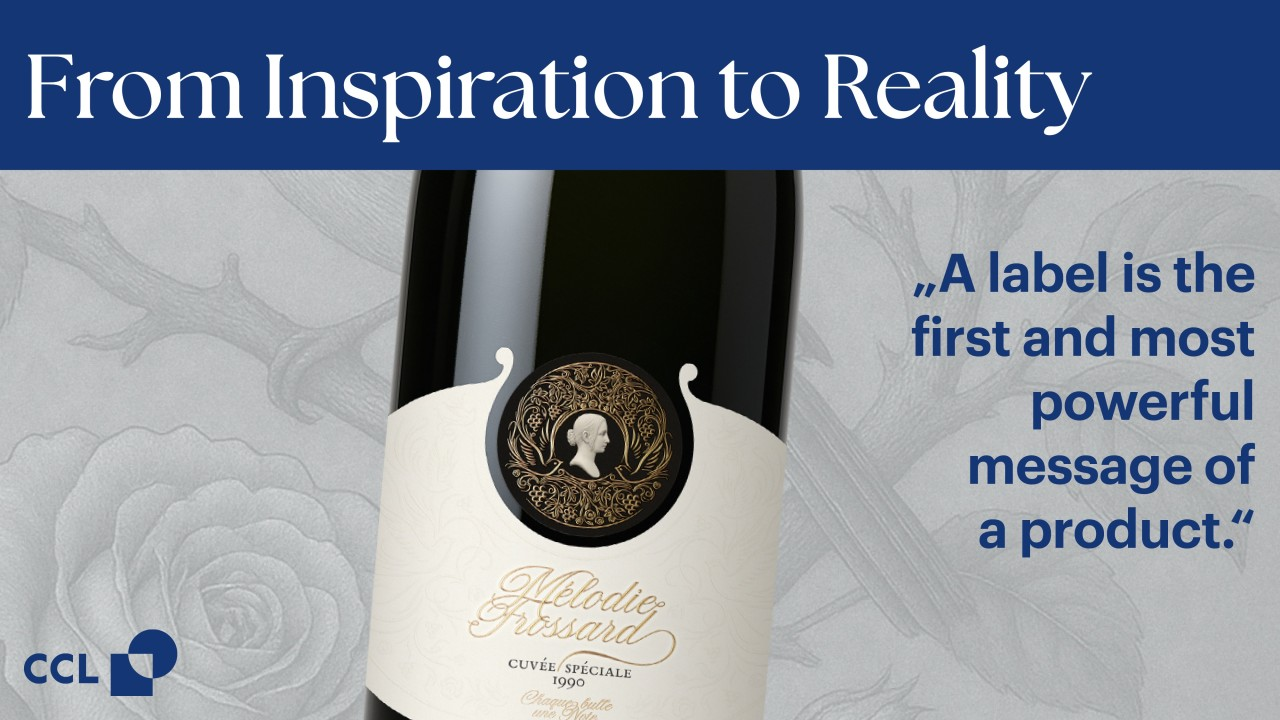
Great Champagne tells its story long before the cork is popped. With the Mélodie Frossard label, an abstract idea rooted in anticipation, rhythm and movement was transformed into a tangible expression of craftsmanship. The result is a Champagne label that translates inspiration into material, structure and embellishment through close collaboration between design and production.
At the heart of the concept lies the idea of Champagne as a silent melody. Not heard, but seen. Not tasted, but anticipated. The perlage becomes a vertical score, each bubble a note rising patiently to the surface. This poetic starting point shaped every design decision that followed.
Translating Inspiration into Design
The creative concept was developed by Atelier Design, an Italy-based studio specialising in label design for high-end beverages. For founder Luca Morandini, the label is more than decoration.
“A label is the first and most powerful message of a product. It must already communicate passion, dedication and the pursuit of quality before the bottle is opened,” explains Luca Morandini.
With Mélodie Frossard, Atelier Design transformed the idea of Champagne’s musicality into a visual language. The imaginary figure of Mélodie – perhaps an opera singer, perhaps a memory carried through time – became the symbolic embodiment of the cuvée. Her presence is not illustrative, but sculptural, giving the label depth and personality while remaining refined and restrained.
When Design Meets Reality
Turning this concept into reality required more than creative vision. From the earliest stages, Atelier Design worked closely with CCL Label’s project team in Trittenheim to ensure that Mélodie Frossard could be brought to life in the best way possible.
“From the beginning, the challenge was to interpret the design intent through carefully chosen materials and production techniques,” says Christiane Spang, Project Manager at CCL Label Trittenheim. “Our role was to shape this creative ambition into a refined, tactile result with the required level of precision.”
This collaboration influenced the structure of the label, its two-part form and the deliberate spacing between elements. It also guided the selection of materials and embellishment techniques, ensuring that each detail contributed to the overall expression rather than competing for attention.
Shaping the Label Through Materials and Processes
The front and neck labels were designed to work together as a cohesive composition. Carefully selected papers, foils and tooling allowed the design to gain physical presence. Blind embossing, debossing and hot foil stamping were combined in multiple stages to create subtle relief and elegant shine.
The sculptural head, with its three-dimensional blind embossing reminiscent of a marble bust, required precise alignment between artwork, tooling and press settings. This level of detail was only possible through continuous exchange between designer and production team, refining each step until form and finish were perfectly balanced.
The focus on detail and execution reflects a guiding principle and core belief of Atelier Designat the heart of the project: “Make what is useful also (and always) beautiful.” In this label, material choice, structure and embellishment are not added decoration, but integral elements that give the design its final clarity and presence.
A Shared Understanding of Craftsmanship
What defines the Mélodie Frossard label is not a single technique, but the way inspiration, design and production come together. The close cooperation between Atelier Design and CCL Label demonstrates how ideas can be translated into tangible quality when creative and technical expertise are aligned.
The result is a Champagne label that captures anticipation and emotion through structure and detail. A reminder that premium labels are not simply designed. They are crafted.
Follow CCL Label here on LinkedIn to stay in the loop for more about the Signature Collection and premium decoration solutions.
Visit these websites to learn about Atelier Design and CCL Label:
Paris, France – February 2026 — CCL Label, a global leader in premium labelling and packaging solutions, will present its latest innovations for the wine and spirits sector at Paris Packaging Week, held 5th and 6th February 2026 at Paris Expo Porte de Versailles.
At Booth C102, CCL Label will highlight how the future of premium packaging lies at the intersection of high-end design, advanced embellishment, and sustainability – responding to growing brand demand for packaging that delivers visual distinction while meeting environmental expectations.
Redefining Premium Through Sustainable Innovation
CCL Label’s showcase demonstrates how luxury and responsibility can coexist without compromise. The company will unveil a range of solutions designed to elevate brand storytelling and shelf impact while supporting more sustainable outcomes, including:
- Sustainable Shine: High-impact embellishments engineered with sustainability in mind
- Premium labels and sleeves featuring tactile effects, depth and refined shine
- „Haute Couture“ die-cut designs emphasising craftsmanship and precision
- Eco-conscious materials and production approaches for wine and spirits brands
An Exclusive Unveil at Paris Packaging Week
“Among the highlights is the introduction of the CCL Signature Collection, a curated label range for Wines & Spirits that builds on CCL Label’s growing presence in the wine and spirits segment. This new expression showcases refined creativity, exclusivity and technical mastery, designed for premium and ultra-premium brands,” explains Alex Mulvenny, Managing Director Wines & Spirits Europe.
As a special highlight for Paris Packaging Week, CCL Label will exclusively unveil a new Champagne label at the show. Created as a showcase of design excellence and technical sophistication, the label translates craftsmanship, storytelling and premium embellishment into a refined visual expression.
The label was developed in close collaboration with selected partners across design, materials and tooling. The creative concept was crafted by Atelier Design from Udine, Italy, while premium papers were supplied by Fedrigoni. Univacco provided the foils, and specialist tooling expertise was delivered by Hinderer+Mühlich. Together, this collaboration reflects how strong partnerships and technical precision can bring a premium Champagne vision to life.
Combining artistic inspiration with advanced production expertise, it reflects how labels can elevate anticipation even before the bottle is opened. Visitors are invited to discover this new creation firsthand at Booth C102.
A Strategic Platform for Industry Dialogue
CCL Label’s stand reinforces its premium identity and provides a platform for discussions with brand owners, designers, and converters on the evolving expectations shaping the future of wine and spirits packaging.
Paris Packaging Week is recognised as a key international event for packaging innovation, bringing together decision-makers and trendsetters across the luxury, beverage, and sustainability ecosystems.
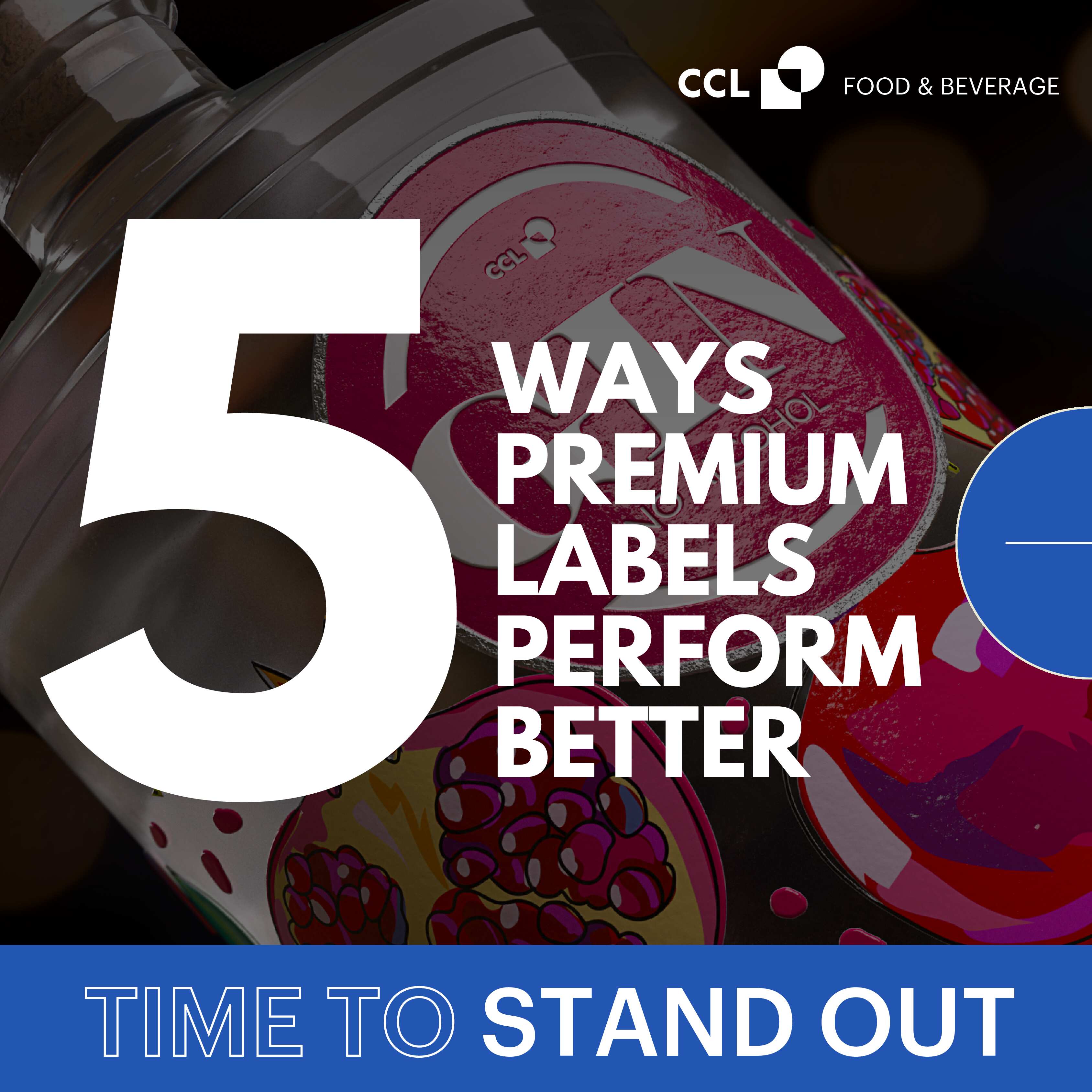
Premium labelling doesn’t just elevate design, it elevates performance. From withstanding challenging conditions to protecting brand integrity through every touchpoint, PSL and Sleeves are engineered for impact.
See below for 5 ways premium labels prove their performance.
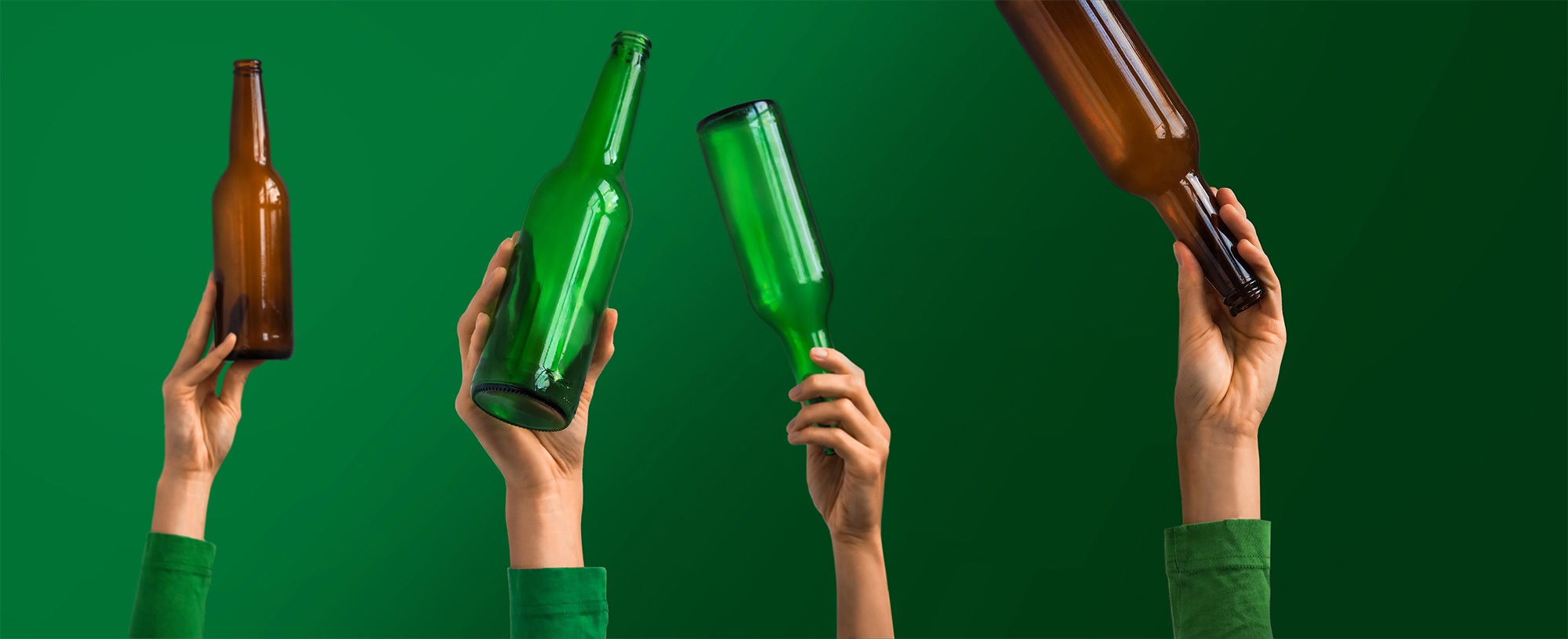
With the publication of their new Guide to Design for Good Recycling in Glass, the BDE (Federal Association of German Waste Management, Water and Recycling Industries) and the bvse (Federal Association of Secondary Raw Materials and Waste Management) provide practical recommendations to maximise the recyclability of glass packaging.
The aim is clear: strengthen circularity, improve the quality of glass recyclate and align with European initiatives such as the Green Deal and upcoming sustainability classifications for packaging licensing. While published for the German market, the guidance is highly relevant for glass recycling in general.
Filmic Labels in the Green Zone
A major outcome is that filmic labels are listed in the “green” category alongside paper labels – provided that easily releasable adhesives are used.
This is excellent news for brand owners, as it means filmic PSL solutions can be applied without restrictions if the right adhesive is chosen.
We are prepared to support you with EcoShear, this Pressure Sensitive Label construction is designed specifically for one-way glass containers, combining premium on-shelf performance with optimal recyclability.
Sleeves Remain in the Green Zone
Shrink Sleeves are also confirmed in the green column of the guideline, with the clear recommendation to include perforations. This makes sleeves easy to separate from the bottle before or during recycling – and at the same time opens up valuable design opportunities. With decades of expertise, CCL Label offers a wide range of perforation options, from standard to customised solutions. These can even double as interactive marketing elements, while perforations over the closure provide an additional benefit as a reliable tamper-evident feature.
The positive news: there are no restrictions regarding sleeve size, allowing brands to continue using full-body decoration to maximise shelf appeal while meeting recyclability requirements.
Aluminium Foil Necks Discouraged – Alternatives Available
The guidelines explicitly list aluminium roll-on foils among the materials that disturb the recycling process. They can lead to contamination, colour shifts and production issues in the glass furnace.
CCL offers proven alternatives that visually match foil necks thanks to metallised material, printed metallics and/or hammer blow effects:
- EcoShear Labels for one-way bottles
- WashOff Labels for returnable bottles
What This Means for Brand Owners
The guidelines clearly show that sustainable packaging design and premium brand presentation are not mutually exclusive. With CCL’s innovative label solutions our customers are already equipped to meet and exceed these new recyclability standards.
Together, we make glass packaging future-ready: fully recyclable, legally compliant and visually outstanding.Time to act sustainably. Time to Stand Out.
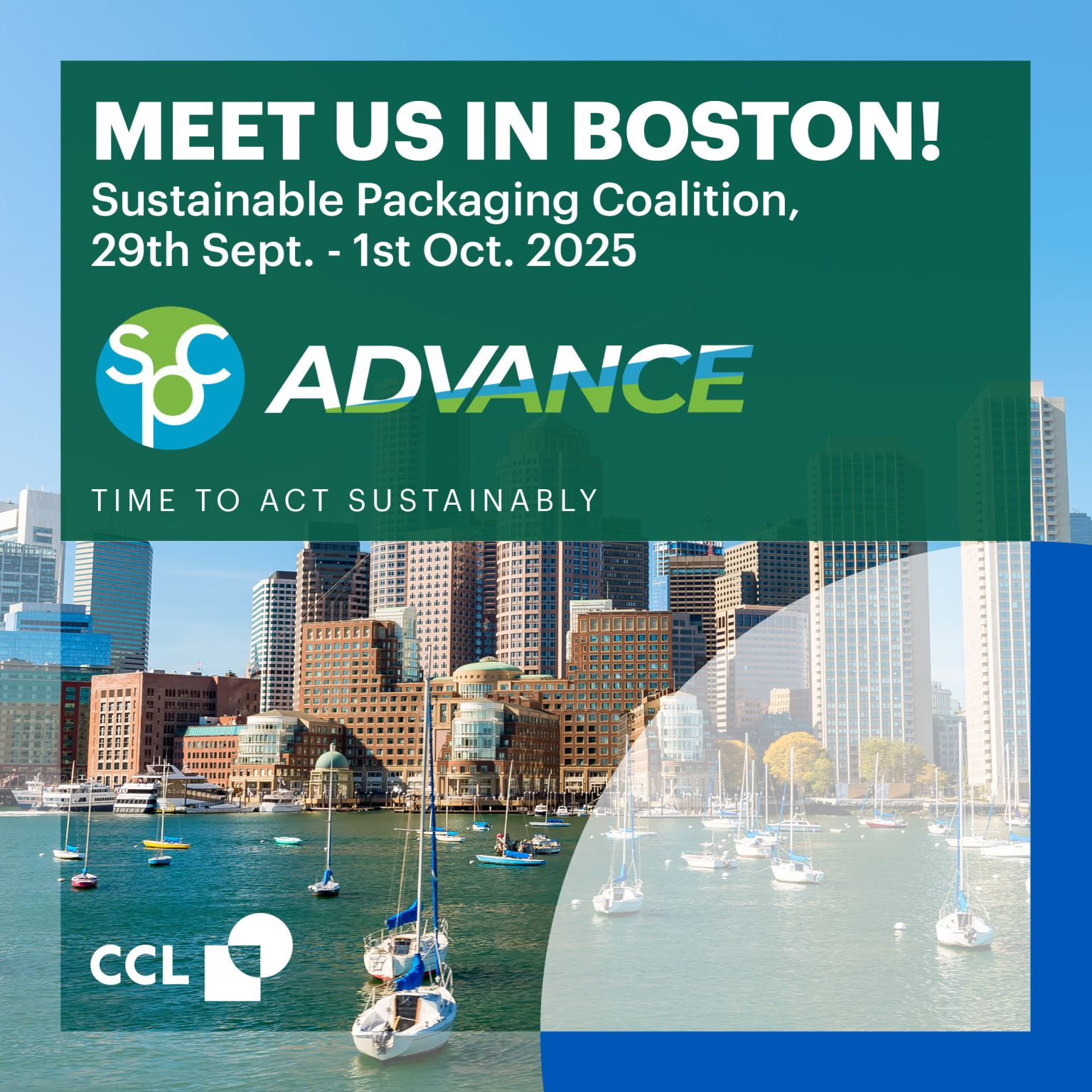
Meet us next week for our next gig at the premier event for sustainable packaging at Sustainable Packaging Coalition (SPC) in Boston!
We will be present with a booth and all the fine label and sleeve innovations we have developed for ecodesign and recycling more FMCG packaging. Discover the sustainable label family and find out why we love labels!
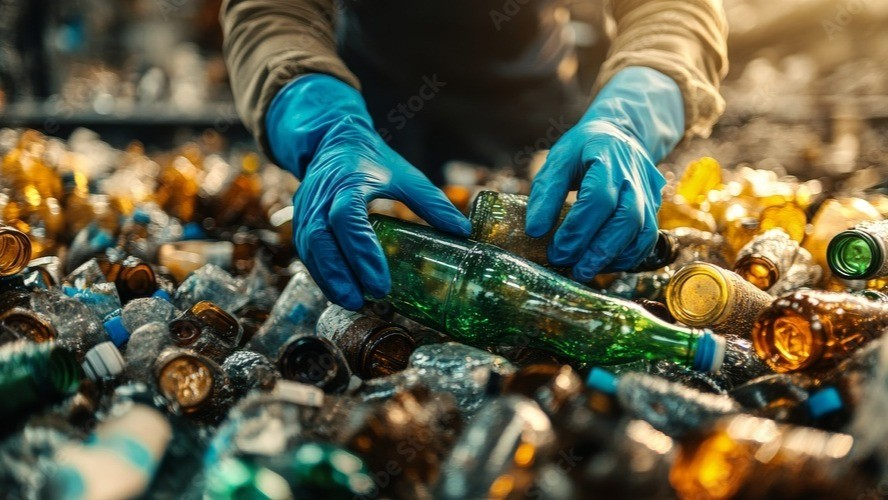
How CCL works with recyclers and sorters to improve our products and make their life easier!
Recyclers and Sorters are an integral part of the CCL sustainability network. We make sure to collaborate with and visit recycling faclities to make sure that our products work in the recycling streams. Field trips and exchanges are high up on our agenda – to one way glass recyclers, polyolefin recyclers and PET recyclers alike. Here is where we get our insights and get our R&D teams involved to make things better!
Recycling glass should be straightforward — it’s infinitely recyclable, after all. But the reality is more complex. One of the challenges in glass recycling is label contamination. Traditional adhesives often bond too tightly to glass shards or leave behind residue that contaminates the cullet stream, causing high rejection rates and unnecessary waste.
Labels sticking to glass cullets can cause the glass to be ejected
That’s why we’ve developed EcoShear® — a breakthrough adhesive technology engineered specifically for single-use glass bottles. It enables virtually residue-free label removal, dramatically improving the recyclability of glass packaging.
The result? Glass waste during recycling drops to just about 1.5 kg per ton — a significant improvement that directly boosts the yield of high-quality recycled glass.
But we didn’t stop there.
We’re also transforming plastic bottle design for light-sensitive products like yogurt, protein drinks, and probiotics. By using floatable polyolefin sleeves, we’ve enabled a shift from opaque HDPE or PET containers to transparent PET bottles — without sacrificing light protection. The protective barrier is now in the sleeve, not the bottle.
- Carbon-free inks ensure PET recycling remains efficient.
- Bottles maintain their familiar white appearance.
- The entire package meets Design for Recycling guidelines.
Together, EcoShear® and our recyclable sleeves represent a new generation of packaging that supports a circular economy — by design.
At CCL, we’re not just improving recyclability — we’re removing the barriers to it. Because packaging innovation isn’t just about function or branding anymore — it’s about designing smarter systems that work for the planet. Let’s make every bottle recyclable!
The CCL team (R&D, Sales, Sustainability) out in the wild to improve our label products