
For wineries managing hundreds or thousands of barrels, cooperage represents a significant investment. With new French oak barrels often exceeding $1,200 each and wineries facing increasing pressure to control costs, Barrel Blasting offers another option: rejuvenating structurally sound barrels so wineries can extend the useful life of the cooperage they already own, with service starting as low as $140 per barrel.
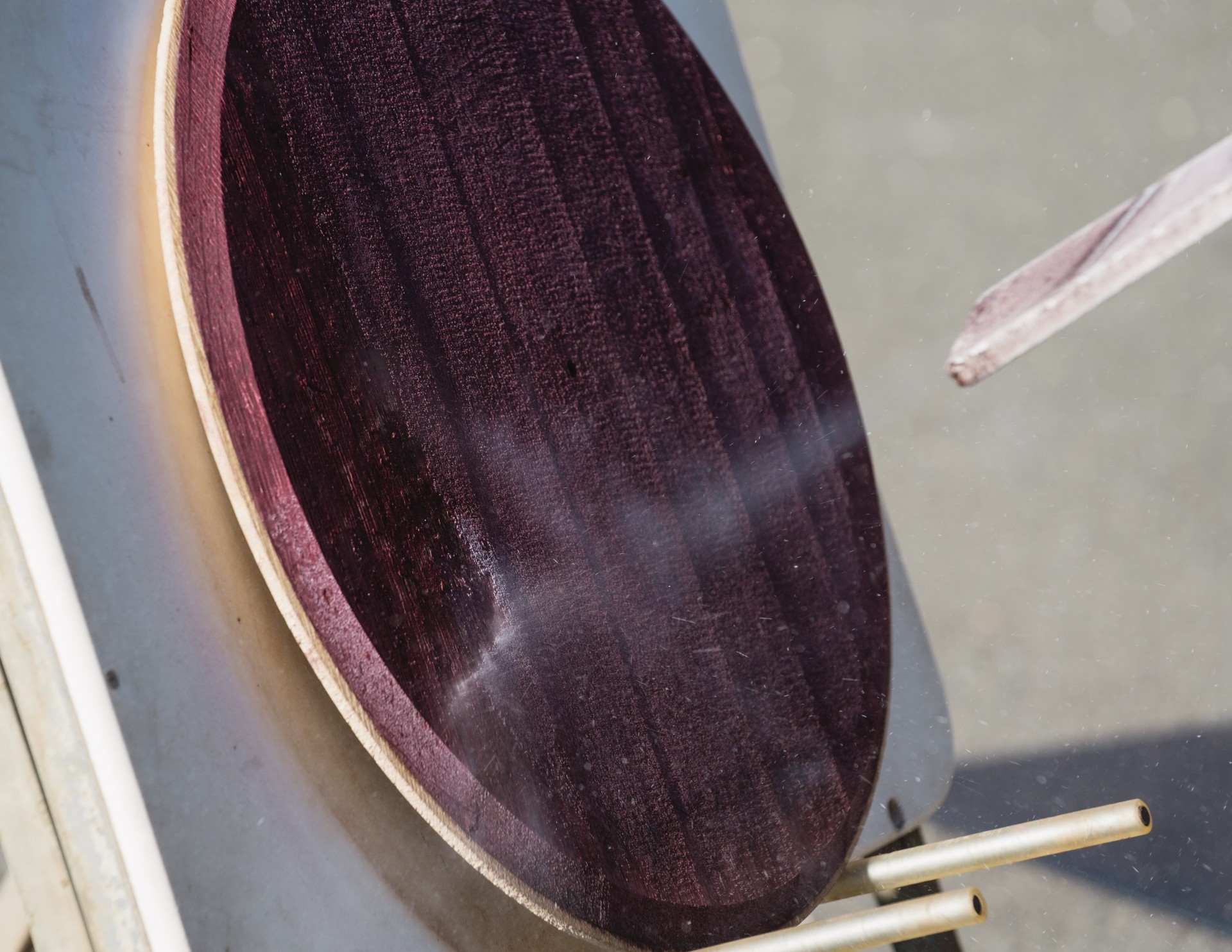
Barrel Blasting uses a precision-controlled dry ice process to remove heavy tartrates, embedded wine residue, and a micro-layer of wine-saturated surface wood from inside the barrel. The process exposes the underlying toasted oak and renews the barrel's working surface without introducing water or chemical cleaners. Because dry ice sublimates directly into gas, there is no chemical residue or secondary wastewater stream left behind. The objective is not simply to make an old barrel look clean. It is to restore a barrel to a condition where it can once again contribute reliably to the winemaking program.
What makes the process particularly valuable is what happens before the blasting begins. Every barrel is opened so the interior can be physically inspected. That inspection can reveal conditions that are difficult or impossible to identify from the bunghole, including heavy tartrate formations, embedded residue, and wine-filled blisters hidden within the interior surface. It gives the winery something conventional closed-barrel cleaning cannot provide: the opportunity to actually see the condition of its cooperage before putting another vintage of wine inside.
For larger wineries, the financial impact can be substantial. Barrel renewal is not about trying to save every barrel or pretending that a renewed barrel is identical to new cooperage. It is about identifying structurally sound barrels that still have useful life and getting more value from an asset the winery has already purchased. When renewal allows even a portion of a large barrel inventory to remain in productive service, wineries can reduce new cooperage purchases, preserve capital, and make replacement decisions more strategically.
That is ultimately what Barrel Blasting brings to a winery's barrel program: another option. Instead of automatically choosing between continuing to use an underperforming barrel or replacing it, wineries can inspect, evaluate, and renew barrels when it makes sense. In an industry where every capital decision matters, extending barrel life while protecting wine quality is more than a sustainability story. It is smart asset management.

The Barrel Decision You Keep Postponing
Barrel Blasting is a specialized barrel renewal and sanitation company serving commercial wineries throughout California and the West Coast. Using a proprietary dry ice blasting process, we restore the interior working surface of wine barrels by removing heavy tartrates, embedded residue, and wine-saturated surface wood without water, chemicals, or secondary waste.
As new barrel costs continue to rise, Barrel Blasting provides wineries with a practical, cost-effective solution for maintaining quality while maximizing the value of existing barrel inventories.
The hardest barrel decisions are not technical. They are emotional.
Most wineries do not struggle with barrel decisions because they lack knowledge. They struggle because barrels feel like assets you should be able to keep using. They feel like something you already paid for. Something that should stay productive if you are careful enough.
So the decision gets delayed. The barrel stays in circulation. The program moves on. And the winery pays for that delay in ways that are easy to overlook.
The easiest decision is the one you do not have to make
A strong barrel program reduces decision-making. It creates predictability. It removes uncertainty. It keeps the cellar focused on wine, not on constant troubleshooting.
But when barrel condition is unknown, the program becomes decision-heavy. Should this lot stay longer? Should we rack? Should we blend earlier? Should we intervene? Should we wait?
Those questions are not always signs of careful winemaking. Sometimes they are signs that the barrel program is creating variables the wine never needed.
The postponed decision becomes a downstream problem
The barrel decision you avoid today becomes a wine decision you are forced to make later. And later is always more expensive. Later means the lot is already committed. Later means the timeline is tighter. Later means the cellar has fewer options.
This is why postponement is costly. It does not eliminate the decision. It simply moves it into a moment where you have less control.
Most wineries keep barrels in circulation for the wrong reason
There is a quiet logic that drives many barrel programs. If the barrel is not obviously bad, keep using it. If it is not leaking, keep using it. If it does not smell off, keep using it.
That logic feels conservative. It feels responsible. It feels like avoiding waste.
But it also ignores the reality of scale. In large programs, the cost of inconsistency is often greater than the cost of replacement. A barrel that quietly disrupts predictability can consume more labor than it is worth.
A barrel does not need to be “bad” to be wrong for the job
This is where the decision becomes clearer. The question is not always, “Is this barrel ruined?” The question is, “Is this barrel appropriate for this program?”
High barrel count programs require a tiered approach
At scale, treating every barrel the same is not simplicity. It is avoidance.
A tiered program makes the work more intentional. It creates categories that actually matter to production. Barrels that are reliable stay in the most important roles. Barrels that are inconsistent get moved down the ladder. Barrels that create risk get removed.
This is how you protect the wines that need to be predictable without pretending every barrel is equally capable.
Timing is where control is gained or lost
The best time to make a barrel decision is when the barrel is empty. That is when condition is visible. That is when the cellar still has flexibility. That is when the program can act proactively instead of reactively.
The right barrel program is not sentimental
Barrels are tools. They are not trophies. They are not permanent. They have a life cycle, and the job of the cellar is to manage that life cycle with discipline.
The best barrel programs are not the ones that stretch every barrel to the limit. They are the ones that protect consistency, protect timelines, and protect winemaking intention.
Because at scale, the most expensive barrel is not the one you retire early. It is the one you keep too long without a
Email blake@barrelblasting for a free quote today.

Saving Money in a Hard Year Starts With the Barrels You Already Own
Barrel Blasting is a specialized barrel renewal and sanitation company serving wineries throughout California and the West Coast. Using a proprietary dry ice blasting process, we restore the interior working surface of wine barrels by removing heavy tartrates, embedded residue, and wine-saturated surface wood without water, chemicals, or secondary waste.
As new barrel costs continue to rise, Barrel Blasting provides wineries with a practical, cost-effective solution for maintaining quality while maximizing the value of existing barrel inventories.
The pressure is real, and the cellar feels it first
This is not an easy year for wineries. Costs are up. Margins are tighter. Inventory moves slower. And every purchase gets questioned. In that environment, new barrels become one of the most obvious places to pull back. The problem is that simply buying fewer barrels does not solve the underlying need. The cellar still needs reliable wood. The program still needs consistency, the wine still needs to move.
So the question becomes practical. How do you protect quality while spending less?
The cheapest barrel is not the one you already own. It is the one you can trust.
Owning barrels is not the same as having a usable barrel inventory. A barrel only saves money if it performs predictably. If it introduces variability, slows integration, or forces extra intervention, it stops being a cost-saving asset and starts becoming an operational expense.
This is where many wineries get stuck. They want to reuse barrels longer, but they do not want to gamble on the ones that have drifted, and in a high barrel count program, guessing is expensive.
Reuse only works when you can reset performance
The goal is not to stretch every barrel to the limit. The goal is to extend the useful life of the barrels that are still structurally sound but have become restricted by buildup and embedded residue. That is the difference between a barrel that should be retired and a barrel that can be brought back into reliable service.
Barrel blasting is built for that exact situation. It is not about making old barrels new. It is about restoring function by renewing the working layer of the barrel’s interior surface.
Barrel blasting helps you spend less by making your inventory usable again
When a barrel is compromised by tartrate buildup, residue, or saturated surface wood, it may still hold wine safely, but it stops behaving the way you need it to. Barrel blasting removes the restricted interior layer and exposes a fresh, working surface again.
That can bring barrels back into predictable use and reduce the need to replace as many barrels this year. For wineries trying to control costs, that matters. It turns existing inventory into capacity you can trust.
The savings are not only in cooperage
New barrels are the obvious cost. But the hidden cost is what happens when barrels drift. Lots take longer. Programs become less consistent. The cellar spends more time sampling, monitoring, racking, blending, and correcting.
Those costs do not show up as a barrel line item. They show up as labor and time, and in a year where everyone is being asked to do more with less, time is often the most limited resource in the winery. A barrel program that performs predictably reduces intervention, that is where real savings start to compound.
This is how to think about it as a strategy, not a shortcut
Barrel blasting is most valuable when it is used deliberately. It helps wineries extend barrel life where it makes sense, and it helps wineries make clearer decisions about which barrels deserve another fill.
That is the difference between cost cutting and cost control. If a barrel is structurally sound but functionally restricted, renewal can make it useful again. If a barrel is compromised in ways that cannot be corrected, it should be pulled from critical use. The point is not to save every barrel, the point is to stop wasting money on uncertainty.
A hard year rewards wineries that manage assets, not wineries that just spend less
When budgets tighten, the wineries that stay strongest are the ones that protect their core systems. The barrel program is one of those systems. It touches quality, scheduling, and consistency. It determines whether the cellar runs smoothly or runs on constant correction.
Reusing barrels is not a sign of lowering standards, it is a sign of managing assets with intention.
If you need to save money this year, start with what you already own
Most wineries already have a large barrel inventory sitting on site. The opportunity is not just to keep using it. The opportunity is to make it reliable again. Because in a difficult year, the smartest savings are the ones that protect performance.
Email at blake@barrelblasting.com to get a free quote today