
Growth creates pressure. Better operations create room to move.
Product is moving. Customer demand is growing. The workforce often isn’t.
For many manufacturers and fulfillment operations, that tension is what starts the automation conversation.
But being “ready for better” does not necessarily mean you are starting from a manual operation. Maybe you already have automation in place. You might have equipment that still works. Or you’re simply reaching the point where something in the operation needs to perform better.
That could mean more throughput. Better use of labor. Greater accuracy. More capacity. Better integration. Less physical strain. More visibility. Optimizing available space. Or simply removing the bottleneck that is keeping the rest of the operation from performing the way it should.
The important question is not:
What equipment should we buy?
It is:
What needs to work better?
1. Your customer demand is growing faster than your operation
Growth is usually a good problem to have—until your operation becomes the thing holding it back.
At Zippy Ice, the company was already using automation when it began evaluating another part of its operation. The need was not simply to “automate.” It was to prepare the business for what was coming next.
Co-owner Howard Mackie explained that expected new business would not have been possible with the existing manual line. The decision to automate was ultimately about preparing for future growth.
That is often the first sign that it may be time to reevaluate an operation:
You can see the growth opportunity, but your current process cannot support it.
2. Labor is limiting what the operation can do
Automation conversations often begin with labor—but labor reduction is only part of the story.
At Nom Nom, the goal was to make fulfillment more efficient while improving accuracy and reducing physical strain. After the new system was implemented, site industrial engineer Alison Kapustka described being able to operate with fewer people while producing the same number—or more—orders.
At St. James Winery, automation reduced repetitive packaging work and allowed employees to spend more time on skilled winemaking and cellar activities.
At Zippy Ice, automation helped the company respond to an employee retirement while also making the remaining team more engaged with the broader production process.
The better question is not simply:
How many people can automation replace?
It is:
Where can automation free people to do work that has more value?
3. Your current automation works—but something around it does not
A company does not have to choose between “manual” and “fully automated.”
In many facilities, the bigger opportunity is to improve one part of an existing operation.
St. James Winery is a strong example. The company already had equipment it intended to keep. MMCI helped modernize the packaging operation around it rather than requiring a complete replacement.
Chief Production Officer and Executive Winemaker Andrew Meggitt described the relationship with MMCI as continuous: as new issues arose, MMCI continued to offer ideas and suggestions.
At Zippy Ice, MMCI added a new robotic palletizing solution into a facility that was already highly automated. The new system had to work with existing equipment, changing production speeds, multiple bag sizes, and tight space constraints.
Sometimes better means adding automation.
Sometimes it means integrating automation.
Sometimes it means simply helping the automation you already own work better together.
4. A bottleneck is controlling the rest of the operation
Operations rarely improve evenly.
Increase speed in one area and a constraint may appear somewhere else.
Add production capacity and packing may become the problem.
Improve picking and shipping may become the next bottleneck.
MMCI’s Graham Starling describes the risk as simply moving the “golf ball in the snake”—solving one visible problem without looking at what happens next in the process.
That is why an automation project should begin with the operation as a whole.
Where does work slow down?
Where is labor concentrated?
Where are people waiting?
Where is equipment waiting?
Where are errors introduced?
Where does product accumulate?
Those questions can be more valuable than asking which machine to buy.
5. You need more capacity but do not have more space
Space is one of the most common operational constraints MMCI’s engineering team encounters.
Existing columns, walls, ceiling heights, conveyors, doors, utilities and equipment all affect what is possible.
MMCI project engineer Andy Kroll describes much of the engineering process as making the puzzle pieces fit together—including integrating new technology with existing equipment and real-world building constraints.
At Zippy Ice, the available footprint was so constrained that the robotic cell had to be engineered around the existing facility and automation.
Better use of space can sometimes create capacity without creating more building.
6. Accuracy, visibility or consistency is costing you
Speed alone does not make an operation better.
At Nom Nom, automation improved order accuracy and helped reduce order issues and customer credits. The system also gave the team greater visibility into inventory and fulfillment.
Inventory and warehouse manager Joshua Simmons described inventory accuracy improving dramatically and cycle counting dropping from roughly 72 hours to about 24 hours.
The value was not simply doing more.
It was knowing more—and doing it more consistently.
7. Your process has changed since the system was originally designed
Operations evolve.
Product mixes change. Packaging changes. Volumes change. Customers change. Facilities expand. Equipment ages.
At Zippy Ice, MMCI adjusted the robotic system when the operation moved from 20-pound bags to 16-pound bags.
At St. James Winery, existing equipment remained part of the operation while other parts of the packaging process were modernized around it.
A system that was right five years ago may still be valuable—but that does not mean it is optimized for the business you have today.
8. You know something needs to improve—but you are not sure what the answer is
That may be the strongest reason to begin the conversation.
MMCI’s approach starts with understanding the operation: the process, products, rates, labor, facility, constraints, goals and growth plans.
As Tim Stoinski explains, sometimes MMCI finds that automation is not even the immediate answer. The opportunity may be to help the customer do what they already do—better.
Repeat MMCI customer Jonathan Marshall describes the engineering team as highly inquisitive: they want to understand the environment, the process and the potential pitfalls before determining the solution.
That is an important distinction.
Better automation does not begin with a robot.
It begins with understanding what better needs to mean for your operation.
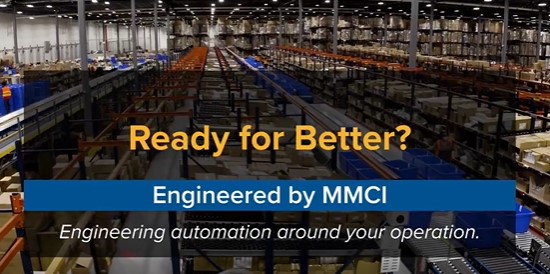
Ready for Better?
Maybe the answer is automation.
Maybe it is optimization.
Maybe it is integration.
Maybe it is improving something you already have.
The right solution depends on where your operation is today—and where it needs to go next.
Ready to identify what could work better?
Tell MMCI where your operation is today, what is changing and what you would like to improve. Rates, shifts, headcount and a layout help if you have them. You do not need to have the solution figured out.
An MMCI team member will review what you share and follow up to learn more about your operation.
MMCI | Engineering Automation Around Your Operation.