

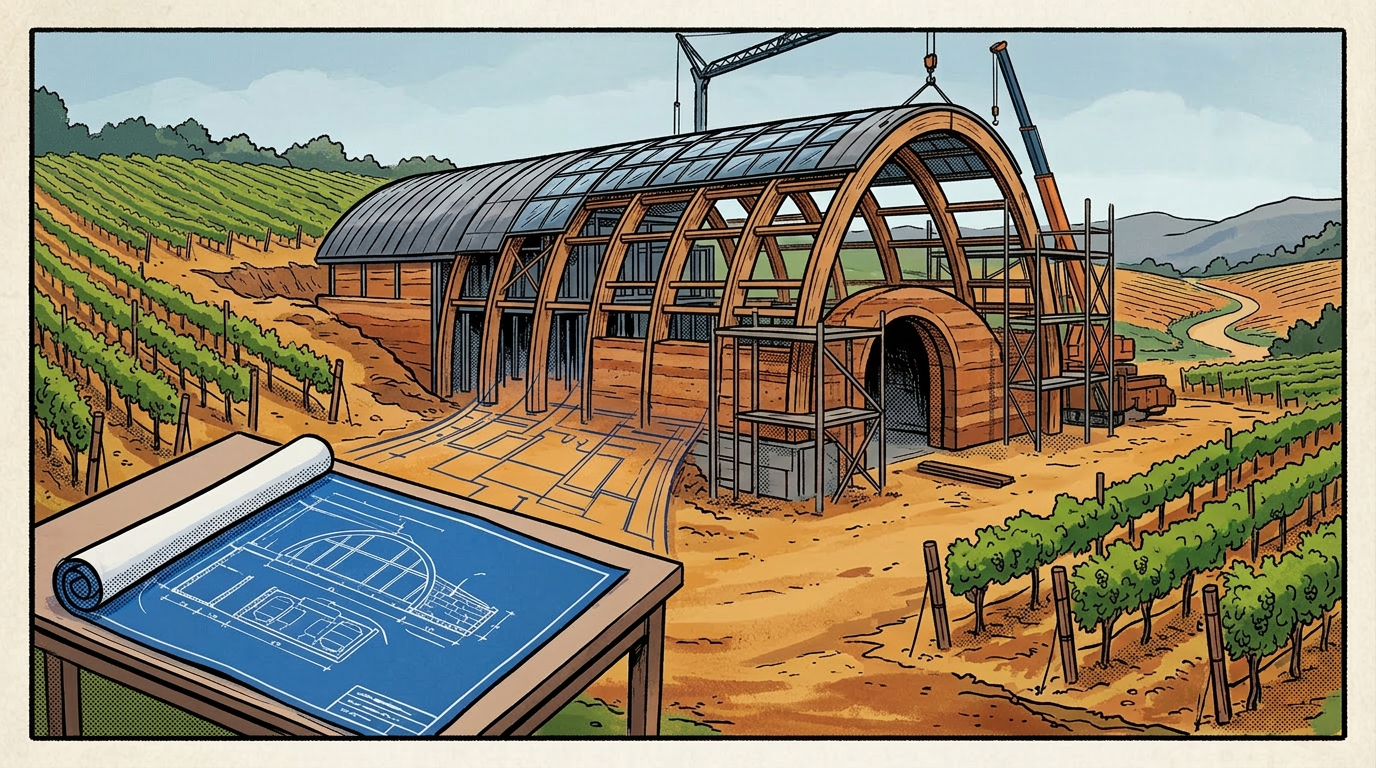
Most winery startup mistakes are preventable. After working with startup founders and existing owners across the industry, the same ten missteps appear again and again — mistakes that don’t just cost money, but can undermine a winery’s potential before it ever opens its doors. Here is what they are, why they happen, and how an integrated approach prevents them.
MISTAKE 01: STARTING WITH THE WINE
Passion for wine is why most founders enter this business. But a winery is a business first — one built on an integrated consumer experience. Every touchpoint, from your website and label to your price point and location, must work as a cohesive, consistent unit. Wine is one ingredient in that system, not the starting point.
MISTAKE 02: NOT HAVING A CLEAR, WRITTEN VISION
A vision statement is not a formality. It is the foundation for every consequential business decision you will make — your location, customer experience, pricing, and brand identity. Wineries that struggle financially almost always share one thing in common: having no written vision grounding their choices. I’ve written about how to create a vision statement several times in the last 10 years because it is so foundational. A clear vision statement leads to cohesive, consistent business decisions.
MISTAKE 03: CHOOSING A NAME THAT IS PERSONAL, NOT STRATEGIC
Your brand name is a business asset, not a personal memorial. It needs to communicate your story, values, and positioning — while helping consumers find and remember you. Naming sits at the intersection of marketing, customer experience, and exit strategy. It deserves the same rigor as any other strategic decision. If you’re curious about how to choose a name, read my blog post about choosing names for your winery and brands.
MISTAKE 04: UNDERFUNDING
Wineries are one of the most capital-intensive businesses you can start. Most founders underestimate both the upfront requirements and the time needed before revenue exceeds expenses. Underfunding slows growth. It also forces compromises that erode quality, limit your options, and in many cases, ends the business before it gets started. Know exactly what you need, then plan for a buffer beyond that.
What I do differently: I build full financial models before significant capital is committed — not projections built to look attractive. I create realistic capital plans that account for production, construction, staffing, and DTC ramp-up timelines. Many high cost winery startup mistakes are avoided with a realistic, comprehensive financial model. Read more about creating financial plans.
MISTAKE 05: PURCHASING A PROPERTY BEFORE BUILDING THE BUSINESS MODEL
Almost every founder has a property in mind before they have a plan. That instinct can be expensive. The property must support your business model, your wine style, your hospitality vision, and your budget — in that order. Build the model first. Then find the property that earns its place.
MISTAKE 06: PLANTING A VINEYARD BEFORE DECIDING ON THE SALES STRATEGY
The vineyard exists to produce grapes that make the wine your sales strategy demands. It’s not the other way around. Not all varieties thrive on every site, and the wrong acreage mix — too much of one variety, too little of another — creates long-term sales constraints that are expensive to correct. Planting decisions must follow strategic decisions, not precede them.
MISTAKE 07: “MAKE GOOD WINE AND IT WILL SELL”
This is the most common sales strategy among startup wineries, and one of the most dangerous winery startup mistakes. Great wine is necessary, but it is not sufficient. Wine sells when it is supported by a clear vision, consistent branding, compelling messaging, packaging aligned to the price point, and a DTC strategy built to convert visitors into long-term customers. Wine without a comprehensive, strategic sales plan is long term inventory.
MISTAKE 08: DESIGNING THE WINERY BEFORE DETERMINING WINE MIX AND MARKET POSITIONING
Winery design must be driven by the wines you intend to make — their volume, varieties, production methods, quality level and price point. It must function as both an efficient production facility and a hospitality environment that supports sales. Designing before these decisions are locked in means building for a business you haven’t fully defined yet.
What I do differently: I connect production design and winemaking needs to financial modeling and market positioning from the start — so the facility you build serves the winery you actually intend to run.
MISTAKE 09: THINKING YOUR TARGET MARKET IS “EVERYONE WHO DRINKS WINE”
It isn’t. Your target market is a specific group of people shaped by your vision, your consumer experience, the wines you make, your location, and your price point. Wineries without a precise understanding of their buyer create wines and experiences that appeal to no one in particular — spending resources that don’t translate into profitable sales.
MISTAKE 10: FRAGMENTED CONSULTING
Building a winery requires expertise across finance, viticulture, production, engineering, hospitality, and DTC sales. When those specialists work independently — without a unifying strategy — the founder’s vision gets diluted at every handoff. Critical decisions get made in silos. The result is a winery built from disconnected parts rather than a coherent business.
This is where my work begins. I work with winery owners from initial planning through engineering, vineyard design, operations, and sales — ensuring every consultant, every decision, and every dollar is aligned to one strategic vision. That cohesion is what separates wineries that grow from those that struggle.
—
These winery startup mistakes are common. They are also avoidable. When the right decisions are made in the right order, grounded in a clear strategy from the start, costly mistakes can be avoided.
If you are thinking seriously about starting a winery and want to talk through where you are in the process, I am happy to have that conversation. Let’s talk about creating a successful, profitable winery.