
Filter Post Type
NewsVideoProductEventLink
Sort:
Most Recent
Tagged:vineyard management
1–10 of 48
November 4, 2026
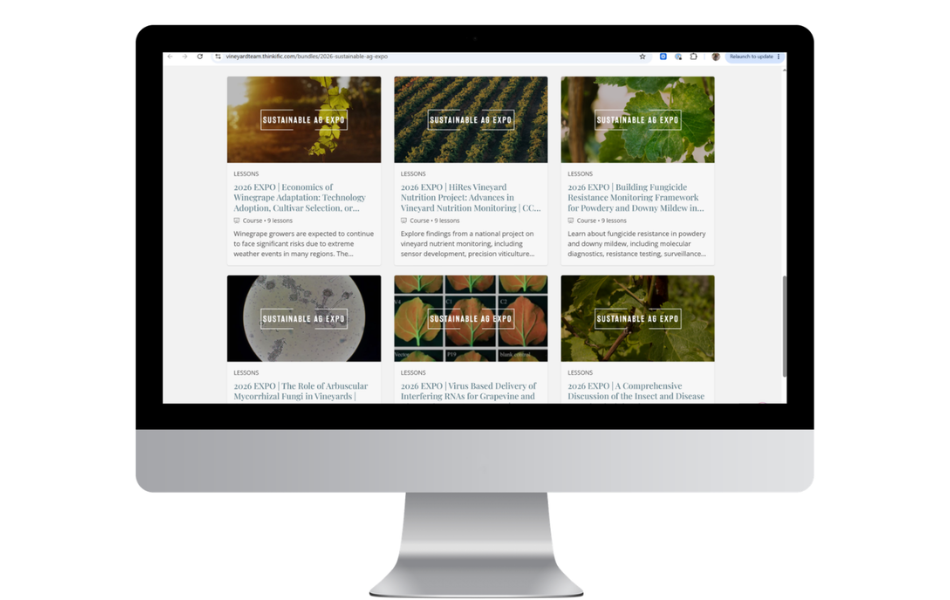
The 2026 Sustainable Ag Expo may wrap up November 11, but the opportunities to learn and earn continuing education hours continue well beyond the event. Two-day Expo ticket holders have access to a collection of on-demand online courses through December 13, 2026, giving growers and agricultural professionals additional time to explore research, discover new management strategies, and earn DPR and CCA hours at their own pace. The online program complements the Expo's two days of in-person seminars and trade show in San Luis Obispo, extending the educational experience beyond the conference. More Time to Learn, More Opportunities to Earn Busy schedules shouldn't stand in the way of continuing education. With online courses available through December 13, attendees can fit additional learning around vineyard operations, revisit topics of interest, and work toward their continuing education requirements without having to complete everything during the event. Courses feature researchers and
00
From disease-resistant grape varieties and biological pest management to vineyard technology, soil health, and labor solutions, the 2026 Sustainable Ag Expo is bringing a wide range of research and practical expertise to San Luis Obispo, November 10–11. The two-day program brings together university researchers, growers, and industry professionals to explore the challenges and opportunities shaping California agriculture. With 10.5 DPR hours, including 1 hour of Laws & Regulations, and 15 CCA hours approved, attendees can make progress toward continuing education requirements while gaining insights to take back to their operations. Day 1: New Varieties, Natural Solutions, and Smarter Vineyard Management Tuesday's program opens with a look at the future of winegrape growing. Dr. Michelle Moyer of Washington State University will kick off the Expo with Modern Grape Varieties and Their Role in Sustainable Farming, exploring how disease-resistant grape varieties could change approaches
00
April 15, 2026
Control the Vineyard. Control the Outcome. Gonzalez Vineyard Management Services — a comprehensive solution for growers looking to optimize vine health, fruit quality, and overall vineyard performance throughout the growing season. Vineyard management is a year-round, hands-on process, covering everything from soil and site management to planting, canopy work, irrigation, pest control, and harvest coordination. Services like this provide growers with the expertise and labor support needed to make timely, informed decisions at every stage of the vineyard lifecycle, helping maximize both yield and quality. As the growing season progresses, having the right management in place can make a measurable difference in how the vintage develops. View Listing The WIN Marketplace is built to connect buyers and sellers across the wine industry, and listings like these highlight how the platform helps growers access full-spectrum support throughout the vineyard l
00
March 25, 2026
Set Your Vineyard Up for Success This Season Now available: Viticultural Services from Jack Neal & Son, backed by decades of Napa Valley experience — offering vineyards comprehensive support from site evaluation and vineyard development to ongoing management and harvest execution. Services include everything from varietal and rootstock selection, irrigation strategy, pest and disease management, soil and tissue analysis, and precision farming tools — all tailored to maximize vineyard performance and fruit quality. With over 50 years of vineyard management experience and a strong focus on organic and biodynamic farming practices, this is a full-spectrum solution for growers looking to optimize both yield and quality. View Listing The WIN Marketplace is built to connect buyers and sellers across the wine industry, and listings like these Viticultural Services highlight how the platform helps growers access experienced, full-service vineyard management support. Wi
00
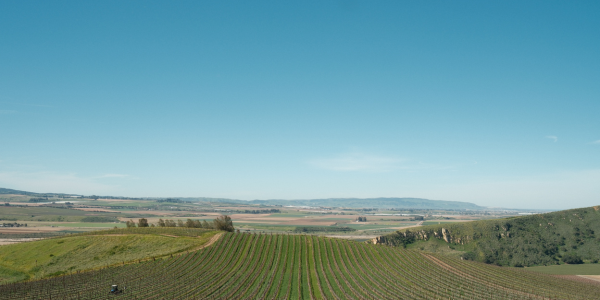
Making Time Work in the Vineyard Time is becoming one of the most limited resources in vineyard operations. Between labor constraints and the daily demands of irrigation, many teams are spending hours on tasks that are necessary, but repetitive. Irrigation, in particular, requires constant attention. Starting and stopping sets, adjusting valves, checking system performance, and traveling between blocks can quickly take up a large part of the day. Even when everything is running correctly, time is still spent verifying that it stays that way. Over the course of a season, those hours add up. Simplifying the day-to-day Automation offers a practical way to reduce that workload without changing the goals of the operation. Instead of managing irrigation manually, teams can schedule events in advance, make adjustments remotely, and monitor performance from a single platform. This removes the need for frequent site visits and reduces the number of routine tasks that require hands-on involveme
00
March 16, 2026
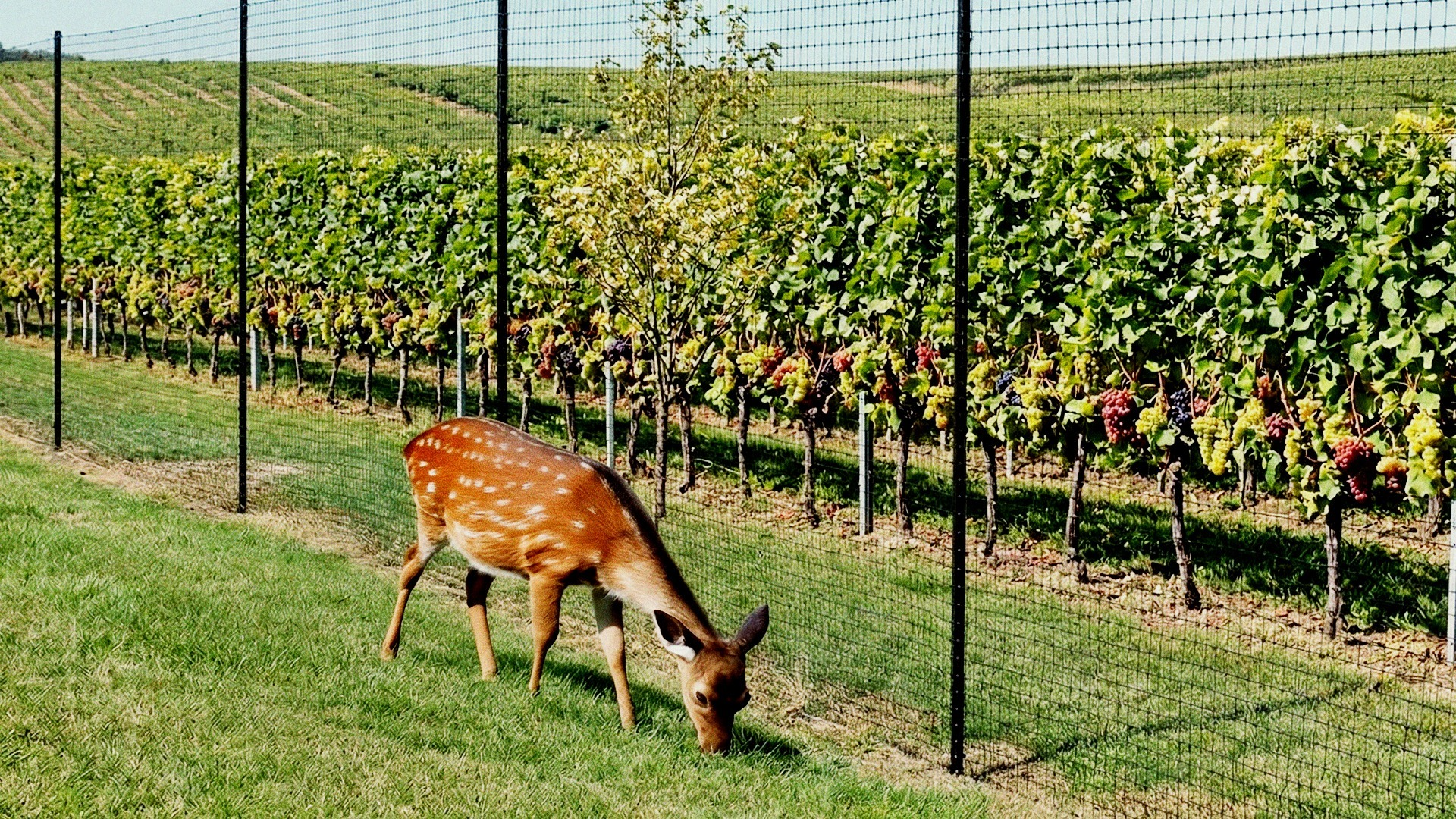
When growers talk about adopting new techniques, the conversation usually stays inside the rows — canopy decisions, new tools, new timing, new workflows. But the early adopters who come out of a season feeling confident tend to share one quiet habit: They stabilize the perimeter first. Not because fencing is flashy. Because it reduces variables. If you’re trialing changes in the vineyard and wildlife pressure spikes at the same time, it’s hard to tell what’s actually working. A dependable perimeter helps protect your results, your labor plan, and your fruit — while you focus on what you’re testing. Why the perimeter is the smartest “first move” A fence is a risk-control upgrade. It doesn’t require retraining crews, rewriting SOPs, or perfect timing. It just needs to be designed correctly for your pressure and installed correctly for your terrain. That’s why it pairs so well with seasons where you’re trying anything new:
00
March 16, 2026
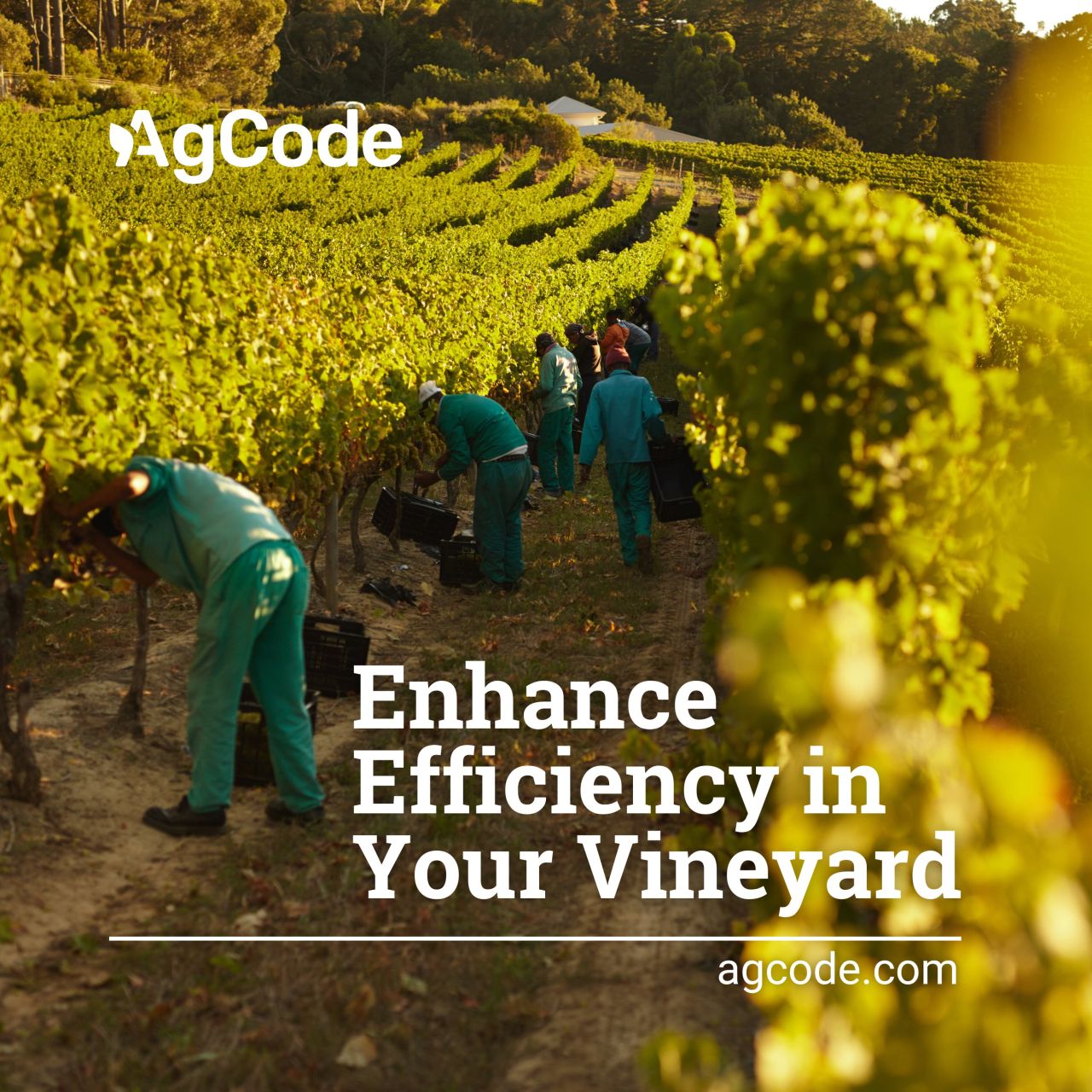
Every vineyard is a complex ecosystem, with countless variables influencing grape quality, yield, and operational efficiency. From soil health to irrigation patterns, nutrient balance to pest activity, the performance of each block is constantly changing. Traditional vineyard management approaches often rely on periodic inspections and intuition, leaving managers reactive rather than proactive. Precision management — the ability to monitor conditions at the block level in real time and respond immediately — is increasingly critical for successful operations. AgCode empowers vineyard managers to achieve this level of precision. Our platform consolidates soil data, irrigation schedules, nutrient monitoring, and pest activity into a single interface, giving your team complete visibility of each block’s conditions. Users can adjust irrigation in response to actual soil moisture, log fertilization and pesticide applications, and track environmental data over time to
00
When we launched the Sustainable Winegrowing Podcast in 2016, we weren’t sure where it would go. Now, 300 episodes later, it’s become a go-to resource for growers, researchers, educators, and wine industry professionals dedicated to sustainability. To mark this milestone, we flipped the mic around and interviewed our host, Craig Macmillan, PhD — long-time vineyard and winery professional, educator, and now podcasting veteran — to reflect on some favorite episodes, meaningful moments, and what’s ahead. From Zoom Recordings to Global Reach Craig began hosting when the podcast was just an idea sparked by the Vineyard Team’s goal to make sustainable winegrowing knowledge more accessible. “I wasn't a podcast listener at all,” Craig admits. “But I said sure, why not? Let's try it.” Since then, the show has featured scientists, growers, and innovators from all over the world, creating a ripple effect of conversations and c
00
Across the vineyard industry, margins are under pressure. Rising labor costs, limited workforce availability, and increasing water expenses are forcing growers to take a closer look at where efficiencies can be gained. While market conditions may be outside a vineyard’s control, how resources are managed in the field is not. For many operations, irrigation remains one of the largest opportunities to reduce both labor and water costs without compromising vine health or fruit quality. Labor remains a growing challenge Labor continues to be one of the most difficult costs for vineyards to manage. Irrigation tasks often require daily attention, including valve adjustments, system checks, troubleshooting issues, and traveling between blocks. During peak season, these tasks can consume significant time and require experienced personnel to be in multiple places at once. Even well-run operations feel the strain when crews spend hours driving to sites simply to make routine changes or co
00
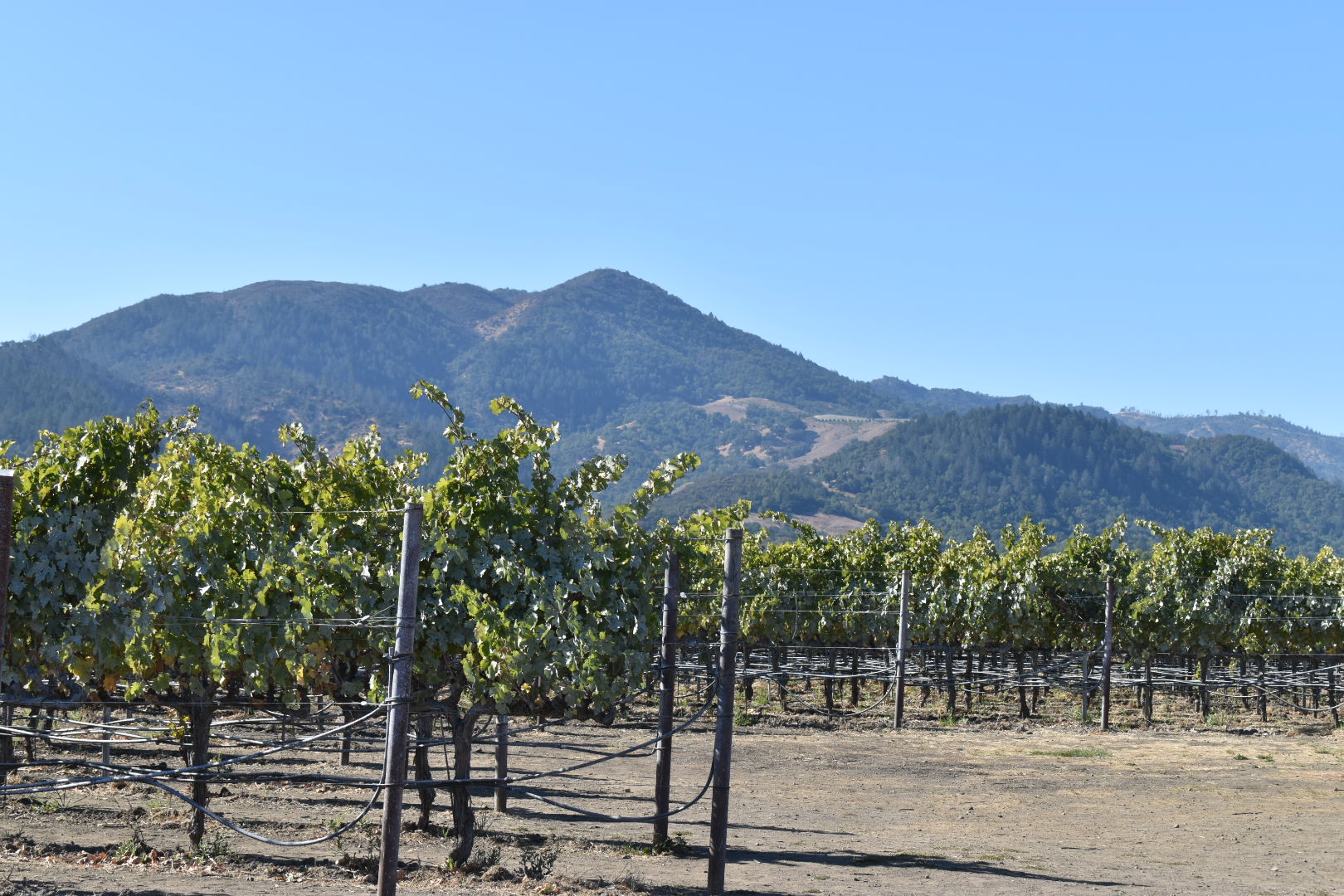
Vineyards communicate long before the fruit shows any stress. Subtle shifts in canopy color, changes in shoot vigor, and even small variations in soil texture can reveal how each block is responding to the season. For growers, the challenge is catching those signals early enough to act with confidence. That’s where strong water monitoring makes a difference. With tools that track soil moisture, water flow, pump activity, and irrigation timing across the ranch, growers can see where vines are holding steady and where attention is needed. Instead of guessing based on visual cues alone, they can match irrigation to the real conditions happening beneath the surface. This approach supports more than efficiency. It protects vine health during heat events, helps stabilize fruit quality, and builds a clearer understanding of each block’s behavior over time. Every vineyard has its own pattern and rhythm. When growers can follow those patterns consistently, they gain a new level of
00